
Effective workplace feedback is no longer limited to annual performance reviews. Modern organizations rely on continuous feedback systems to improve communication, strengthen employee development, and support better performance outcomes throughout the year. This article explores the differences between feedback and performance reviews, compares manager and peer feedback, and explains how businesses can build more effective feedback practices through the right timing, structure, and communication strategies.
Table of Contents
Feedback vs Performance Reviews
How do they reinforce each other?
Manager Feedback vs Peer Feedback
How Often Should Managers Give Feedback?
Feedback vs Performance Reviews
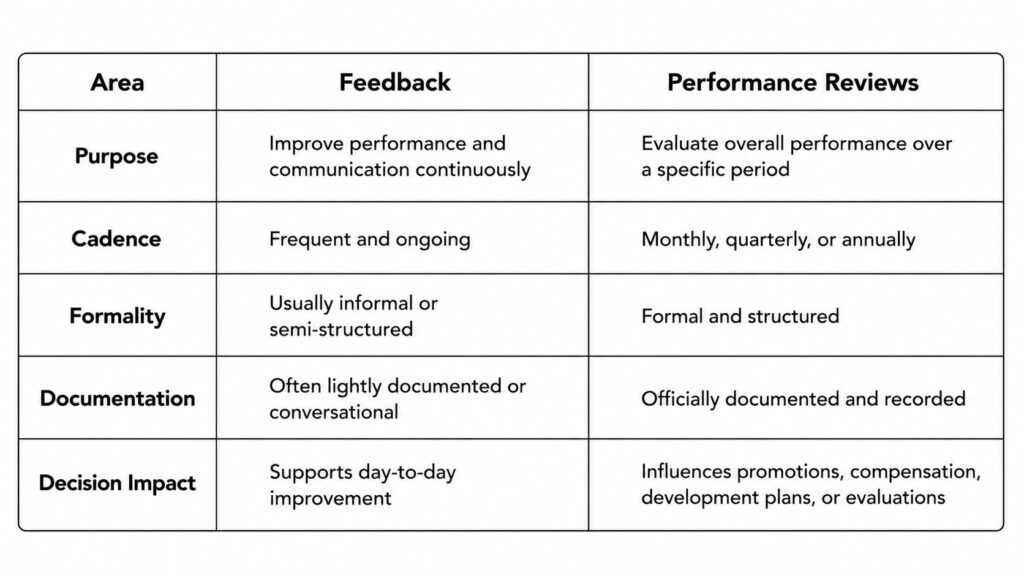
Feedback vs performance reviews refers to the difference between ongoing performance conversations and formal evaluation processes, helping organizations support continuous improvement while also measuring long-term performance outcomes.
The chart below compares feedback and performance reviews across key areas, showing how they differ in purpose, timing, structure, documentation, and overall impact on employee development and evaluation.
How do they reinforce each other?
Continuous feedback and performance reviews work best when they support each other rather than operate separately.
Feedback Feeds the Review
Regular feedback provides real examples, observations, and progress updates throughout the year. Instead of relying on memory during evaluations, managers and employees can refer to documented discussions, achievements, challenges, and improvement efforts.
This makes performance reviews:
- More accurate
- More balanced
- Less surprising
- More evidence-based
Employees also have clearer visibility into expectations and progress before formal evaluations happen.
The Review Sets the Next Feedback Focus
Performance reviews help identify long-term priorities, development goals, and areas for improvement that guide future feedback conversations.
For example, a review may highlight:
- Leadership development needs
- Communication improvements
- Technical skill growth
- Collaboration challenges
- Productivity goals
These areas then become the focus of future coaching, one-on-one meetings, and ongoing feedback discussions.
Strong feedback systems become more effective when supported by structured tools, documented conversations, and regular one-on-one meetings that maintain accountability and continuous development.
Manager Feedback vs Peer Feedback
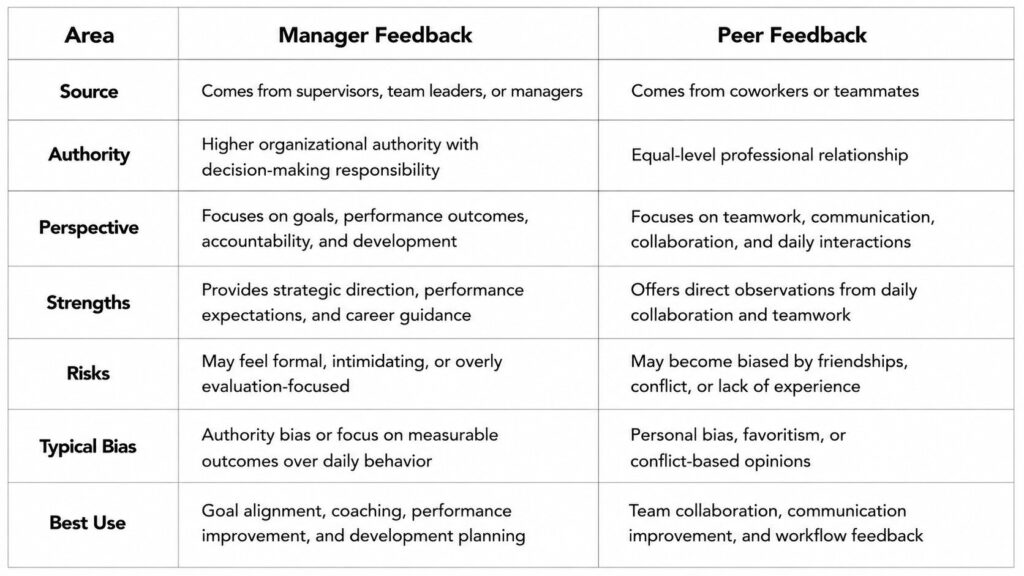
Manager and peer feedback are two workplace feedback approaches that improve performance, communication, and collaboration by providing insights from different professional relationships and perspectives.
The chart below compares manager and peer feedback across key areas, highlighting how each approach differs in terms of authority, perspective, strengths, risks, and practical workplace use.
How do they work together?
Manager and peer feedback are more effective when used together than separately.
Peer Feedback Informs Behaviors
Peers often observe behaviors that managers may not see regularly because coworkers interact closely during projects, meetings, and daily communication.
Peer feedback helps identify:
- Collaboration habits
- Communication style
- Team participation
- Responsiveness
- Conflict management
- Day-to-day workflow behaviors
This feedback improves interpersonal effectiveness and teamwork.
Manager Feedback Connects to Goals and Outcomes
Managers provide broader performance direction connected to organizational expectations, long-term goals, and measurable results.
Manager feedback typically focuses on:
- Performance targets
- Leadership development
- Accountability
- Productivity
- Decision-making
- Career progression
This helps employees understand how their behaviors affect larger business outcomes.
When combined effectively, peer feedback provides insight into workplace behaviors while manager feedback connects those behaviors to performance expectations, development plans, and organizational goals. Together, these approaches form the foundation for broader systems such as 360-degree feedback and structured peer feedback best practices.
How Often Should Managers Give Feedback?
Feedback frequency is the cadence of manager feedback based on role, risk, and change, so employees receive the right level of guidance, support, and performance direction without becoming overwhelmed.
Recommended Feedback Cadence Matrix
The chart below outlines recommended feedback frequencies for different workplace roles and situations, helping managers balance support, development, and communication effectively.
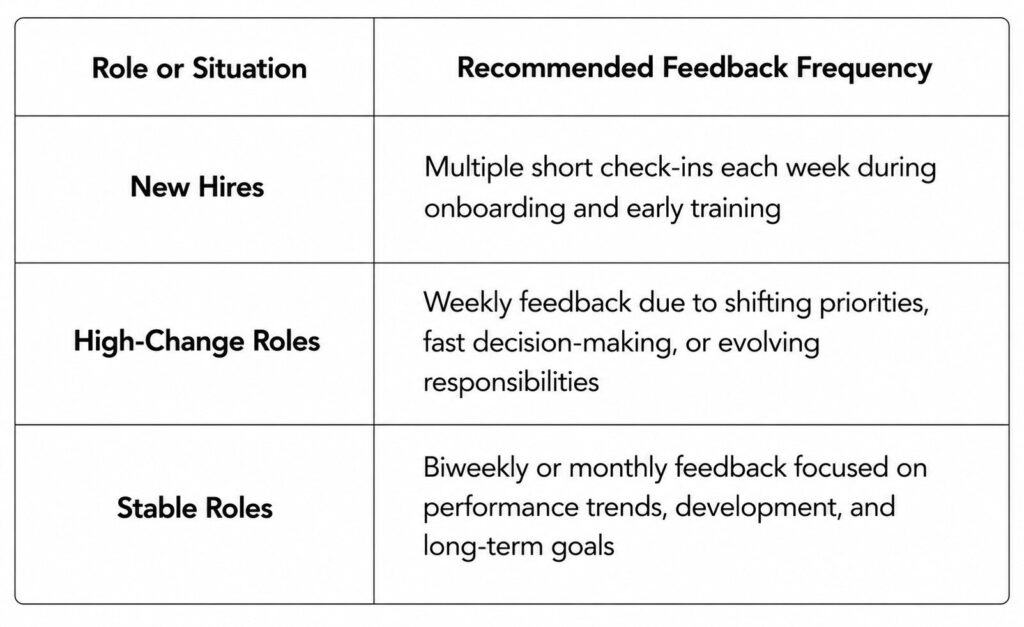
The ideal cadence should match the complexity of the work, the employee's experience level, and the pace of change within the role.
Trigger-Based Feedback Rules
In addition to scheduled conversations, managers should also give feedback after important moments or events.
After Key Deliverables
Provide feedback after presentations, reports, project milestones, or major assignments while details are still fresh.
After Incidents or Challenges
Address communication problems, workflow issues, or mistakes quickly before they become repeated patterns.
After Wins and Achievements
Recognize strong performance immediately to reinforce positive behaviors and maintain motivation.
These trigger-based conversations often have more impact than waiting for formal review cycles.
A helpful guide on feedback rules explains that effective feedback supports leadership, communication, and learning by helping people apply new knowledge sooner and avoid repeating mistakes. It highlights the importance of giving feedback that is useful, timely, and focused on improvement. This supports trigger-based feedback because managers should not wait only for formal reviews; they should respond after meaningful workplace moments such as key deliverables, challenges, achievements, or behavior patterns.
Managers should avoid turning feedback into constant monitoring or unnecessary commentary. Effective feedback should remain purposeful, specific, and actionable because timely beats frequent when specificity is high.