
The manager's role in performance management is to turn organizational expectations into clear goals, regular feedback, fair evaluation, and employee development. Managers' performance management role can be improved by providing continuous coaching, aligning work with priorities, documenting performance consistently, and helping employees grow rather than relying solely on formal reviews.
What is the manager's role in Performance Management?
A manager's role in performance management is to guide employees every day toward clear expectations, better performance, and steady improvement. The manager does more than review at year-end. They set direction, clear up confusion, watch how work is done, give feedback, and help employees make progress over time.
This role is important because performance management works best when it happens consistently, not just once in a while. Employees need to know what good work looks like, how their tasks fit with team goals, and what to work on next. Managers provide this clarity by having regular conversations and consistently following up.
Managers also need to balance holding employees accountable with offering support. They must keep standards high, but also coach, recognize good work, and give chances to grow. Performance evaluation focuses on results, while coaching helps employees improve in the future.
Key Responsibilities of Managers in Performance Management
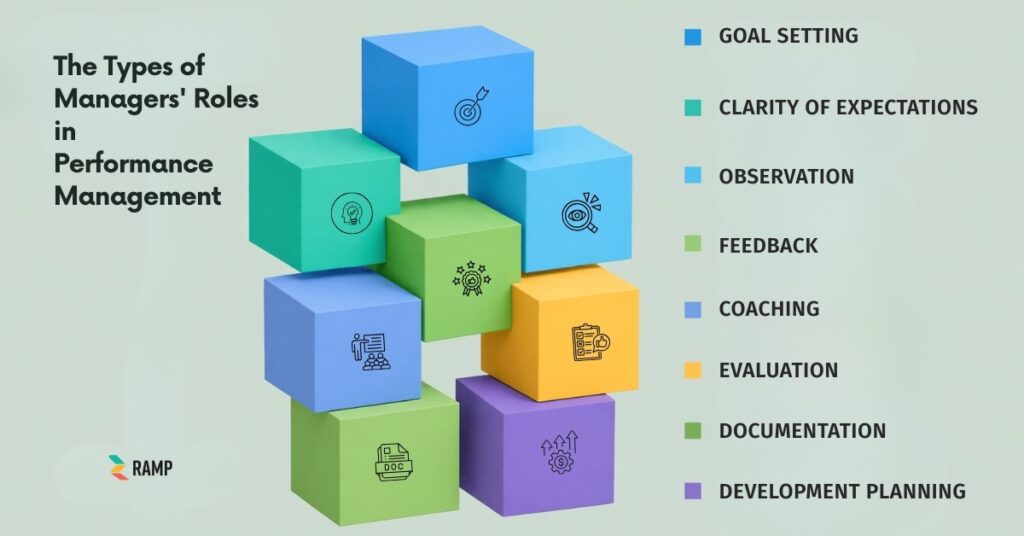
The core responsibilities are easiest to understand when grouped into distinct areas. The main manager roles in performance management include goal setting, clarity of expectations, observation, feedback, coaching, evaluation, documentation, and development planning, as shown in the diagram below.
Managers begin by translating business priorities into individual goals. Employees perform better when managers explain not only what needs to be done, but why it matters. Good managers set clear, relevant, and measurable goals so employees can make sound daily decisions.
Managers are responsible for providing ongoing feedback. They should address strengths, concerns, progress, and missed expectations regularly, not just during annual reviews. Frequent conversations enable employees to adjust early and improve more quickly.
Another key responsibility is to assess performance fairly. Managers should use facts, examples, and the same standards for everyone, not just personal opinions. They need to keep records, recognize achievements, and address problems early. Managers also help employees grow by identifying skill gaps, offering new challenges, and supporting skill development over time.
Skills and Competencies Required
The manager's role in performance management requires practical leadership skills to ensure performance conversations are clear, fair, and effective. Without these skills, even strong processes yield poor results.
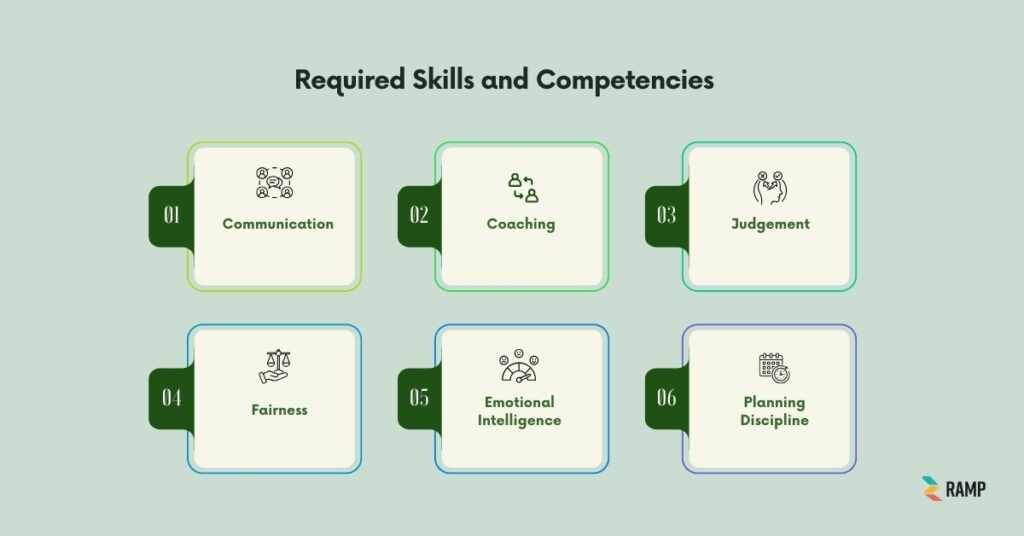
The required skills are listed below.
- Communication: Managers need to clearly explain expectations, ask strong questions, and give direct yet respectful feedback. Employees should leave conversations knowing what they are doing well, what must improve, and what actions come next.
- Coaching: A strong manager does not simply point out problems. They also help employees think through obstacles, identify better approaches, and build confidence through support and accountability.
- Judgment and Fairness: Managers need both. This includes recognizing bias, comparing performance against agreed standards, and separating facts from assumptions.
- Emotional intelligence: This matters as well, because difficult conversations require empathy, timing, and self-control.
- Planning discipline: Finally, managers need planning discipline to track commitments, follow up consistently, and connect individual performance to broader team outcomes.
Best Practices: What Good Looks Like
Effective performance management is demonstrated through regular manager actions, not just formal reviews. The difference between active management and passive management is that active management creates clarity and momentum, while passive management waits for problems to become serious.
Strong managers set expectations early and revisit them regularly. They explain priorities clearly, ensure employees understand success criteria, and update goals as business conditions change.
Good managers provide balanced feedback, recognize strong work promptly, address issues early, and ensure feedback is specific and actionable. Their feedback is based on observable behavior and results.
Managers also use performance conversations to support development by discussing skill growth, needed support, and future opportunities, not just task completion. Good practice includes consistent check-ins, clear documentation, fair evaluation, and a visible commitment to employee improvement.
Common Mistakes and How to Avoid Them
Managers can undermine performance management through avoidable habits, often due to inconsistency, discomfort, or lack of preparation rather than intent. However, the consequences can be significant.
A common mistake is delaying feedback. Avoiding difficult conversations prevents timely improvement. Managers should address issues early, while examples are current and change is possible.
Another mistake is providing vague feedback. Statements like "be more proactive" or "show more ownership" are too general to guide improvement. Managers should describe specific behaviors, their impact, and the expected change.
Bias is another common issue. Managers may overemphasize recent events, personal style, or a single strong trait, overlooking overall performance. To avoid this, use evidence, documented examples, and consistent standards.
Some managers focus too much on correction and not enough on recognition or development. Employees need both accountability and positive reinforcement. To avoid this, prepare for conversations, keep notes throughout the cycle, and follow a consistent routine.
The chart below summarizes common manager mistakes and how to avoid them.
| Common Mistakes and How to Avoid Them | ||
| MISTAKE | IMPACT | HOW TO AVOID IT |
| Delaying feedback | Employees don’t get timely corrections and miss the chance to improve. | Discuss issues early and regularly, while examples are fresh and change is still possible. |
| Being vague | Unclear feedback creates confusion and doesn’t guide improvement. | Be specific about the behavior, its impact, and the expected change. |
| Bias and subjectivity | Unfair or inconsistent evaluations damage trust and morale. | Use evidence, documented examples, and shared standards across employees. |
| Over-focusing on correction | Employees may feel discouraged and lack motivation to grow. | Balance accountability with recognition and development opportunities. |
| Lack of preparation and consistency | Leads to reactive conversations and inconsistent management across the team. | Prepare for conversations, keep notes throughout the cycle, and follow a repeatable routine. |
Tools and Routines to Support the Role
Managers are more effective in performance management when supported by simple tools and predictable routines. The aim is not increased administration, but greater consistency, follow-up, and quality conversations.
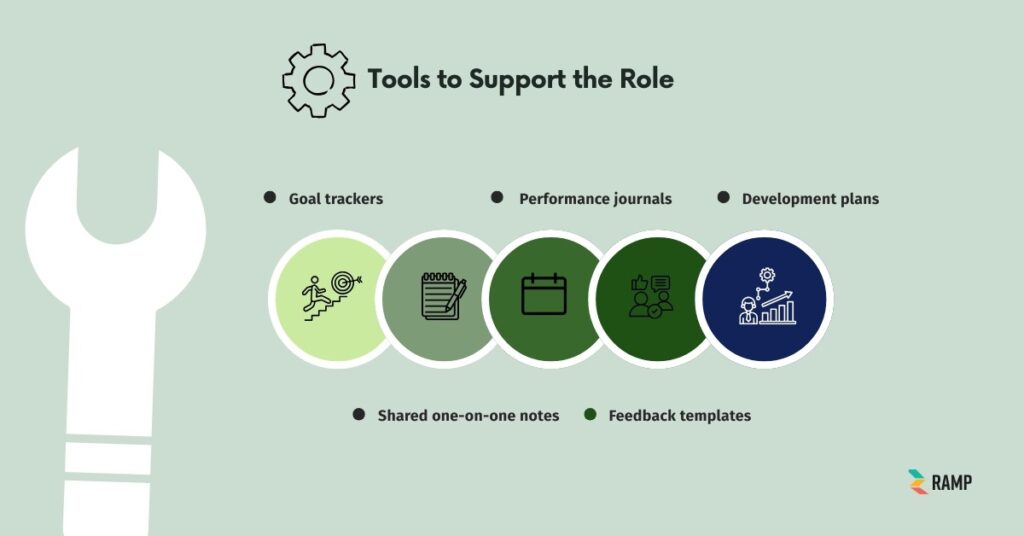
Useful tools include goal trackers, shared one-on-one notes, performance journals, feedback templates, and development plans. These tools help managers record examples, track commitments, and connect current performance to future growth. Even a simple shared document can work when used consistently.
The diagram shows the required tools to support managers' roles.
Practical routines should happen at different intervals:
- Weekly: quick check-ins on priorities, blockers, and support needed
- Biweekly: one-on-ones focused on progress, feedback, and coaching
- Monthly: goal review, workload alignment, and development discussion
- Quarterly: broader performance reflection, achievements, risks, and next-quarter priorities
A simple 1:1 agenda template can include:
- Top priorities since the last meeting
- Wins and progress
- Challenges or blockers
- Feedback in both directions
- Support needed from the manager
- Next actions and follow-up dates
Useful feedback prompts can include:
- What worked well here?
- What should be repeated next time?
- What needs to change?
- What support would help?
- What is the next specific action?
Example 1: One-on-Ones and Feedback Cadence
One-on-ones are one of the most important routines in performance management because they create the space where expectations, coaching, and accountability come together. When these meetings are skipped or treated casually, performance management becomes reactive.
A good one-on-one cadence is usually weekly or biweekly, depending on the role, the employee's experience level, and the pace of the work. Weekly check-ins are often best for newer employees, high-change roles, or periods of heavy execution. Biweekly meetings can work well when the employee is established and priorities are stable.
The meeting should not become a status dump. Status can be covered quickly, but the deeper value comes from discussing decisions, obstacles, feedback, and development. Managers should prepare examples, ask thoughtful questions, and end with clear next steps.
A strong cadence creates trust because employees know they will not have to wait months to raise concerns or hear feedback. It also reduces surprises during formal reviews because performance conversations have been happening all along.
Example 2: Goal Setting and Alignment
Goal setting is one of the clearest ways managers shape performance. If goals are unclear, unrealistic, or disconnected from business priorities, employees may work hard but still miss what matters most. That is why alignment is a core part of the manager's role.
Managers should begin by connecting team goals to broader organizational objectives. Then they should translate those priorities into individual expectations that are specific and realistic. Employees need to understand not only the target, but the standard, timeline, and reason behind it.
Good managers revisit goals regularly. Priorities change, and performance management becomes weak when goals remain frozen while the work shifts around them. A monthly review can keep goals relevant and prevent wasted effort.
The difference between goal assignment and goal alignment is that goal assignment gives an employee a target, while goal alignment ensures the employee understands how that target supports team and business success. Managers strengthen performance when they co-create goals, check understanding, and adjust them when circumstances change.