
Upward feedback is a structured communication process in which employees provide feedback to their managers or supervisors on leadership style, decisions, communication, and workplace support. It helps organizations understand how employees experience leadership and identify ways to improve management practices.
Why does it matter?
Upward feedback strengthens organizational trust and transparency. It ensures leadership is not operating in isolation and helps create a healthier work environment.
Key reasons it matters:
- Improves leadership effectiveness
- Builds trust between employees and managers
- Highlights blind spots in management behavior
- Encourages an open communication culture
- Supports employee engagement and retention
Research on upward feedback and managerial behavior shows that feedback from employees can help managers better understand how their leadership is experienced by their teams. The study found that upward feedback can support improvements in managerial behaviour, especially when used for development rather than blame. This supports the value of upward feedback as a structured way to improve leadership communication, trust, and team effectiveness.
Core Structure: SBI Framework (Situation–Behavior–Impact)
Upward feedback works best when it follows the SBI model, which keeps feedback clear, factual, and non-personal.
- Situation: Describe the specific context or event
- Behavior: Explain what the manager did or said
- Impact: Describe how it affected you or the team
This structure prevents emotional or vague feedback and keeps the message constructive.
Example (SBI in Upward Feedback)
“In [situation], I observed that during the weekly team meeting yesterday, project deadlines were discussed without clarifying priorities for each member.”
“The impact was that several team members were uncertain about what to focus on first, which slowed down progress and created confusion.”
Characteristics of Upward Feedback
The characteristics of upward feedback include:
- Direction flows from employee to manager
- Focuses on leadership behavior, not personality
- Works best when it is specific and evidence-based
- Often collected through surveys, meetings, or one-on-one discussions
- Encourages honesty when psychological safety is present
- Aims at improving management effectiveness, not criticism
When to use it?
Upward feedback is most effective in situations such as:
- After major projects or team milestones
- When improving leadership communication is needed
- During performance review cycles
- When organizational change is happening
- When recurring team issues involve management decisions
- To support leadership development programs
When not to use it?
Avoid upward feedback when:
- Emotions are still high after a conflict
- There is no trust or safe environment for honest feedback
- The issue is minor and does not affect team performance
- It is used as a complaint channel without constructive intent
- Immediate operational decisions are required instead of reflection
The diagram below summarizes when to use upward feedback and when not to.
| When to Use It | When Not to Use It |
| After major projects or team milestones | Emotions are still high after a conflict |
| When improving leadership communication is needed | There is no trust or safe environment for honest feedback |
| During performance review cycles | The issue is minor and does not affect team performance |
| When organizational change is happening | It is used as a complaint channel without constructive intent |
| When recurring team issues involve management decisions | Immediate operational decisions are required instead of reflection |
| To support leadership development programs |
Common mistakes to avoid
The diagram below shows the common mistakes to avoid while giving upward feedback.
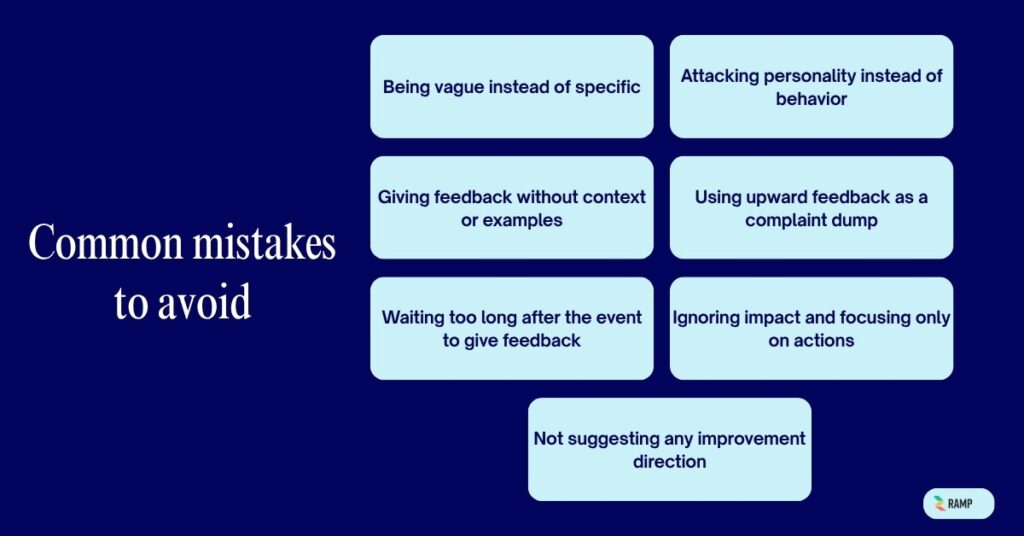
The points in the diagram include:
- Being vague instead of specific
- Attacking personality instead of behavior
- Giving feedback without context or examples
- Using upward feedback as a complaint dump
- Waiting too long after the event to give feedback
- Ignoring impact and focusing only on actions
- Not suggesting any improvement direction
Upward feedback is a powerful tool for improving leadership quality and organizational culture. When delivered using structured methods like SBI, it becomes clearer, safer, and more actionable. Organizations that encourage consistent upward feedback build stronger communication loops, better managers, and more engaged teams.