
Modern workplaces depend heavily on communication, collaboration, and behavioral awareness. Technical skills are important, but the way people interact with coworkers, respond to pressure, make decisions, and approach teamwork often determines how effectively teams perform. This is where the DISC framework becomes valuable.
The DISC framework is one of the most widely used behavioral assessment models in professional environments. Organizations use it to improve communication, strengthen teamwork, support leadership development, and better understand workplace behavior patterns.
Rather than labeling people as "good" or "bad" employees, DISC helps explain how individuals tend to behave in different work situations. It provides a practical way to understand work styles, communication preferences, and interpersonal tendencies.
What Is the DISC Framework?
DISC is a behavioral assessment model that categorizes human behavior into four primary personality dimensions. The framework is designed to help individuals understand:
- How they communicate
- How they respond to challenges
- How they work with others
- How they approach tasks and decision-making
- What environments do they naturally prefer
The model is commonly used in:
- Team development
- Leadership training
- Conflict resolution
- Hiring discussions
- Employee coaching
- Sales training
- Workplace communication improvement
DISC focuses on observable behavior rather than internal psychology. It examines how people tend to act in the workplace and other social settings.
The framework is popular because it is simple to understand and easy to apply in day-to-day professional interactions.
What Does DISC Stand For?
DISC represents four core behavioral dimensions:
- D — Dominance
- I — Influence
- S — Steadiness
- C — Conscientiousness
The diagram below shows the DISC framework.
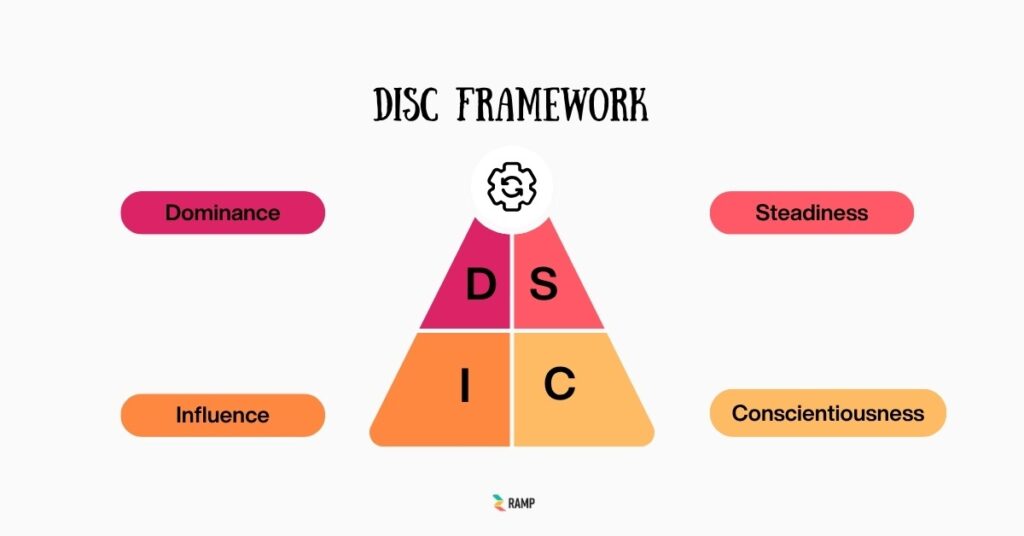
Each dimension reflects a different communication style, motivational pattern, and workplace approach.
Most people display a combination of all four dimensions, but usually one or two traits are more dominant in their behavior.
DISC Measures Behavioral Tendencies — Not Intelligence or Competence
One of the most important things to understand about DISC is that it does not measure:
- Intelligence
- Technical ability
- Experience
- Education level
- Emotional worth
- Professional competence
DISC only measures behavioral tendencies and communication styles.
For example:
- A person with a high Dominance profile is not automatically a better leader.
- A highly Conscientious employee is not necessarily smarter than others.
- An Influence-oriented employee is not automatically more creative.
- A Steadiness-focused employee is not less ambitious.
The framework simply explains how people naturally prefer to work, communicate, and respond to situations.
This distinction matters because organizations should use DISC as a developmental and communication tool, not as a way to judge employee value.
Why Organizations Use DISC in Workplace Settings?
Organizations use DISC because workplace problems are often caused by communication gaps rather than a lack of technical knowledge.
Employees may misunderstand each other because they:
- Process information differently
- Communicate in different styles
- Handle pressure differently
- Prefer different work environments
- Approach decision-making differently
DISC helps teams recognize these differences and adapt accordingly.
Research on using the DISC behavioral instrument to guide leadership and communication explains that DISC can help leaders understand different workplace behavior and communication styles. The article highlights the four DISC types: Dominance, Influence, Steadiness, and Conscientiousness, and shows how leaders can adjust their approach when working with each style. This supports the value of the DISC framework as a practical communication tool for improving leadership, reducing misunderstandings, strengthening teamwork, and building more effective workplace relationships.
Common Reasons Companies Use DISC
The common reasons that companies use DISC are shown in the diagram below.
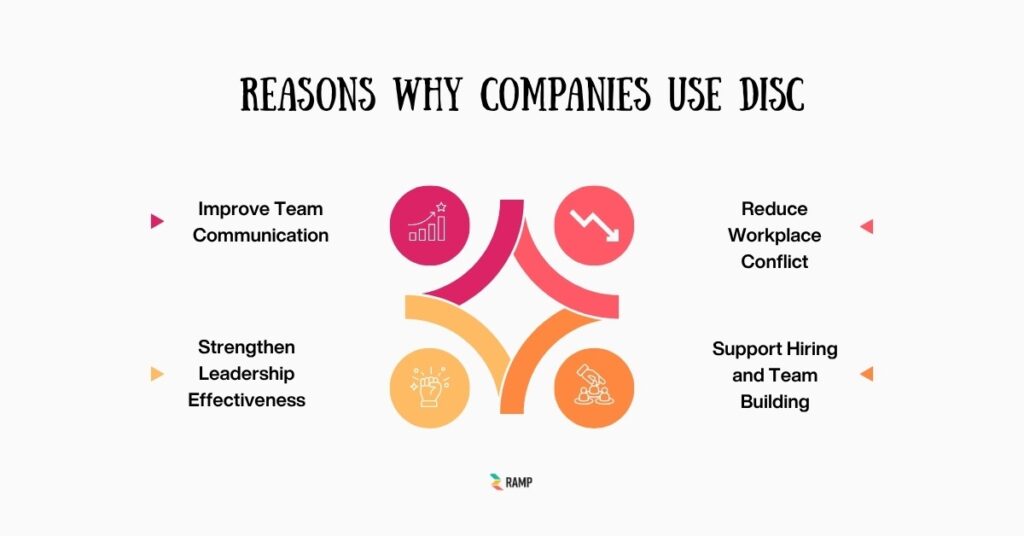
The details are discussed below.
- Improve Team Communication
DISC helps employees understand how coworkers prefer to receive information, feedback, and direction.
For example:
- Some employees prefer direct communication.
- Others need more discussion and relationship-building.
- Some value detailed explanations.
- Others focus on speed and outcomes.
Understanding these preferences reduces misunderstandings and frustration.
- Strengthen Leadership Effectiveness
Managers use DISC to adapt leadership approaches for different team members.
A single leadership style rarely works for everyone. DISC helps leaders:
- Delegate more effectively
- Motivate employees appropriately
- Deliver feedback constructively
- Manage workplace tension
- Build stronger working relationships
- Reduce Workplace Conflict
Many workplace conflicts are behavioral rather than personal. DISC helps employees recognize that different communication styles are normal, not hostile.
For example:
- A direct employee may appear aggressive to others.
- A cautious employee may appear slow or resistant.
- A highly social employee may seem unfocused.
- A reserved employee may seem disengaged.
DISC creates awareness that these are often style differences rather than intentional problems.
- Support Hiring and Team Building
Some organizations use DISC during hiring or onboarding discussions to better understand work-style compatibility.
The framework can help teams identify:
- Communication balance
- Collaboration strengths
- Potential tension areas
- Leadership potential
- Customer interaction styles
However, DISC should never be the sole basis for hiring decisions.
The Four DISC Dimensions
D — Dominance
People with strong Dominance traits tend to focus on:
- Results
- Control
- Speed
- Problem-solving
- Competition
- Decision-making
They are usually direct, assertive, and action-oriented.
Common Workplace Characteristics
High-D individuals often:
- Prefer fast-paced environments
- Take the initiative quickly
- Enjoy challenges
- Make decisions rapidly
- Focus heavily on outcomes
- Speak directly and confidently
Potential Strengths
- Strong leadership presence
- Quick decision-making
- Confidence under pressure
- Goal orientation
- Ability to drive action
Potential Challenges
- May appear impatient
- Can become overly controlling
- May overlook details
- Sometimes communicate too aggressively
Communication Style
Dominance-oriented employees usually prefer:
- Brief communication
- Clear objectives
- Efficient meetings
- Fast decisions
- Direct feedback
I — Influence
People with strong Influence traits tend to focus on:
- Relationships
- Enthusiasm
- Collaboration
- Social interaction
- Persuasion
- Positive energy
They are often expressive, outgoing, and people-oriented.
Common Workplace Characteristics
High-I individuals often:
- Enjoy teamwork
- Communicate openly
- Build connections easily
- Motivate others
- Bring energy into groups
- Prefer interactive environments
Potential Strengths
- Strong interpersonal skills
- Persuasive communication
- Team motivation
- Networking ability
- Positive workplace energy
Potential Challenges
- May struggle with organization
- Can become overly talkative
- Sometimes, avoid difficult conversations
- May lose focus on details
Communication Style
Influence-oriented employees usually prefer:
- Friendly interactions
- Open discussions
- Recognition and encouragement
- Collaborative meetings
- Social engagement
S — Steadiness
People with strong Steadiness traits tend to value:
- Stability
- Cooperation
- Consistency
- Patience
- Reliability
- Supportive relationships
They are typically calm, dependable, and team-focused.
Common Workplace Characteristics
High-S individuals often:
- Work steadily and consistently
- Support team harmony
- Listen carefully
- Avoid unnecessary conflict
- Remain patient under pressure
- Prefer predictable environments
Potential Strengths
- Reliability
- Loyalty
- Strong listening skills
- Team support
- Emotional consistency
Potential Challenges
- May resist rapid change
- Can avoid confrontation
- Sometimes hesitate to speak up
- May struggle with fast-paced disruption
Communication Style
Steadiness-oriented employees usually prefer:
- Respectful conversations
- Clear expectations
- Stable routines
- Collaborative environments
- Supportive leadership
C — Conscientiousness
People with strong Conscientiousness traits tend to focus on:
- Accuracy
- Quality
- Structure
- Logic
- Analysis
- Precision
They are often careful, detail-oriented, and systematic.
Common Workplace Characteristics
High-C individuals often:
- Analyze information carefully
- Follow processes closely
- Value accuracy
- Ask detailed questions
- Prefer structured systems
- Focus on quality standards
Potential Strengths
- Attention to detail
- Strong analytical thinking
- High-quality control
- Process improvement
- Careful decision-making
Potential Challenges
- May overanalyze situations
- Can become overly perfectionistic
- Sometimes resist ambiguity
- May struggle with quick decisions
Communication Style
Conscientiousness-oriented employees usually prefer:
- Detailed explanations
- Logical reasoning
- Clear documentation
- Structured communication
- Accurate information
DISC as a Workplace Communication Model
At its core, DISC is a communication and work-style framework.
The model helps employees understand that people approach work differently, depending on their behavioral tendencies. These differences influence:
- Communication preferences
- Collaboration styles
- Leadership expectations
- Conflict responses
- Decision-making habits
- Workplace motivation
DISC does not attempt to place employees into rigid categories. Instead, it provides a practical structure for improving self-awareness and workplace interaction.
When used properly, the framework helps organizations create:
- Better communication systems
- Stronger collaboration
- More adaptive leadership
- Healthier team dynamics
- Greater workplace understanding
In modern organizations where teamwork and communication directly affect performance, DISC remains a widely used tool because it translates behavioral differences into practical workplace insight.