

Receiving feedback is the process of understanding input from others and turning it into measurable improvement that strengthens performance, communication, and professional growth.
Receiving and implementing feedback is important because it helps individuals recognize strengths, correct weaknesses, and improve performance over time. Feedback provides an outside perspective that people may not notice on their own, making it easier to identify areas for growth.
A research paper, "Constructive criticism that works," by Heather Stinger, mentions that a psychologist named Naomi Winstone conducted research on constructive feedback and believes that the work environment matters and that it's important to teach people how to use the feedback they receive.
It is important because it:
- Improves communication and teamwork
- Encourages continuous learning and self-awareness
- Helps correct mistakes before they become larger problems
- Strengthens professional and leadership skills
- Increases accountability and performance quality
- Builds stronger workplace relationships
- Supports career growth and long-term development
- Encourages adaptability in changing work environments
Implementing feedback is equally important because improvement only happens when feedback leads to action. Listening without applying changes limits growth, while consistent implementation helps individuals build better habits, stronger performance, and greater professional confidence over time.
The Answer → Ask → Answer Approach
A practical way to handle feedback is by following the Answer → Ask → Answer pattern. This structure keeps conversations professional, productive, and action-oriented. The diagram below shows the answer-ask-answer approach.

The approach is explained in detail below.
1. Answer — Acknowledge the Feedback
Start by listening carefully and acknowledging the feedback without becoming defensive. The goal is to show that you understand the concern or observation.
Example:
"Thank you for pointing that out. I understand why that situation created confusion during the project."
This step helps maintain trust and keeps the discussion constructive.
2. Ask — Clarify the Details
After acknowledging the feedback, ask questions to better understand the issue, expectations, or areas for improvement.
Helpful questions include:
- "Can you give a specific example?"
- "What would improvement look like in this situation?"
- "Which area should I prioritize first?"
- "How did this affect the team or project?"
Clarifying questions reduces misunderstandings and makes feedback easier to apply.
3. Answer — Summarize the Action Plan
Finish the discussion by explaining the actions you will take moving forward. This demonstrates accountability and commitment to improvement.
Example:
"I'll focus on improving communication updates during projects and confirm deadlines more clearly with the team."
A clear action plan turns feedback into measurable progress.
4-Step Plan to Implement Feedback
Implementing feedback effectively requires a clear and structured approach that turns suggestions into measurable actions and long-term improvement. The following four-step plan helps individuals process feedback professionally and apply it effectively.
The diagram below shows the 4-step plan to implement feedback effectively.
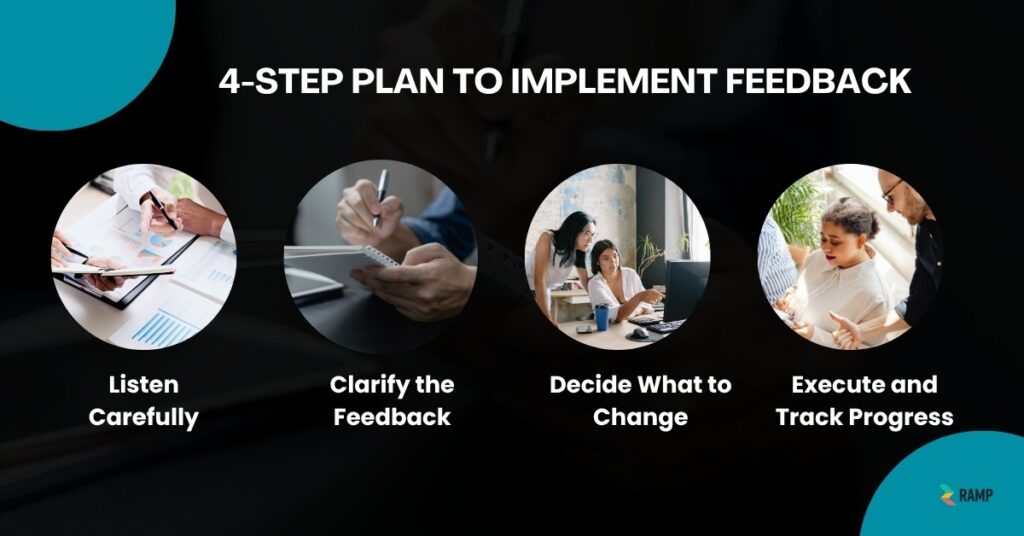
The steps are detailed below.
1. Listen Carefully
Focus fully on the feedback before reacting. Avoid interrupting, defending yourself immediately, or making assumptions.
Key actions:
- Stay calm and professional
- Listen for facts and examples
- Pay attention to patterns in the feedback
- Separate emotions from useful information
Good listening improves understanding and reduces conflict.
2. Clarify the Feedback
Ask follow-up questions to understand the exact issue and expected improvement.
Focus on:
- Specific behaviors
- Situational examples
- Impact on performance or teamwork
- Clear improvement expectations
Clarification transforms vague feedback into actionable guidance.
3. Decide What to Change
Not all feedback requires the same response. Evaluate the feedback objectively and identify realistic areas for improvement.
Consider:
- What should change immediately
- Which habits need long-term improvement
- What resources or support may help
- How progress will be measured
This step creates a focused improvement plan instead of reactive changes.
4. Execute and Track Progress
Apply the feedback consistently through daily actions and measurable goals.
Examples include:
- Improving communication habits
- Managing deadlines more effectively
- Practicing leadership skills
- Asking for regular check-ins
- Tracking progress weekly
Implementation is what turns feedback into actual growth.
2-Week Follow-Up Checkpoint
A brief follow-up review after 2 weeks helps gauge improvement and maintain accountability.
During the checkpoint:
- Review what actions were completed
- Discuss visible progress
- Identify remaining challenges
- Adjust goals if necessary
- Request additional feedback if needed
Regular follow-ups prevent feedback from being forgotten after the initial discussion.
Micro-Template for Receiving Feedback
“I heard…, I will…, I need…, We’ll review on…”
Example:
"I heard that my project updates were sometimes unclear. I will send more structured progress summaries each week. Also, I need clearer expectations for deadlines from the team lead. We’ll review progress on the 15th of next month."