HR performance management is the structured approach used by human resources teams to design, govern, measure, and continuously improve how employee performance is evaluated and aligned with business goals. It ensures fairness, accountability, and measurable outcomes while enabling both organizational success and workforce development.
HR performance management operates from two equally important angles:
1. HR as System Owner
HR designs and manages the entire performance framework. This includes policies, tools, processes, and governance. HR ensures consistency, fairness, and alignment with business strategy across the organization.
2. HR as a Measured Team
HR itself must deliver measurable results. It is evaluated through KPIs such as hiring efficiency, retention, engagement, and overall organizational impact. HR is not just a facilitator; it is accountable for outcomes.
Core Attributes of Performance Management for HR Teams
Strategic Role of HR in Performance Management
HR acts as the architect of the performance system. The diagram below shows the key actions HR takes as the architect to ensure the performance management system is strategically aligned and consistently executed across the organization.
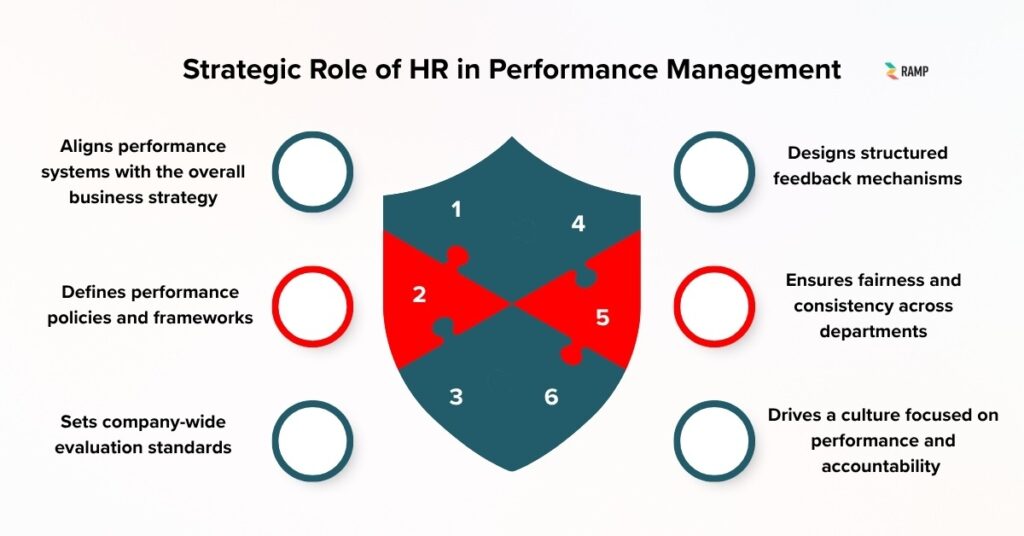
Without HR's strategic direction, performance management becomes inconsistent and ineffective.
HR Team Performance KPIs
HR must demonstrate measurable value through clearly defined metrics.
Talent Metrics
- Time-to-hire (days per hire): Average number of days from job posting to offer acceptance
- Quality-of-hire (score within first 6 months): Performance rating of new hires after onboarding
- Offer acceptance rate (% per quarter): Accepted offers ÷ total offers extended × 100
Employee Metrics
- Retention rate (% annually): Employees retained ÷ total employees × 100
- Turnover rate (% annually): Employees leaving ÷ total workforce × 100
- Engagement score (index per survey cycle): Measured through employee surveys
- Absenteeism rate (% per month): Days absent ÷ total working days × 100
Performance Metrics
- Review completion rate (% per cycle): Completed reviews ÷ total expected reviews × 100
- Goal alignment percentage (% per quarter): Employees with aligned goals ÷ total employees × 100
- PIP success rate (% per cycle): Employees successfully completing PIPs ÷ total on PIPs × 100
- Manager compliance rate (% per cycle): Managers following process ÷ total managers × 100
Organizational Impact Metrics
- Productivity improvement (% annually): Output growth compared to the previous year
- Leadership pipeline strength (ratio): Ready successors ÷ critical roles
- Succession coverage ratio (% annually): Roles with successors ÷ total key roles ×
The diagram below summarizes the following metrics, their units, and timeframes.
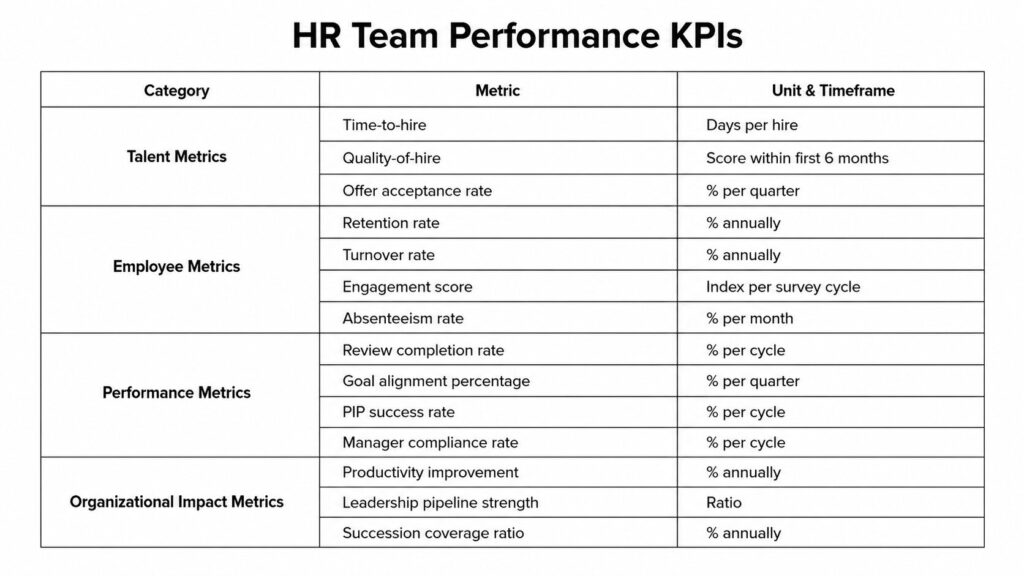
HR must connect these metrics directly to business performance to demonstrate ROI.
Governance & Compliance
HR is responsible for maintaining legal and organizational integrity. The diagram below shows the key actions HR takes to ensure governance, compliance, and legal integrity in the performance management system.
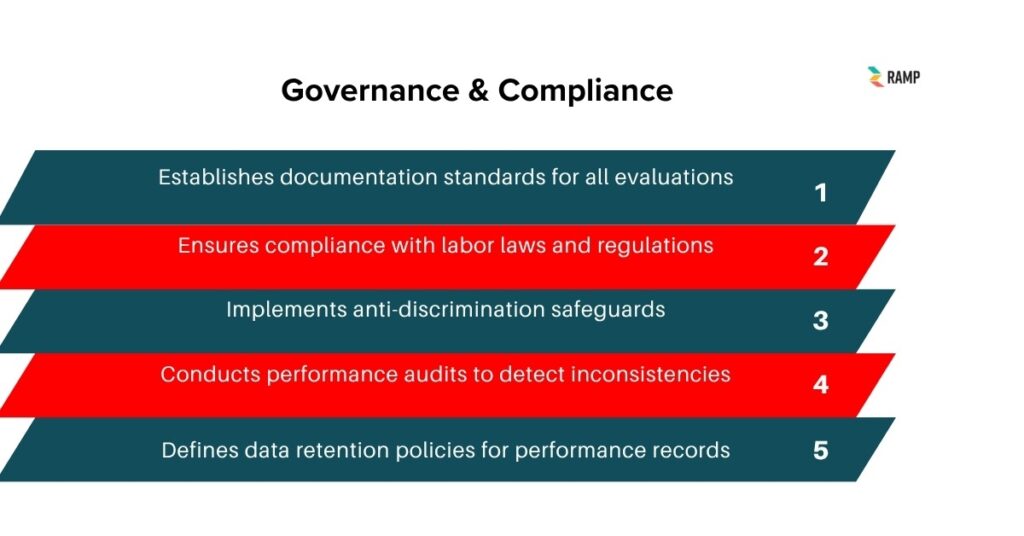
Strong governance reduces legal risks and ensures defensible decisions.
Performance System Design Attributes
HR builds the structure that drives performance. The diagram below shows the key design attributes HR implements to build a structured and effective performance management framework.
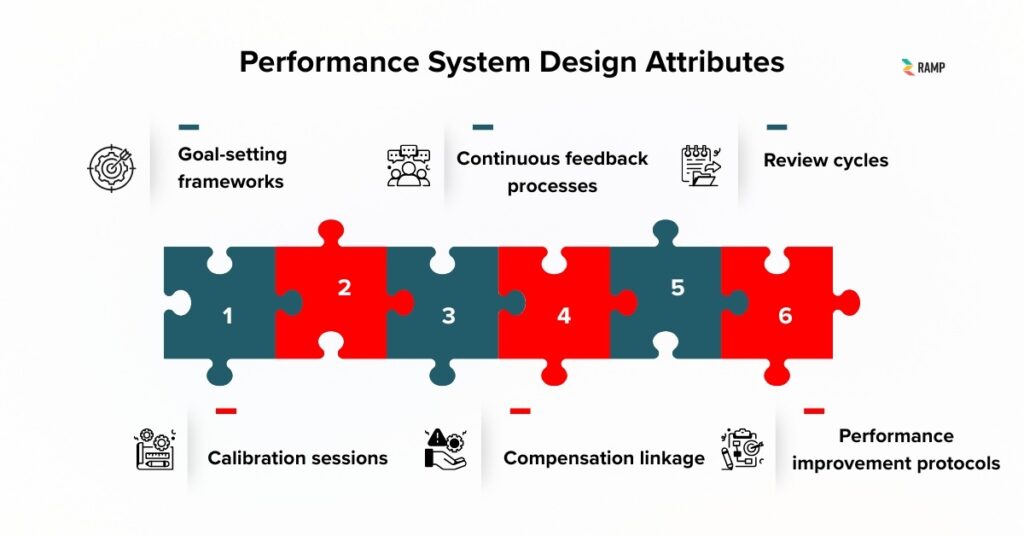
A well-designed system balances structure with flexibility.
Bias Reduction & Fairness Controls
Fairness is a core HR responsibility. The diagram below shows the key actions HR takes to implement bias reduction and fairness controls within the performance management system.
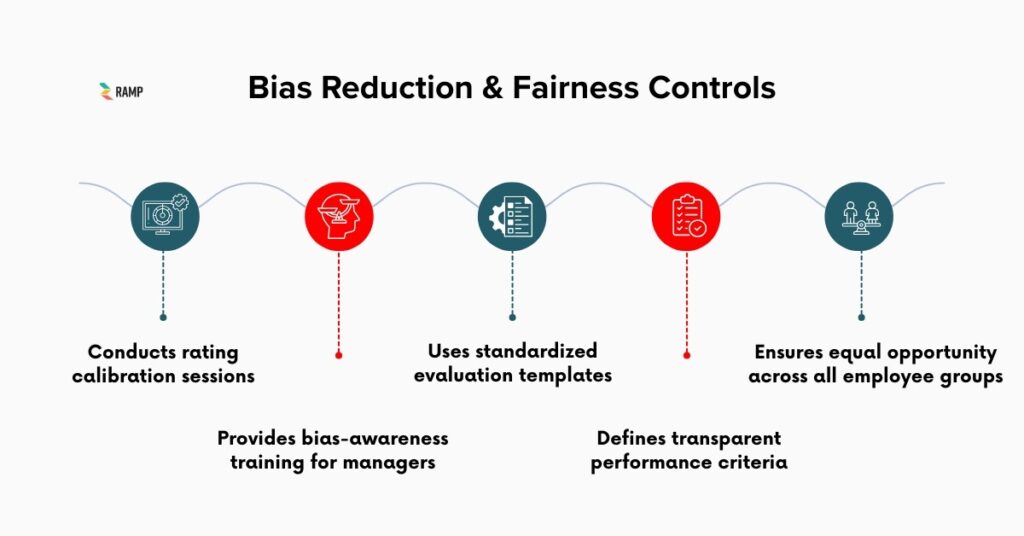
Bias control builds trust and strengthens decision quality.
HR's Role in Manager Enablement
Performance management depends heavily on managers. The diagram shows the key actions HR takes to enable managers and ensure effective execution of the performance management system.
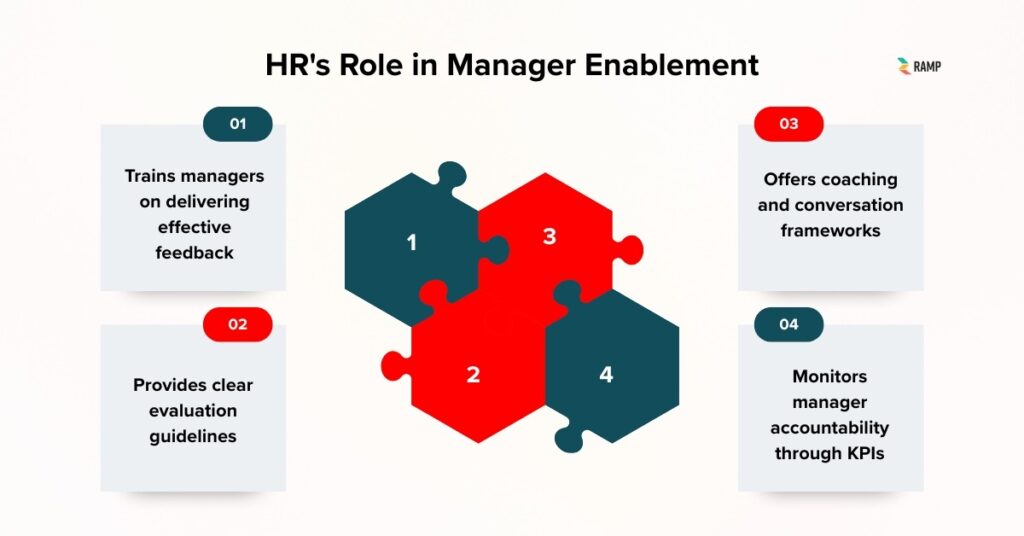
If managers are incapable, the system will fail regardless of the design. Thus, the manager's role in performance management is crucial.
Technology & HR Analytics
Modern HR relies on integrated technology systems. The diagram below shows the key technologies and analytics tools HR uses to manage performance, gain insights, and drive data-driven decision-making.
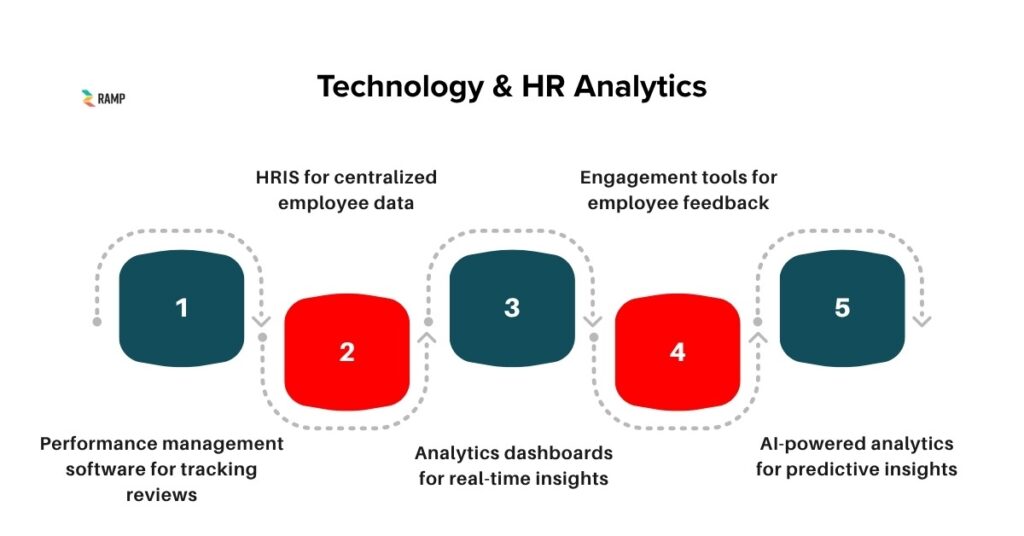
Key considerations:
- Data governance to ensure accuracy
- Data privacy to protect employee information
- Automated reporting for efficiency
Technology enables scale, accuracy, and speed in decision-making.
Continuous Improvement of the Performance System
HR must regularly evaluate and refine the system. The diagram shows the key actions HR takes to continuously evaluate and improve the performance management system.
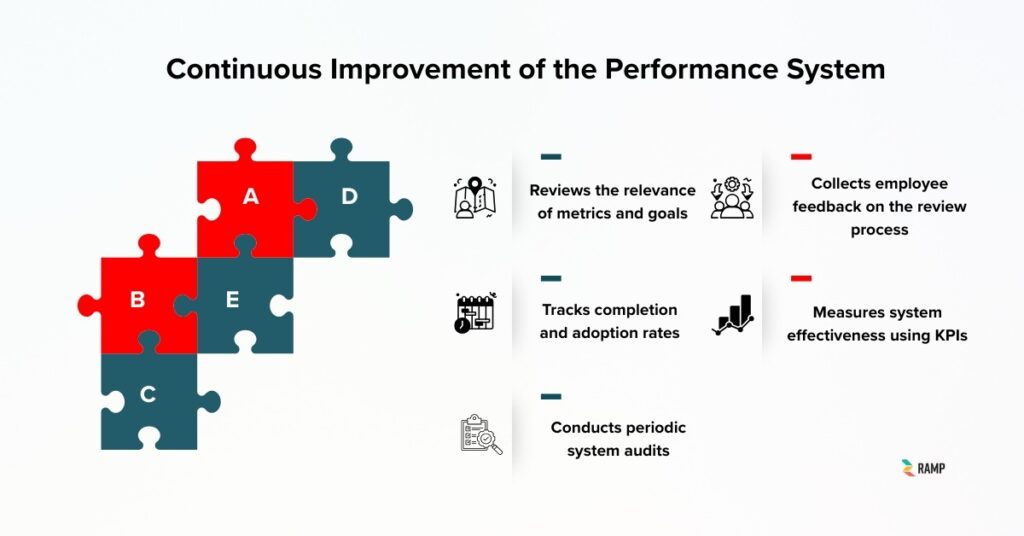
A static system quickly becomes outdated; continuous improvement is essential.
Common HR Performance Management Mistakes
The diagram below shows the common HR performance management mistakes.
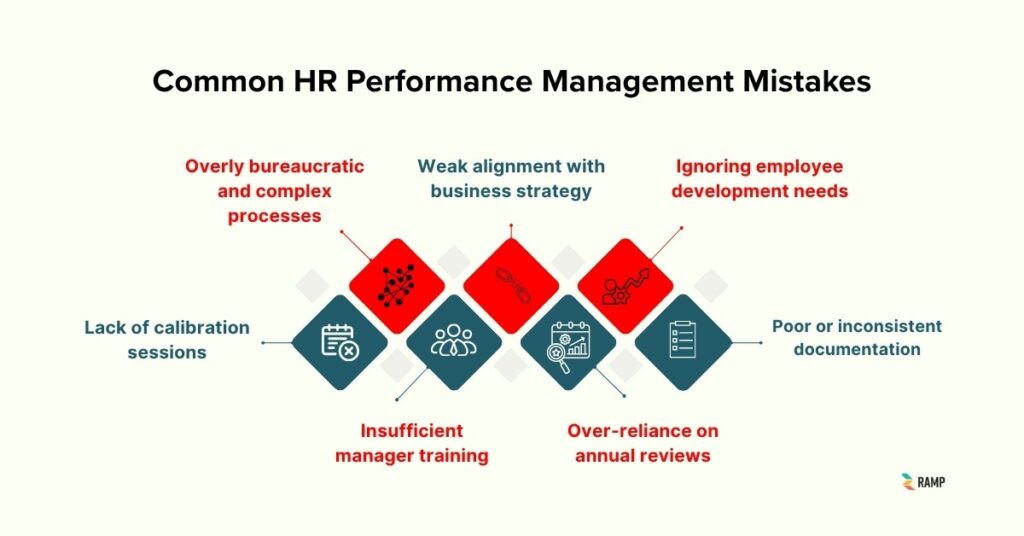
These mistakes reduce system credibility and effectiveness.
HR Performance Maturity Model
This model reflects how HR evolves in its performance management. The diagram shows the HR performance maturity model.
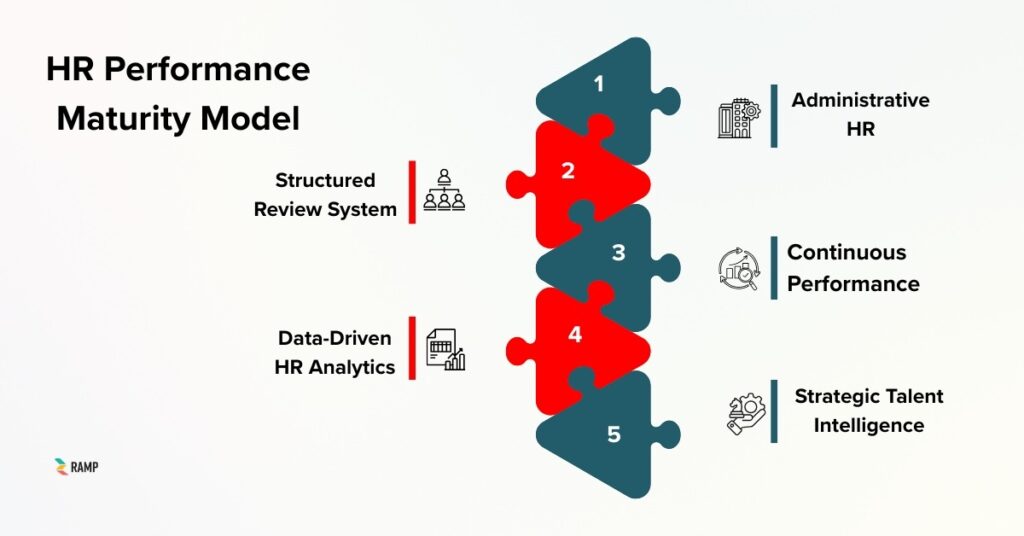
The details include:
- Level 1 – Administrative HR: Basic record-keeping, minimal structure
- Level 2 – Structured Review System: Formal annual reviews implemented
- Level 3 – Continuous Performance: Regular feedback and check-ins
- Level 4 – Data-Driven HR Analytics: Decisions based on measurable insights
- Level 5 – Strategic Talent Intelligence: Predictive and strategic workforce planning
Higher maturity levels indicate stronger business impact.
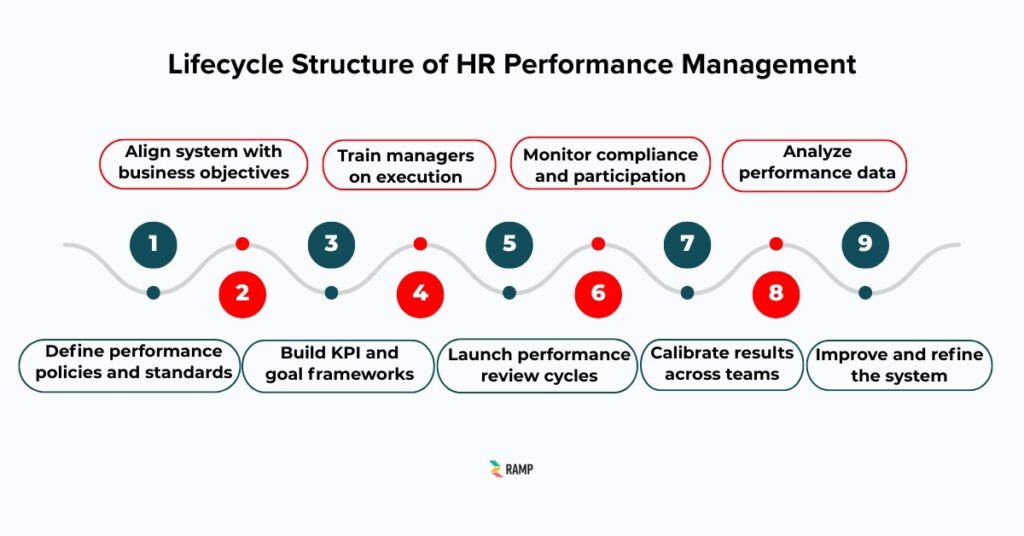
Lifecycle Structure of HR Performance Management
HR follows a structured process to manage performance effectively:
- Define performance policies and standards
- Align system with business objectives
- Build KPI and goal frameworks
- Train managers on execution
- Launch performance review cycles
- Monitor compliance and participation
- Calibrate results across teams
- Analyze performance data
- Improve and refine the system
The diagram summarizes the lifecycle of HR Performance Management.