

A peer review is a performance evaluation method in which coworkers assess an employee's collaboration, communication, teamwork, reliability, and contribution within a team environment. Because peers often work closely together on daily tasks and projects, they can provide valuable insights into interpersonal skills and work habits that managers may not fully observe. Peer reviews are commonly used to strengthen teamwork, improve collaboration, and support a more balanced evaluation process.
Research on performance feedback and peer effects explains that feedback from peers can influence employee effort, productivity, and workplace behavior. The chapter highlights that peer effects may work through social learning, comparison, pressure, and teamwork dynamics. This supports the value of peer performance reviews because coworkers often observe daily collaboration and can provide practical feedback that helps employees improve.
How Peer Performance Reviews Work?
Peer performance reviews usually follow a structured process to maintain fairness, consistency, and constructive feedback. The diagram below shows the process of peer performance review.
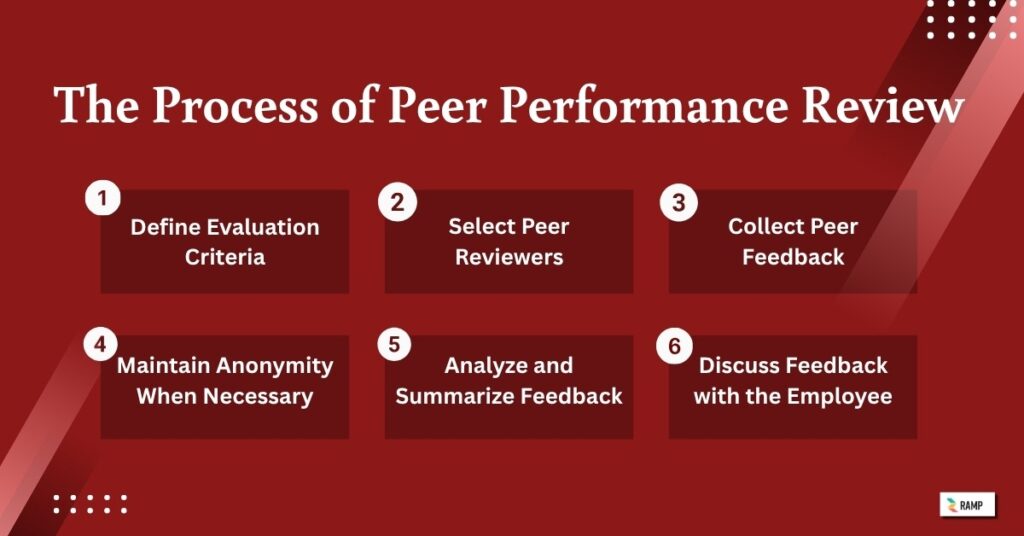
The details of the process are given below.
1. Define Evaluation Criteria
Organizations first establish the areas that peers should evaluate.
Common evaluation categories include:
- Teamwork
- Communication
- Reliability
- Collaboration
- Problem-solving
- Professional behavior
- Leadership support
- Work quality
Clear criteria help reviewers focus on observable workplace behaviors instead of personal opinions.
2. Select Peer Reviewers
Managers or HR teams choose coworkers who regularly work with the employee being evaluated.
Reviewers may include:
- Team members
- Project collaborators
- Cross-functional colleagues
- Senior peers
The selected peers should have enough interaction with the employee to provide meaningful feedback.
3. Collect Peer Feedback
Peers complete structured feedback forms or surveys.
Feedback may include:
- Strengths
- Improvement areas
- Collaboration experiences
- Communication effectiveness
- Team contribution examples
Organizations often encourage reviewers to provide specific examples instead of vague comments.
4. Maintain Anonymity When Necessary
Many organizations anonymize peer feedback to encourage honesty and reduce workplace tension.
Anonymous reviews help peers:
- Share constructive criticism openly
- Avoid fear of retaliation
- Provide more balanced feedback
However, organizations should still monitor comments to prevent misuse or inappropriate behavior.
5. Analyze and Summarize Feedback
Managers or HR teams review the feedback to identify patterns and recurring themes.
They typically look for:
- Consistent strengths
- Repeated concerns
- Behavioral trends
- Collaboration effectiveness
- Communication patterns
The goal is to evaluate overall trends rather than isolated opinions.
6. Discuss Feedback with the Employee
The manager discusses the summarized feedback with the employee during the review meeting.
The discussion may focus on:
- Positive contributions
- Team relationships
- Development opportunities
- Workplace behavior
- Improvement plans
Constructive communication is essential to maintain trust and employee motivation.
Advantages of Peer Performance Reviews
Peer reviews offer several important benefits in modern workplaces. The diagram below shows the advantages of peer performance reviews.
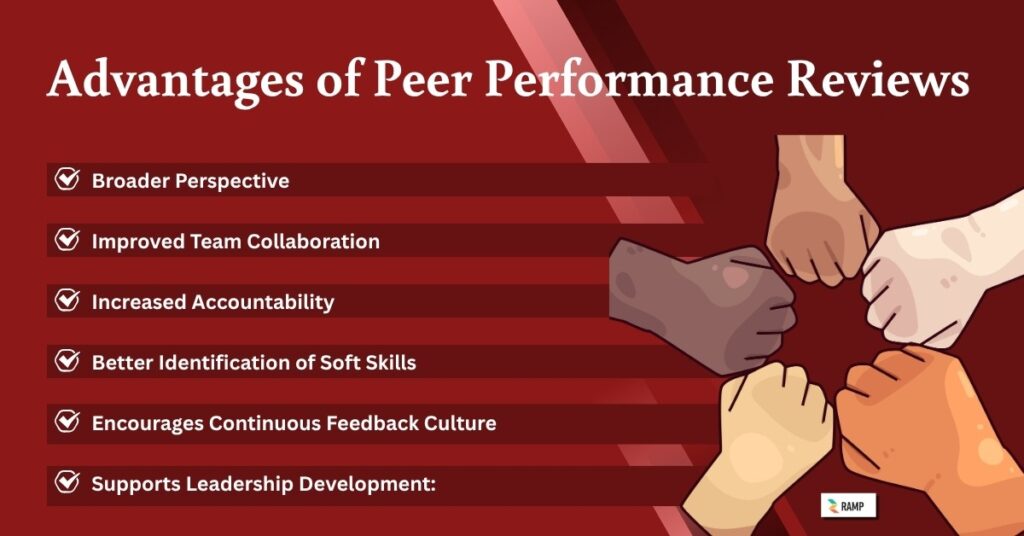
The details of the advantages include:
- Broader Perspective: Coworkers often observe daily behaviors and teamwork more closely than managers.
- Improved Team Collaboration: Employees become more aware of how their actions affect coworkers and team performance.
- Increased Accountability: Knowing peers may provide feedback often encourages stronger workplace behavior and cooperation.
- Better Identification of Soft Skills: Peer reviews help evaluate communication, collaboration, adaptability, and teamwork more effectively.
- Encourages Continuous Feedback Culture: The process promotes open communication and stronger workplace relationships.
- Supports Leadership Development: Peer feedback helps identify informal leadership skills and influence within teams.
Disadvantages of Peer Performance Reviews
Despite their benefits, peer reviews also have challenges. The diagram below shows the challenges of peer performance reviews.
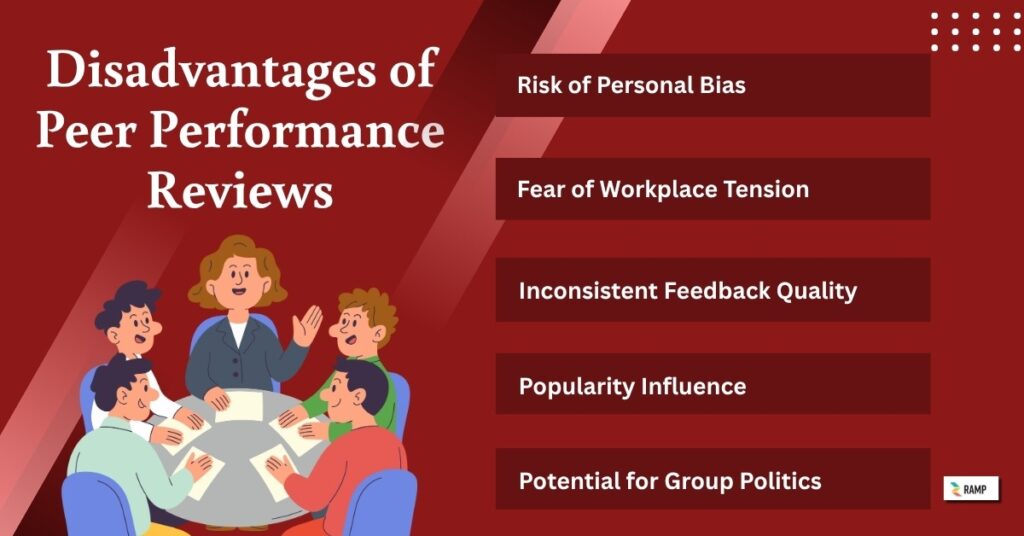
The disadvantages are explained further below.
- Risk of Personal Bias: Friendships, conflicts, or competition may bias evaluations.
- Fear of Workplace Tension: Employees may hesitate to provide honest feedback to avoid damaging relationships.
- Inconsistent Feedback Quality: Some peers provide thoughtful input, while others may submit vague or emotional comments.
- Popularity Influence: Well-liked employees may receive overly positive feedback regardless of actual performance.
- Potential for Group Politics: Team dynamics and internal conflicts can affect the accuracy of reviews.
Common Bias Risks
Several biases can reduce the fairness and credibility of peer performance reviews. The diagram below shows the common biases in peer performance reviews.
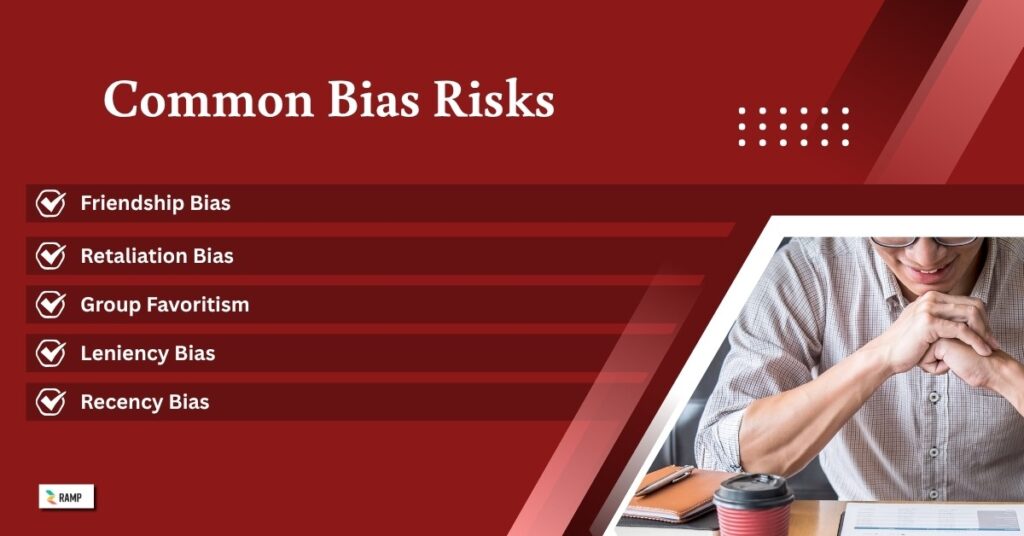
The peer performance biases are explained in detail below.
- Friendship Bias: Coworkers may give overly positive feedback to close friends.
- Retaliation Bias: Personal conflicts may lead to unfairly negative evaluations.
- Group Favoritism: Employees belonging to certain social or departmental groups may receive more favorable reviews.
- Leniency Bias: Some reviewers avoid criticism and rate everyone too positively.
- Recency Bias: Peers may focus only on recent events rather than overall performance.
Organizations should actively manage these risks to maintain fairness and trust.
Safeguards for Effective Peer Performance Reviews
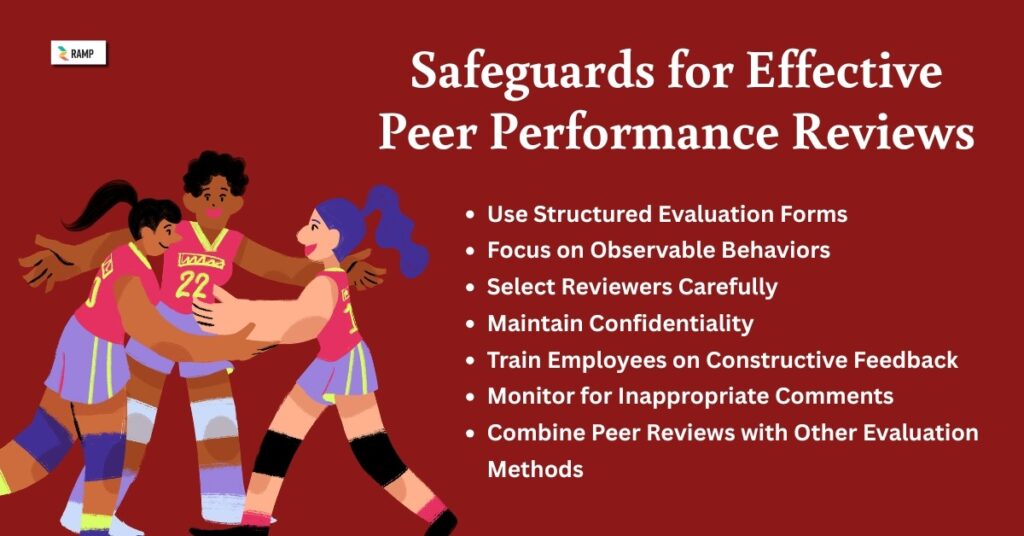
Strong safeguards help improve review quality and reduce bias. The diagram below lists the safeguards for effective peer performance reviews.
The details are given below.
- Use Structured Evaluation Forms: Standardized questions improve consistency and focus.
- Focus on Observable Behaviors: Feedback should address work-related actions and collaboration rather than personality traits.
- Select Reviewers Carefully: Only peers with meaningful working relationships should participate.
- Maintain Confidentiality: Anonymous or confidential systems encourage honest feedback.
- Train Employees on Constructive Feedback: Employees should understand how to provide professional and balanced evaluations.
- Monitor for Inappropriate Comments: Managers or HR teams should review feedback before sharing it.
- Combine Peer Reviews with Other Evaluation Methods: Peer reviews work best alongside manager reviews, self-assessments, or performance metrics.
When to Use Peer Performance Reviews
Peer reviews are most effective when teamwork and collaboration strongly influence job performance.
They are commonly used for:
- Team-based environments
- Cross-functional projects
- Leadership development
- Agile work cultures
- Collaborative organizations
- Continuous feedback systems
Organizations focused on communication and teamwork often benefit significantly from peer evaluations.
Best Roles for Peer Performance Reviews
Peer reviews work especially well for roles involving frequent interaction and collaboration.
Common Examples
- Software development teams
- Project managers
- Customer service teams
- Marketing professionals
- Creative teams
- Healthcare teams
- Research groups
- Agile and cross-functional teams
These roles depend heavily on cooperation, communication, and teamwork.
Situations Where Peer Performance Reviews May Not Work Well
Peer reviews may be less effective in certain workplace situations.
- Highly Competitive Environments: Employees competing for promotions or rewards may provide biased feedback.
- Weak Workplace Trust: Poor organizational culture may discourage honest communication.
- Limited Team Interaction: Employees working independently may not have enough peer interaction for accurate evaluation.
- Small Teams: Very small teams may struggle to maintain anonymity and objectivity.
- Poor Feedback Skills: Untrained employees may provide emotional, vague, or unhelpful feedback.
In these situations, organizations should use peer reviews carefully and combine them with other evaluation methods.
Peer performance reviews provide valuable insight into teamwork, collaboration, communication, and workplace behavior from coworkers who interact closely with employees every day. When structured properly, they improve accountability, strengthen team relationships, and create a more balanced evaluation process.
However, their success depends on fairness, confidentiality, clear evaluation criteria, and a strong feedback culture. When combined with manager reviews and continuous feedback systems, peer performance reviews become an effective tool for employee development and organizational growth.