
Positive feedback reinforces effective behaviours and results, encouraging continued performance, strengthening employee confidence, and supporting long-term growth within the workplace.
It is most effective when it is specific, timely, and connected to observable actions rather than general praise. Employees are more likely to repeat strong behaviours when they clearly understand what they did well and why it mattered.
A study on positive feedback, feedback seeking, and performance found that positive feedback from supervisors can improve employee performance while encouraging employees to seek further guidance. Feedback-seeking partly explains how positive recognition leads to better results. The benefits are even stronger among employees who are willing to receive, process, and apply feedback, highlighting the importance of developing a positive feedback orientation.
The SBI Framework: Situation–Behaviour–Impact
One of the most effective ways to give positive feedback is the SBI framework. The diagram below portrays the framework:
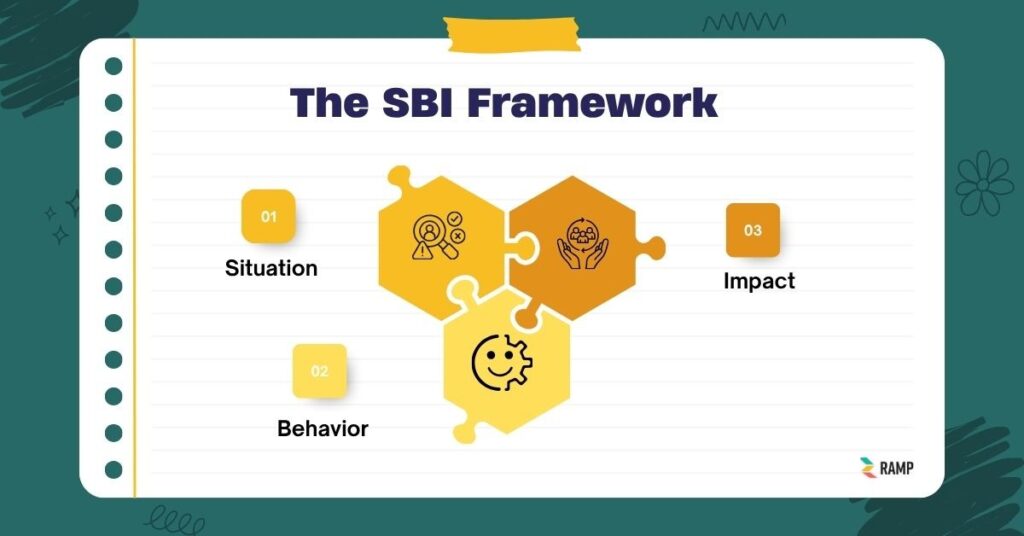
The following section explains each part of the framework.
- Situation — Describe where or when the behaviour happened.
- Behaviour — Explain the specific action you observed.
- Impact — Describe the positive result or outcome.
This structure keeps feedback clear, objective, and meaningful.
SBI Example
Situation: During Monday's client presentation
Behaviour: You explained the project timeline clearly and answered questions confidently.
Impact: The client approved the proposal more quickly, and the team gained greater credibility.
Example Using the Required Sentence Starters
"In Monday’s client meeting, I observed how clearly you handled the customer’s concerns and kept the discussion organized."
"Your clear communication increased client confidence and accelerated project approval."
Why Positive Feedback Matters
Positive feedback supports both employee performance and workplace culture.
It helps:
- Reinforce productive behaviors
- Improve employee motivation
- Build confidence and morale
- Strengthen communication
- Encourage accountability
- Increase employee engagement
Employees who feel recognized are often more committed to maintaining strong performance.
Characteristics
Effective positive feedback should be clear, genuine, and focused on specific actions or results so employees understand exactly what behaviours should be continued and reinforced. The diagram below shows the characteristics of effective positive feedback.
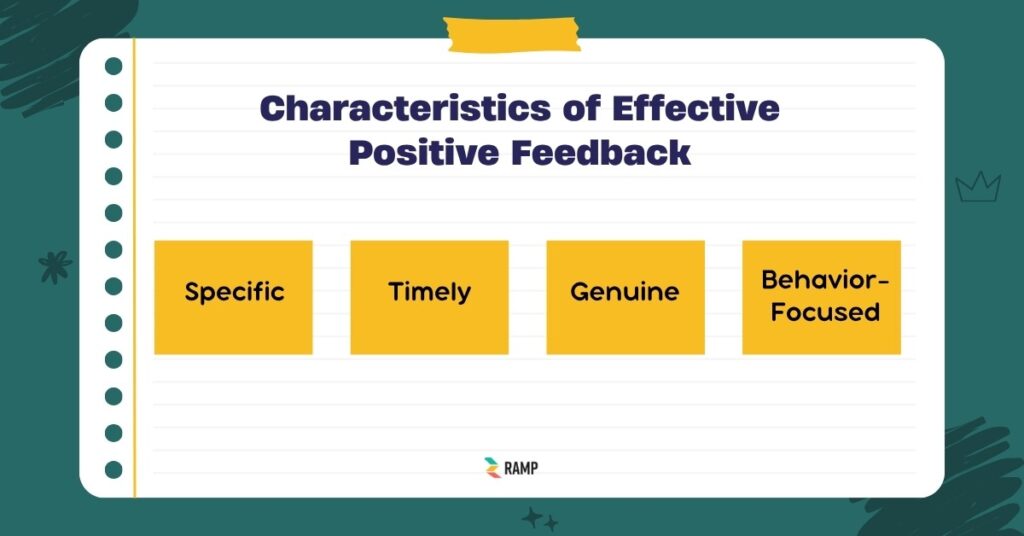
The characteristics are explained in detail below.
- Specific: Focus on clear actions instead of vague praise.
Weak Example: "Great work."
Better Example: "Your detailed project update helped the team identify risks early and stay on schedule."
- Timely: Give feedback close to the actual event so the behaviour is easier to connect and repeat.
- Genuine: Feedback should feel honest and meaningful rather than forced or overly generic.
- Behaviour-Focused: Focus on observable actions and results instead of personality traits.
When to Use Positive Feedback
Positive feedback works best when organizations want to reinforce valuable behaviours and encourage continued improvement.
Use Positive Feedback When:
- Employees achieve important goals
- Strong teamwork or leadership is demonstrated
- Employees improve performance noticeably
- Someone handles a difficult situation effectively
When Not to Use Positive Feedback
Positive feedback becomes less effective when it is exaggerated, unclear, or used to avoid necessary constructive conversations.
Avoid Positive Feedback When:
- Praise is vague or insincere
- Serious performance problems are being ignored
- Feedback is unrelated to actual performance
- Recognition is given inconsistently or unfairly
The chart below summarizes when to use positive feedback and when not to.
| When to Use Positive Feedback | When Not to Use Positive Feedback |
| Employees achieve important goals | Praise is vague or insincere |
| Strong teamwork or leadership is demonstrated | Serious performance problems are being ignored |
| Employees improve performance noticeably | Feedback is unrelated to actual performance |
| Someone handles a difficult situation effectively | Recognition is given inconsistently or unfairly |
Sentence Starters for Positive Feedback
Simple sentence starters help managers communicate more clearly and professionally.
Recommended Examples
- "In [situation], I observed…"
- "The impact was…"
- "One thing you handled especially well was…"
- "Your approach helped the team by…"
- "A strong example of your contribution was…"
These phrases encourage evidence-based and balanced communication.
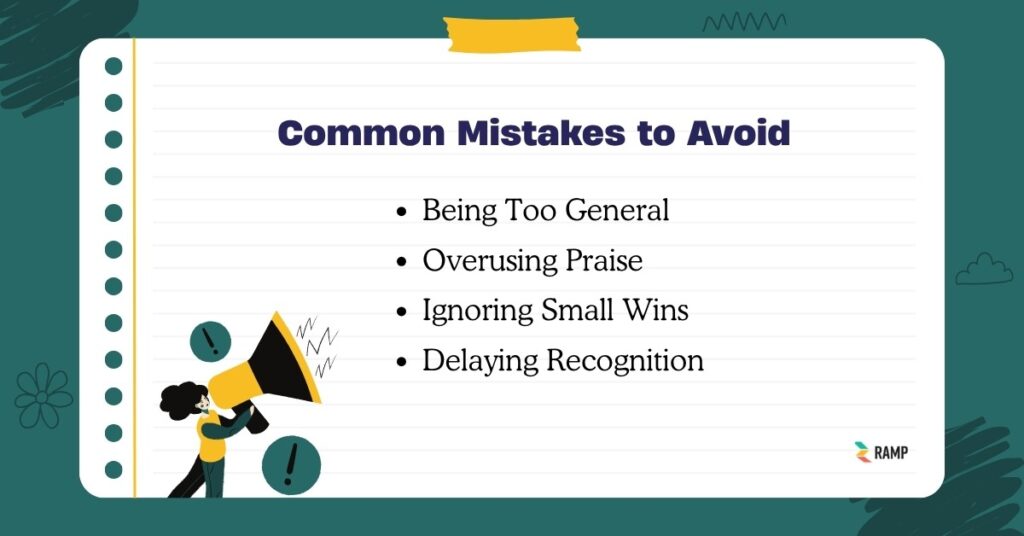
Common Mistakes to Avoid
Organizations should avoid several common problems when giving feedback positively.
- Being Too General: Vague praise provides little learning value.
- Overusing Praise: Constant praise without substance may feel artificial.
- Ignoring Small Wins: Consistently recognizing smaller achievements also improves motivation.
- Delaying Recognition: Late feedback loses emotional impact and relevance.
The diagram below shows the common mistakes to avoid when giving feedback positively.
Positive feedback is an important tool for reinforcing strong performance, improving employee confidence, and building a healthier workplace culture. When delivered using clear structures such as the SBI framework, feedback becomes more meaningful, objective, and actionable.
Use this inside 1:1s and performance reviews to reduce bias.