
Coaching models are structured frameworks that guide coaching conversations and support employee development. They provide a clear process for helping employees identify goals, overcome challenges, develop skills, and improve performance in a systematic and consistent manner.
For managers, coaching models serve as practical tools to organize discussions, clarify objectives, encourage self-reflection, and develop action plans for improvement. Rather than relying solely on informal conversations, these frameworks provide a structured approach that makes coaching more effective and results-oriented.
Several coaching models are widely used in leadership and management development. Each model offers a different approach to guiding conversations, solving problems, and supporting employee growth. The coaching models covered in this article include GROW, OSKAR, CLEAR, FUEL, and STEPPA Models. Together, these frameworks help managers strengthen coaching skills, improve employee performance, and foster continuous learning and development within their teams.
Research also highlights that coaching models provide structured frameworks that make coaching conversations more purposeful and consistent. Rather than relying on informal guidance, these models help coaches set clear goals, encourage self-reflection, explore solutions, and create actionable development plans tailored to individual needs. This structured approach improves both learning and long-term performance outcomes.
GROW Model
The GROW Model is a structured coaching framework that guides conversations toward goal achievement and performance improvement. It provides a simple, step-by-step process that helps employees identify objectives, assess their current situation, explore possible solutions, and create a plan for moving forward.
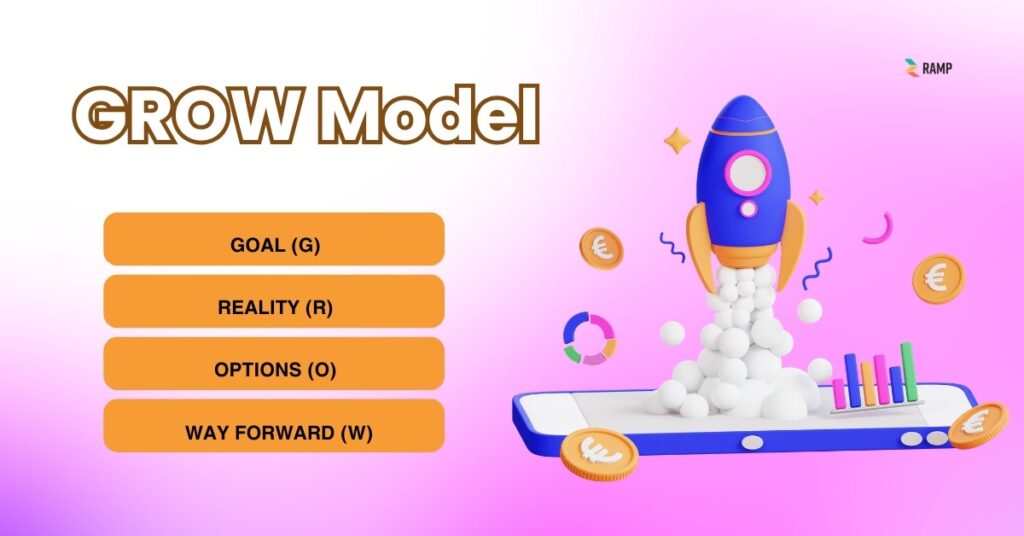
The diagram below shows the four stages of the GROW model.
The stages of the GROW model are explained in detail below.
- Goal (G): Define the objective or desired outcome the employee wants to achieve.
- Reality (R): Examine the current situation, challenges, resources, and factors affecting progress.
- Options (O): Explore possible solutions, alternatives, and actions that could help achieve the goal.
- Way Forward (W): Decide on specific actions, commitments, timelines, and next steps.
By moving through these stages, the GROW Model encourages structured thinking, problem-solving, and accountability. It helps employees clarify objectives, identify practical solutions, and develop actionable plans that support both performance improvement and long-term development.
CIGAR Coaching Model
The CIGAR Model is a coaching framework that focuses on identifying desired outcomes and reviewing progress toward achieving them. It helps employees understand where they are now, where they want to be, and the actions needed to close the gap between the two. The model is commonly used to support performance improvement, problem-solving, and employee development.
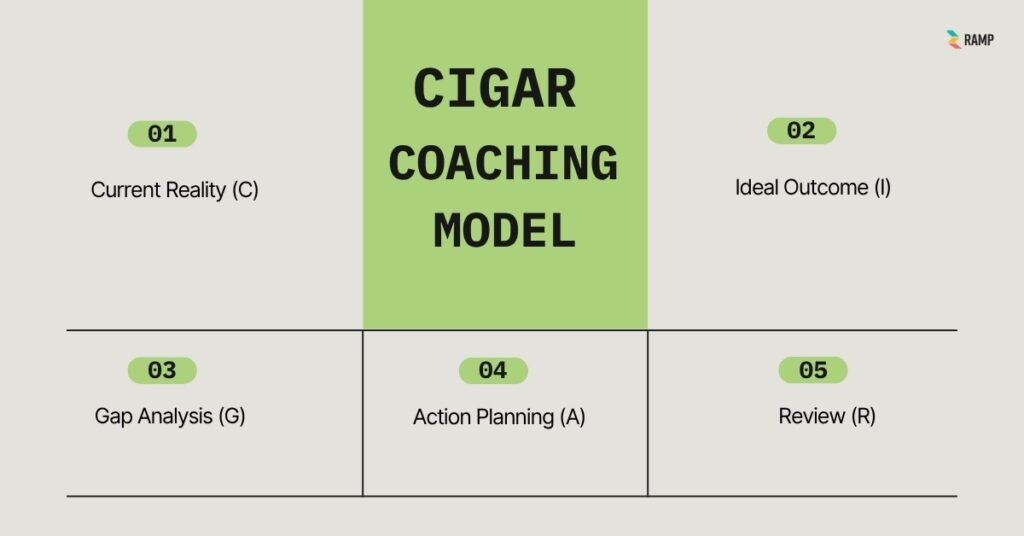
The diagram below shows the stages of the CIGAR coaching model.
The CIGAR Model consists of five main steps:
- Current Reality (C): Assess the present situation, including challenges, strengths, and existing circumstances.
- Ideal Outcome (I): Define the desired result or future state that the employee wants to achieve.
- Gap Analysis (G): Identify the differences between the current reality and the ideal outcome.
- Action Planning (A): Develop specific actions and strategies to close the identified gap.
- Review (R): Evaluate progress, discuss results, and determine any adjustments needed to continue moving forward.
By following these steps, the CIGAR Model provides a structured approach to coaching conversations. It helps managers and employees analyze challenges, identify opportunities for improvement, and create practical action plans that support continuous growth and performance improvement.
OSKAR Coaching Model
The OSKAR Model is a solution-focused coaching approach designed to identify strengths, encourage progress, and support practical improvements. Rather than concentrating primarily on problems, the model helps employees focus on what is working well, what resources are available, and what actions can move them closer to their desired outcomes.
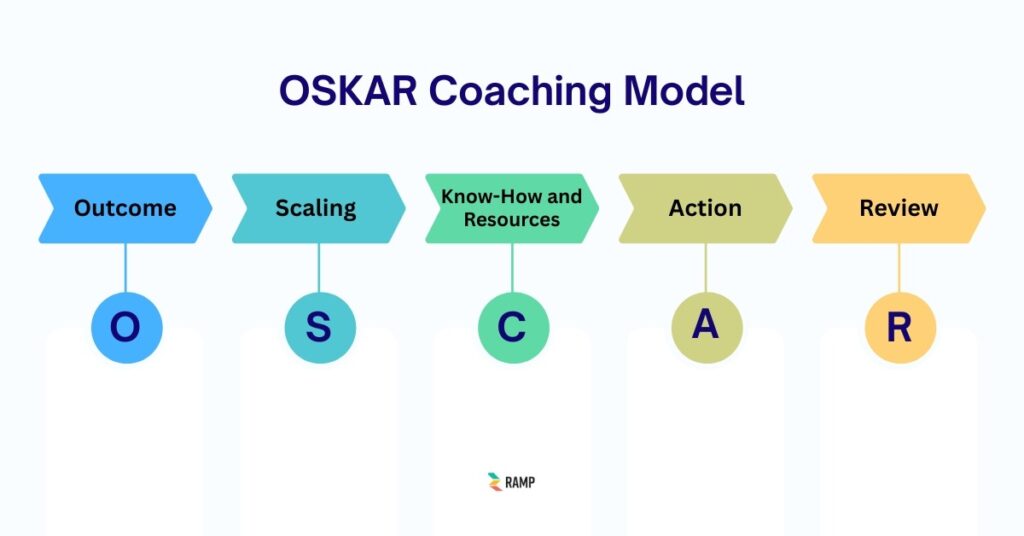
The diagram below shows the stages of the OSKAR coaching model.
The OSKAR Model consists of five key elements:
- Outcome (O): Define the desired result or goal that the employee wants to achieve.
- Scaling (S): Assess current progress by measuring the employee's position relative to the desired outcome.
- Know-How and Resources (K): Identify existing strengths, skills, knowledge, and resources that can support success.
- Action (A): Develop specific actions and next steps to achieve the desired outcome.
- Review (R): Evaluate progress, discuss results, and determine whether adjustments or additional actions are needed.
By focusing on strengths, resources, and achievable actions, the OSKAR Model encourages constructive conversations and continuous improvement. It emphasizes positive development, builds confidence, and helps employees make meaningful progress through realistic and attainable improvements.
CLEAR Coaching Model
The CLEAR Model is a coaching framework designed to support reflective and collaborative coaching conversations. It provides a structured approach that encourages open dialogue, active participation, and thoughtful problem-solving, helping employees gain deeper insights into their challenges and opportunities for growth.
The diagram below shows the stages of the CLEAR coaching model.
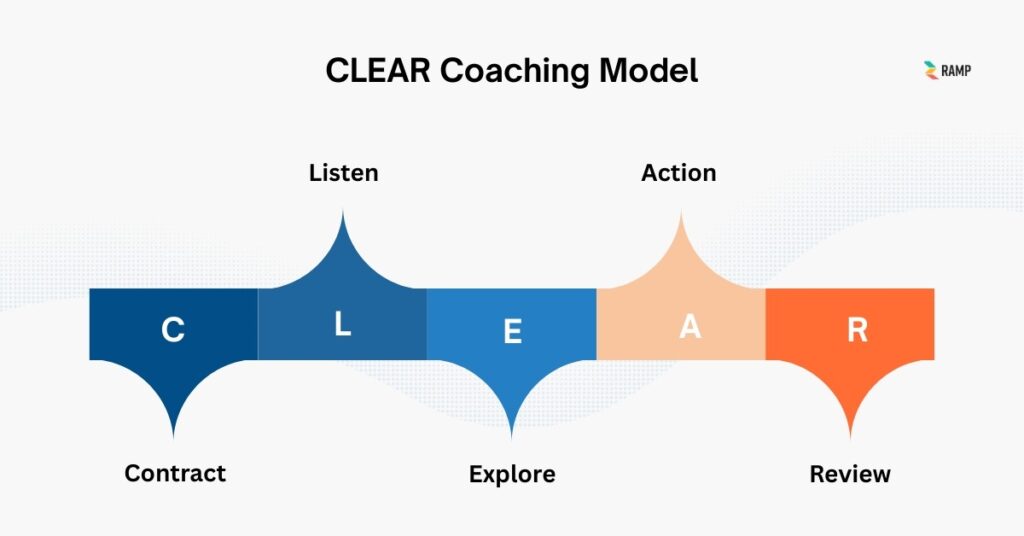
The model consists of five stages:
- Contract (C): Establish the purpose, goals, and expectations for the coaching conversation.
- Listen (L): Actively listen to the employee's perspectives, concerns, and experiences to gain a clear understanding of the situation.
- Explore (E): Examine possibilities, challenges, assumptions, and potential solutions through discussion and reflection.
- Action (A): Agree on specific actions, commitments, and next steps to move toward the desired outcome.
- Review (R): Assess progress, evaluate results, and discuss any adjustments needed to support continued improvement.
By following these stages, the CLEAR Model creates a structured yet flexible coaching process that promotes meaningful dialogue and employee engagement. It encourages deeper understanding, supports collaborative problem-solving, and ensures consistent follow-up to reinforce learning and development.
FUEL Coaching Model
The FUEL Model is a coaching approach used to guide performance discussions and development planning. It provides managers with a structured framework for helping employees assess their current situation, explore improvement opportunities, and create actionable plans that support growth and performance.
The diagram below shows the stages of the FUEL coaching model.
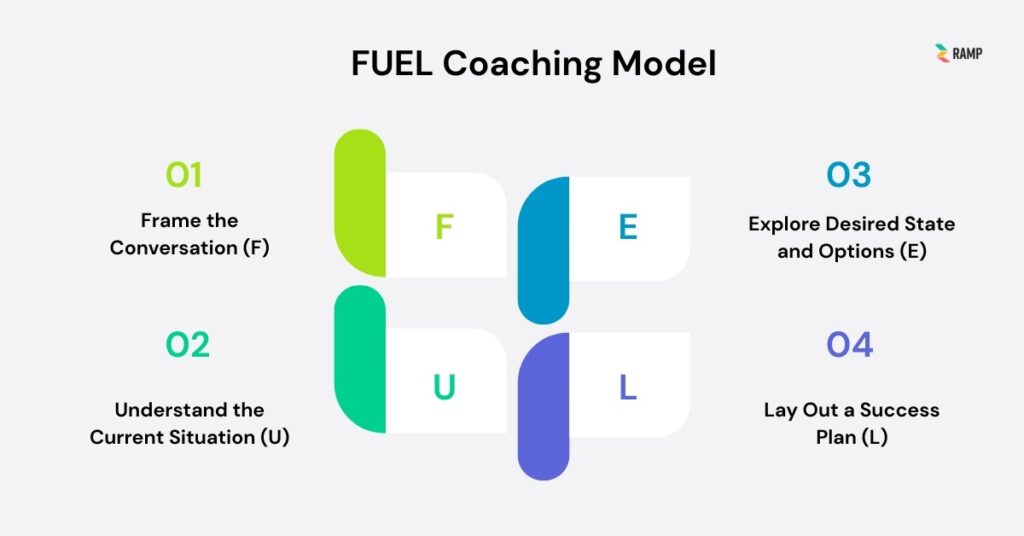
The model consists of four key stages:
- Frame the Conversation (F): Establish the purpose of the discussion, clarify expectations, and foster a positive coaching environment.
- Understand the Current Situation (U): Explore the employee's current performance, challenges, strengths, and perspectives to gain a clear understanding of the situation.
- Explore Desired State and Options (E): Identify goals, consider possible solutions, and discuss different approaches for achieving the desired outcome.
- Lay Out a Success Plan (L): Develop a clear action plan that includes specific steps, responsibilities, timelines, and measures of success.
By following these stages, the FUEL Model helps managers structure productive coaching discussions that encourage reflection, support problem-solving, and promote continuous employee development. The framework creates clear direction while ensuring that coaching conversations lead to meaningful action and measurable improvement.