

Employee engagement is the level of emotional commitment, mental involvement, and behavioral effort employees invest in their work and organization. It reflects how connected employees feel to organizational goals, how motivated they are to contribute, and how actively they participate in achieving business success beyond basic job requirements.
Why is it important?
Employee engagement matters because it directly influences both employee behavior and overall organizational performance. Engaged employees are more committed to their work, more connected to organizational goals, and more willing to contribute beyond minimum expectations. As a result, employee engagement affects operational efficiency, workforce stability, leadership effectiveness, customer relationships, and long-term business success. For this reason, organizations increasingly treat engagement as a strategic business priority rather than only an HR initiative.
Productivity
Highly engaged employees typically demonstrate greater focus, accountability, and effort. They are more likely to complete tasks efficiently, manage their responsibilities proactively, and consistently contribute to team objectives.
Retention
Strong engagement improves employee loyalty and reduces voluntary turnover. Employees who feel valued, supported, and connected to the organization are more likely to remain with the company long term.
Absenteeism
Engaged employees generally demonstrate lower absenteeism because they feel more committed to their responsibilities and workplace relationships. Disengagement, in contrast, is often associated with withdrawal behaviours and reduced attendance.
Performance Quality
Employee engagement improves the quality of work by increasing attention to detail, ownership, consistency, and commitment to high standards. Engaged employees are more likely to care about outcomes and continuous improvement.
Collaboration
Engaged employees tend to communicate more effectively, support coworkers, and participate actively in team activities. This strengthens collaboration, trust, and coordination across departments and projects.
Innovation
Employees who feel psychologically connected to the organization are more willing to share ideas, solve problems creatively, and participate in improvement initiatives. Engagement encourages initiative and innovation rather than passive task completion.
Customer Experience
Employee engagement often directly impacts customer satisfaction. Engaged employees usually provide better service, respond more positively to customer needs, and contribute to stronger client relationships and brand reputation.
Culture Strength
High engagement reinforces a positive workplace culture built on trust, accountability, communication, and shared purpose. Engaged employees help maintain healthy organizational norms and influence overall workplace morale.
Manager Effectiveness
Managers play a major role in shaping engagement through communication, feedback, recognition, and leadership behaviour. At the same time, engagement levels can also reflect how effectively managers support, guide, and develop their teams.
Business Performance
Organizations with strong employee engagement often experience better operational performance, stronger workforce stability, higher customer loyalty, improved productivity, and better long-term business outcomes. Because engagement influences multiple areas of organizational effectiveness, it is considered a critical driver of sustainable business performance.
Dimensions of Employee Engagement
There are three dimensions of employee engagement as shown in the diagram below.
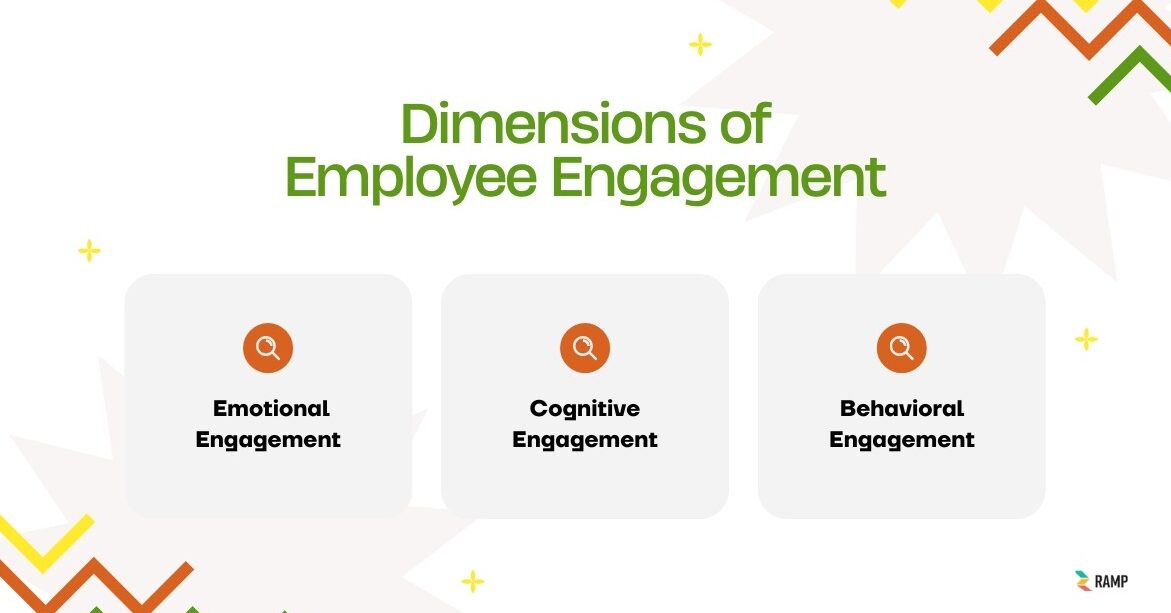
The dimensions are explained in detail below.
1️⃣ Emotional Engagement
Emotional engagement refers to the employee's emotional connection to the organization, its mission, values, leadership, and team environment. Engaged employees feel a sense of belonging, trust organizational leadership, and take pride in contributing to company success.
2️⃣ Cognitive Engagement
Cognitive engagement focuses on the employee's mental involvement in work. It reflects how clearly employees understand organizational goals, job expectations, performance standards, and the importance of their role within the broader business strategy.
3️⃣ Behavioral Engagement
Behavioral engagement is demonstrated through visible workplace actions such as initiative, extra effort, collaboration, productivity, accountability, and willingness to contribute beyond minimum job requirements. Highly engaged employees often exhibit proactive, positive work behaviors.
How does employee engagement affect performance?
Employee engagement directly influences employee performance, workplace behavior, and long-term retention. Engaged employees are emotionally connected to their work, mentally invested in organizational goals, and behaviorally willing to contribute beyond minimum expectations. As a result, engagement affects both individual effectiveness and overall team performance.
Employees with high engagement are more likely to perform well because they show greater focus, accountability, and commitment to quality work. They often take ownership of responsibilities, solve problems proactively, and consistently contribute toward organizational objectives. Engaged employees also collaborate more effectively with coworkers, communicate openly, and support shared team goals rather than focusing only on individual tasks.
Strong engagement also improves adaptability and learning behavior. Employees who feel connected to the organization are generally more willing to accept change, participate in training programs, develop new skills, and contribute ideas for improvement and innovation. They are more likely to engage in professional development opportunities because they see personal growth as connected to organizational success.
Employee engagement also plays a major role in retention. Engaged employees typically experience a stronger sense of belonging, trust, and purpose within the workplace, making them more likely to remain with the organization over time. High engagement reduces voluntary turnover by increasing employee commitment and satisfaction with the work environment.
In contrast, low employee engagement can create serious organizational challenges. Disengaged employees may become emotionally disconnected from their work, contribute only minimal effort, and gradually withdraw from team participation. This can lead to reduced productivity, weaker collaboration, lower work quality, and declining morale across teams.
Low engagement is also closely associated with quiet quitting, in which employees fulfill only basic job requirements without additional involvement or initiative. Over time, disengagement may contribute to burnout, frustration, absenteeism, and increased turnover intentions. Employees who feel unsupported, disconnected, or undervalued are more likely to leave the organization or negatively affect team dynamics and overall workplace performance.
The article "Employee Turnover: 18 Key Causes & Reasons You Must Know" explains that employee turnover is often linked to workplace issues such as poor organizational culture, limited career growth, weak management, lack of recognition, burnout, and poor work-life balance. These factors are closely connected to employee engagement because employees are more likely to stay when they feel valued, supported, and connected to their work. This supports the importance of improving engagement strategies to reduce turnover risk and build a more stable, motivated workforce.
Key Drivers of Employee Engagement
The diagram below shows the key drivers of employee engagement.
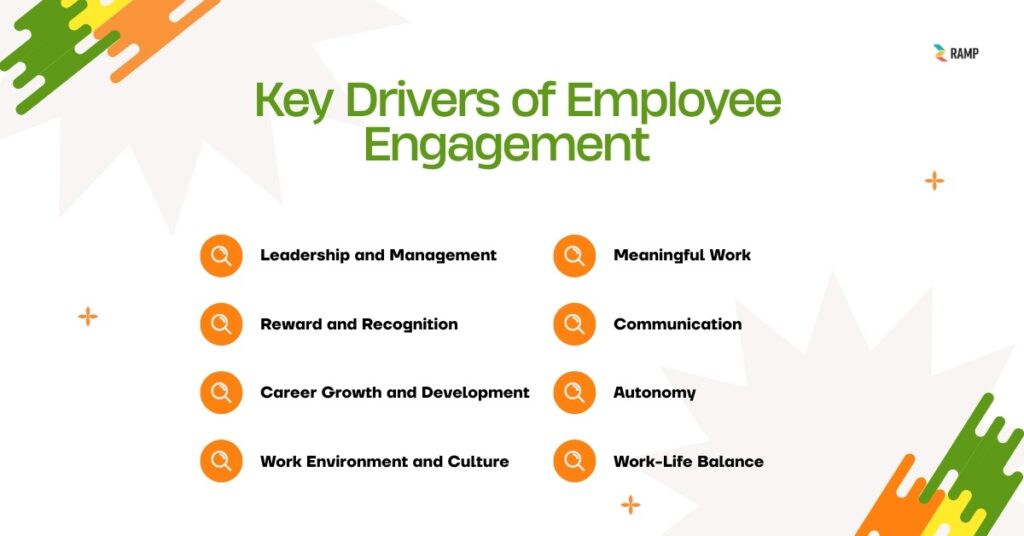
The details of the drivers of employee engagement are given below.
Leadership and Management
Leadership and management refer to how organizational leaders and supervisors guide, support, communicate with, and influence employees. Strong leadership is one of the most important drivers of employee engagement because employees often connect their workplace experience directly to management behavior. Managers who provide clear direction, regular feedback, fairness, support, and trust help employees feel valued and motivated. Effective leadership also strengthens confidence in organizational goals, improves communication, and creates a positive work environment where employees are more willing to contribute actively.
Reward and Recognition
Recognition and reward involve acknowledging employee contributions, achievements, effort, and performance through both formal and informal methods. This may include praise, incentives, bonuses, promotions, or appreciation from managers and peers. Recognition drives employee engagement because employees are more likely to remain motivated when they feel their work is noticed and appreciated. Consistent recognition reinforces positive behaviors, increases morale, and encourages employees to maintain high levels of commitment and performance.
Career Growth and Development
Career growth and development refer to opportunities for employees to improve skills, gain knowledge, advance professionally, and achieve long-term career goals within the organization. Development opportunities may include training, mentoring, promotions, certifications, or leadership programs. Employees are generally more engaged when they believe the organization invests in their future and provides advancement opportunities. Growth opportunities create a sense of progress, purpose, and long-term commitment to the organization.
Work Environment and Culture
Work environment and culture describe the physical, social, and psychological conditions employees experience in the workplace, including organizational values, communication styles, relationships, and behavioral norms. A positive workplace culture promotes trust, inclusion, collaboration, respect, and psychological safety. This directly influences employee engagement because employees are more likely to participate actively and remain committed when they feel comfortable, supported, and respected within the organization.
Meaningful Work
Purpose and meaningful work refer to the extent to which employees believe their work has value, importance, and a positive impact. Employees are more engaged when they understand how their role contributes to organizational goals, customers, teams, or society. Meaningful work creates emotional connection and intrinsic motivation, helping employees feel that their efforts matter beyond completing routine tasks. A strong sense of purpose often increases commitment, enthusiasm, and long-term engagement.
Communication
Communication refers to the exchange of information, expectations, feedback, and organizational updates between leaders, managers, and employees. Clear, transparent communication is a major driver of engagement because employees need to understand goals, responsibilities, changes, and organizational priorities. Open communication also builds trust, reduces uncertainty, and encourages employee participation. Organizations with strong communication practices often experience better collaboration, alignment, and employee involvement.
Autonomy
Autonomy refers to the level of independence and control employees have over how they perform their work, make decisions, and manage responsibilities. Employees who are trusted to use their judgment and skills often feel more empowered and accountable. Autonomy drives engagement by increasing ownership, confidence, creativity, and motivation. Employees are generally more invested in their work when they feel trusted rather than excessively controlled or micromanaged.
Work-Life Balance
Work-life balance refers to the ability of employees to manage professional responsibilities alongside personal life, family needs, health, and well-being. Organizations support work-life balance through flexible schedules, manageable workloads, leave policies, remote work options, and wellness support. Work-life balance affects employee engagement because employees who feel overwhelmed or exhausted are more likely to experience stress and disengagement. In contrast, balanced employees often demonstrate higher energy, stronger focus, improved well-being, and greater long-term commitment to their work.
Employee Engagement Strategies
Improving employee engagement requires a structured organizational system rather than isolated perks or short-term initiatives. Sustainable engagement develops when organizations consistently create conditions that support communication, trust, development, recognition, inclusion, and meaningful work. Effective engagement strategies focus on strengthening the daily employee experience and the quality of workplace relationships across all levels of the organization.
The diagram below shows the employee engagement strategies.
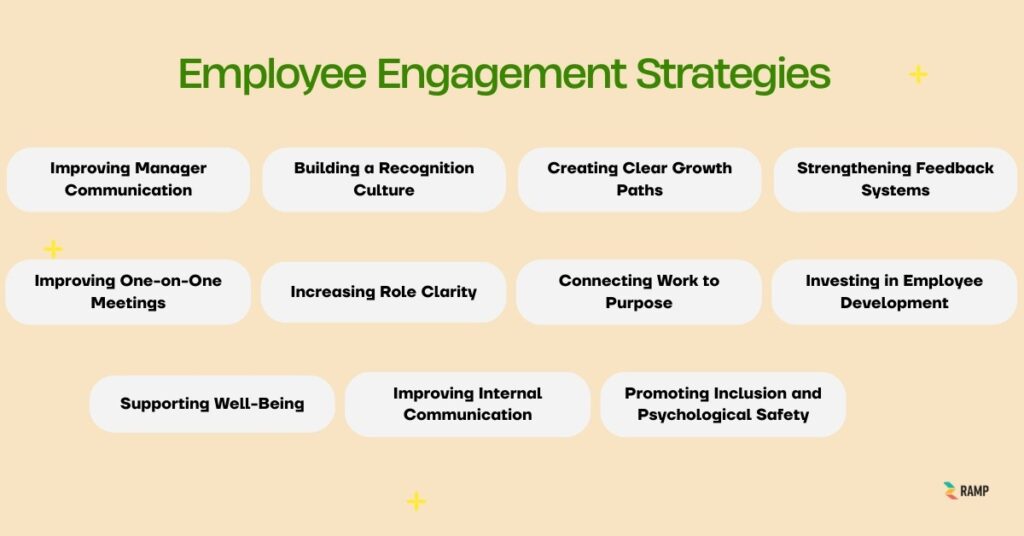
The details of the employee engagement strategies are given below.
Improving Manager Communication
Manager communication is one of the strongest drivers of engagement because employees interact with managers more frequently than with senior leadership. Organizations can improve engagement by training managers to communicate clearly, provide regular updates, set expectations, listen actively, and hold constructive conversations. Strong communication reduces uncertainty, improves alignment, and helps employees feel informed and supported.
Building a Recognition Culture
A recognition culture exists when organizations consistently acknowledge employee contributions, effort, collaboration, and achievements. Recognition should become part of everyday workplace behavior rather than being limited to occasional reward programs. Employees who feel appreciated are more likely to remain motivated, committed, and emotionally connected to their work and organization.
Creating Clear Growth Paths
Employees are more engaged when they understand how they can develop professionally within the organization. Clear growth paths include career progression frameworks, promotion opportunities, mentoring programs, and skill development plans. When employees see long-term opportunities for advancement, they are more likely to remain invested in their work and in the company's future.
Strengthening Feedback Systems
Strong feedback systems help employees understand performance expectations, progress, strengths, and areas for improvement. Organizations can improve engagement by encouraging continuous feedback rather than relying only on annual performance reviews. Constructive and timely feedback increases clarity, trust, accountability, and employee development.
Improving One-on-One Meetings
Regular one-on-one meetings between managers and employees create opportunities for coaching, support, goal discussions, and relationship building. Effective one-on-one conversations help employees feel heard, valued, and connected to their manager. These meetings also allow organizations to identify concerns early and maintain ongoing engagement.
Increasing Role Clarity
Role clarity refers to how well employees understand their responsibilities, priorities, goals, and performance expectations. Employees are more engaged when they know what is expected of them and how their work contributes to organizational success. Clear responsibilities reduce confusion, stress, and workplace frustration while improving confidence and accountability.
Connecting Work to Purpose
Employees are more likely to engage deeply when they understand the meaning and impact of their work. Organizations can strengthen engagement by helping employees connect daily tasks to larger organizational goals, customer outcomes, or social impact. Purpose creates emotional commitment and reinforces the value of employee contributions.
Investing in Employee Development
Employee development includes training, coaching, mentoring, leadership programs, and opportunities to build new skills. Organizations that invest in employee learning demonstrate long-term commitment to workforce growth. Development opportunities increase confidence, motivation, adaptability, and retention while encouraging employees to contribute at higher levels.
Supporting Well-Being
Employee well-being includes mental, emotional, physical, and work-related health. Organizations improve engagement by managing workloads responsibly, supporting work-life balance, providing wellness resources, and creating healthy work environments. Employees who feel supported and balanced are more likely to remain productive, focused, and committed.
Improving Internal Communication
Strong internal communication ensures employees receive accurate information about organizational priorities, changes, expectations, and decisions. Transparent communication builds trust and reduces uncertainty, especially during periods of change. Organizations with effective internal communication systems often experience stronger alignment, collaboration, and engagement.
Promoting Inclusion and Psychological Safety
Inclusion and psychological safety refer to creating an environment where employees feel respected, accepted, and safe expressing ideas, concerns, and opinions without fear of embarrassment or retaliation. Employees are more engaged when they feel their perspectives are valued and when workplace interactions are built on fairness and trust. Inclusive environments encourage participation, collaboration, creativity, and stronger team relationships.
Employee Engagement for Remote Employees
Employee engagement has become more complex in remote and hybrid work environments because employees are no longer consistently connected through physical workplaces and daily in-person interactions. In distributed teams, organizations must intentionally build communication systems, feedback processes, recognition practices, and relationship-building strategies to maintain engagement, collaboration, and a sense of belonging across different locations and work schedules.
Remote and hybrid work environments require organizations to adopt intentional engagement strategies that maintain communication, collaboration, recognition, and employee connection across distributed teams. The following areas highlight the key factors that influence engagement in remote workplaces.
A related study on employee engagement in the virtual workforce explains that remote employee engagement depends on more than completing tasks online. The study highlights the importance of autonomy, competence, and connectedness in helping virtual employees stay motivated, supported, and involved in their work. This supports the idea that organizations should build strong communication, feedback, recognition, and manager check-in practices to keep remote and hybrid employees engaged.
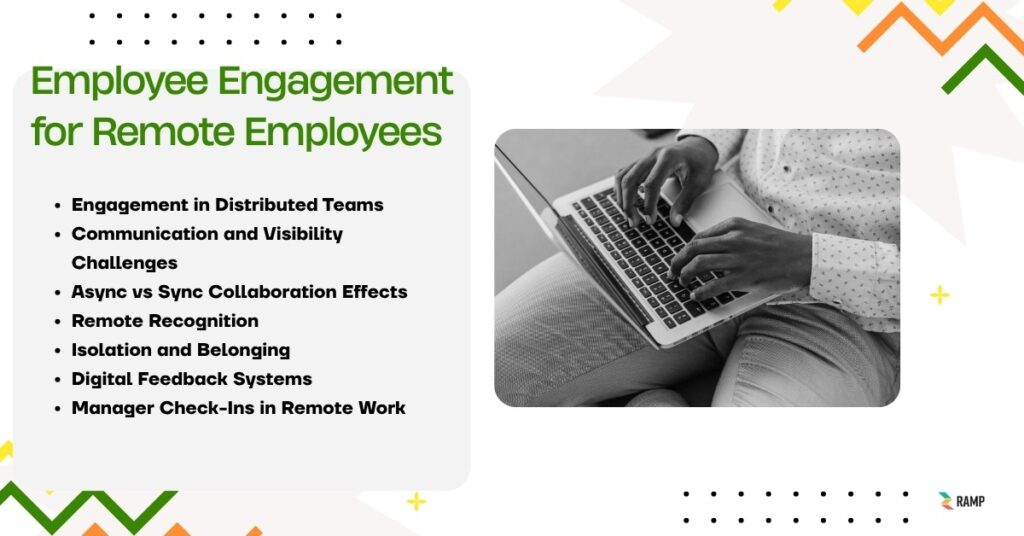
The details are explained below.
Engagement in Distributed Teams
Distributed teams consist of employees working across different locations, time zones, or remote environments. In these settings, engagement depends heavily on communication quality, trust, leadership accessibility, and digital collaboration practices. Without intentional engagement efforts, employees may feel disconnected from organizational goals, team culture, and workplace relationships.
Communication and Visibility Challenges
Remote and hybrid work can create communication gaps and reduce employee visibility. Employees may have fewer informal interactions with managers and coworkers, making it harder to build relationships, share updates, or demonstrate contributions. Limited visibility can sometimes lead employees to feel overlooked, excluded from decisions, or uncertain about expectations and performance.
Async vs Sync Collaboration Effects
Remote teams often rely on both asynchronous and synchronous collaboration methods. Asynchronous communication includes emails, recorded updates, shared documents, and messaging platforms that do not require immediate responses. Synchronous communication includes live meetings, video calls, and real-time discussions. While asynchronous work improves flexibility and productivity, excessive reliance on it may reduce team connection and engagement. Balanced use of both methods helps organizations maintain efficiency while preserving collaboration, communication, and relationship building.
Remote Recognition
Recognition remains a critical driver of engagement in remote environments, but it must be more intentional and visible. Organizations should establish digital recognition practices, such as public acknowledgments during meetings, team communication channels, performance shout-outs, or virtual appreciation programs. Remote employees who receive consistent recognition are more likely to feel valued and connected to the organization.
Isolation and Belonging
One of the major engagement risks in remote work is employee isolation. Employees working remotely for extended periods may experience reduced social interaction, weaker team relationships, and a lower sense of belonging. Organizations can reduce isolation by encouraging team collaboration, virtual social interaction, inclusive communication, and opportunities for employees to participate actively in team discussions and organizational activities.
Digital Feedback Systems
Remote and hybrid organizations often rely on digital feedback systems to maintain communication and support performance. These systems may include engagement surveys, pulse surveys, performance platforms, collaboration tools, and feedback applications. Digital feedback systems help organizations monitor employee sentiment, identify engagement risks, and maintain continuous communication even when employees work from different locations.
Manager Check-Ins in Remote Work
Regular manager check-ins are especially important in remote and hybrid environments, as employees have fewer spontaneous interactions with their supervisors. Effective remote check-ins focus not only on tasks and deadlines but also on employee well-being, workload, development, challenges, and engagement levels. Consistent communication from managers helps employees feel supported, connected, and aligned with organizational priorities, even when they are physically distant.