
An annual performance review is a formal evaluation process conducted once a year to assess an employee's overall job performance, achievements, strengths, and areas for improvement over a fixed review period. It is commonly used to support important organizational decisions such as salary adjustments, promotions, bonuses, training needs, and long-term career planning. Annual reviews provide structured documentation and help organizations measure employee performance against predefined goals and expectations.
A related study on annual progress reports highlights the importance of using clear objectives, performance information, and measurable indicators when evaluating yearly progress. The paper explains that annual reports are most useful when they show not only activities completed but also actual results, learning, and progress against planned goals. This supports the value of annual performance reviews as a structured process for documentation, accountability, and long-term performance improvement.
How Does Annual Performance Review Work?
An annual performance review usually follows a structured process to ensure consistency and fairness. The diagram below shows the process of an annual performance review.
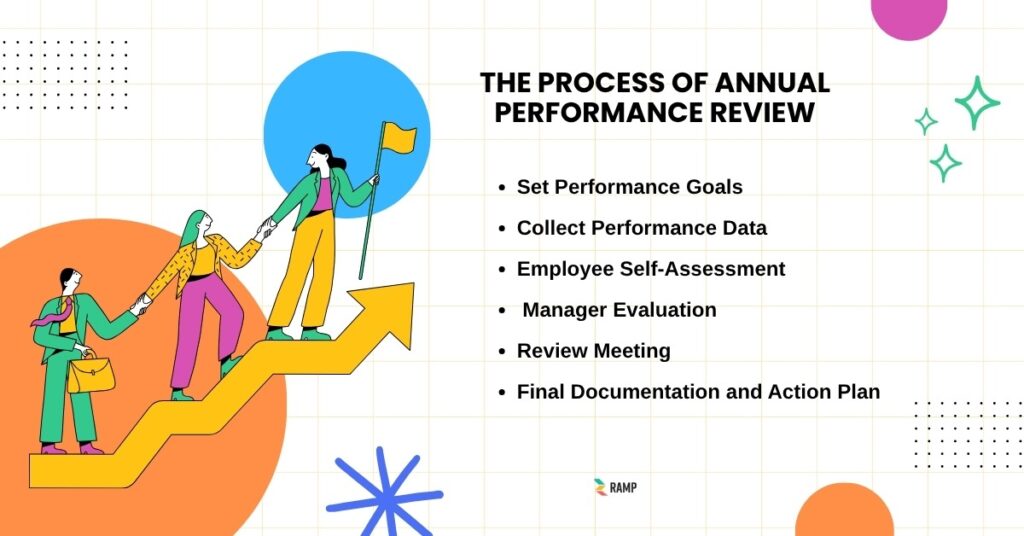
The details of the process are given below.
1. Set Performance Goals
At the beginning of the review cycle, organizations establish clear expectations, objectives, KPIs, and role responsibilities.
Goals may include:
- Productivity targets
- Sales goals
- Project deadlines
- Quality standards
- Behavioral expectations
Clear goals create a measurable foundation for evaluation.
2. Collect Performance Data
Managers gather information throughout the year to accurately evaluate employee performance.
Common sources include:
- KPI reports
- Project outcomes
- Attendance records
- Customer feedback
- Team collaboration observations
- Previous review notes
This step helps reduce subjective judgment.
3. Employee Self-Assessment
Employees often complete self-evaluations before the review meeting.
They may reflect on:
- Accomplishments
- Challenges
- Skill development
- Career goals
- Areas needing improvement
Self-assessments encourage employee involvement and accountability.
4. Manager Evaluation
The manager reviews the employee's overall performance against predefined expectations and standards.
The evaluation may include:
- Strengths and achievements
- Areas for improvement
- Performance ratings
- Workplace behavior
- Goal completion status
Managers usually prepare written feedback before the discussion.
5. Review Meeting
The manager and employee meet to discuss performance openly.
The discussion often covers:
- Key achievements
- Performance concerns
- Feedback from both sides
- Development opportunities
- Future goals
Constructive communication is essential during this stage.
6. Final Documentation and Action Plan
After the meeting, the organization records final ratings, feedback, and development plans.
The review may influence:
- Salary increases
- Bonuses
- Promotions
- Training opportunities
- Performance improvement plans
Clear documentation ensures accountability and follow-up.
Advantages of Annual Performance Reviews
Annual reviews offer several organizational and employee benefits when managed effectively. The advantages are shown in the diagram below.
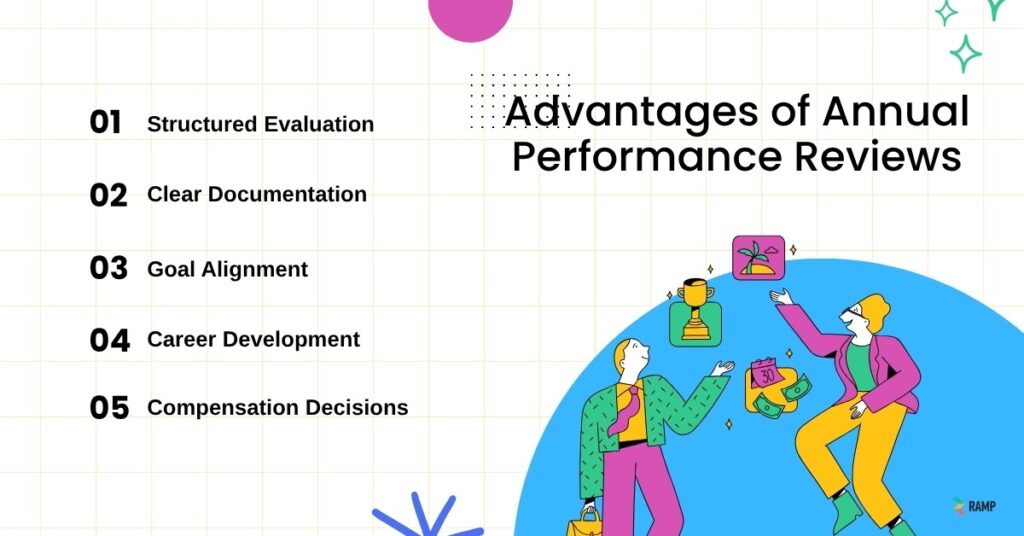
The details of the advantages are given below.:
- Structured Evaluation: It provides a formal, organized method for assessing employee performance.
- Clear Documentation: Annual reviews create official performance records for HR and management decisions.
- Goal Alignment: Employees gain clarity about expectations and organizational priorities.
- Career Development: Reviews help identify training needs, skill gaps, and promotion opportunities.
- Compensation Decisions: Organizations can connect performance outcomes with rewards and recognition.
Disadvantages of Annual Performance Reviews
Despite their benefits, annual reviews also have several limitations. The limitations of annual performance reviews are shown in the diagram below.
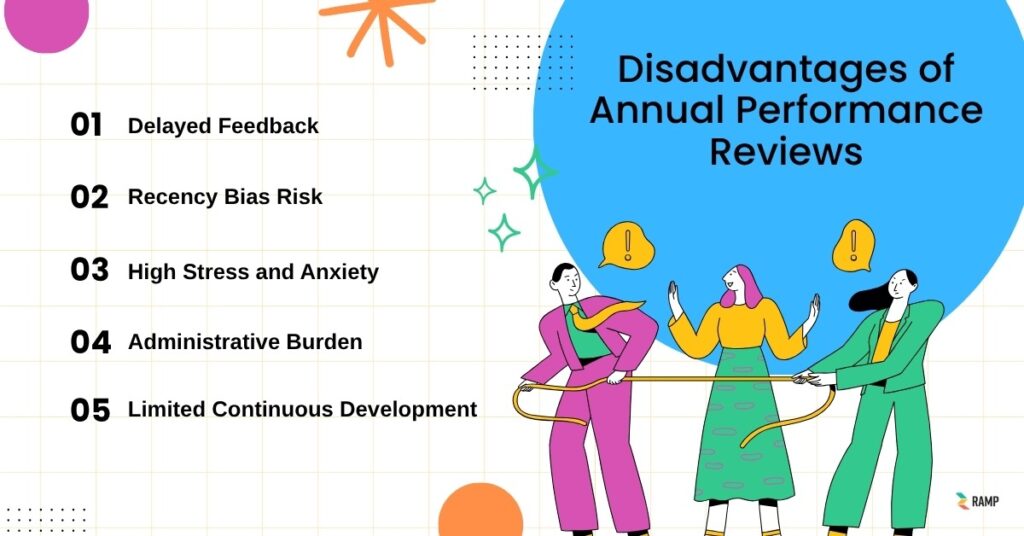
The details of the disadvantages include:
- Delayed Feedback: Employees may wait too long to receive guidance or correction.
- Recency Bias Risk: Managers may focus more on recent events instead of the entire year.
- High Stress and Anxiety: Formal yearly evaluations can create pressure for employees and managers.
- Administrative Burden: Large organizations may spend significant time managing review cycles and documentation.
- Limited Continuous Development: Once-a-year discussions may not effectively support ongoing coaching.
Common Bias Risks
Bias can reduce the accuracy and fairness of annual performance reviews. The common biases in annual performance reviews are shown in the diagram below.
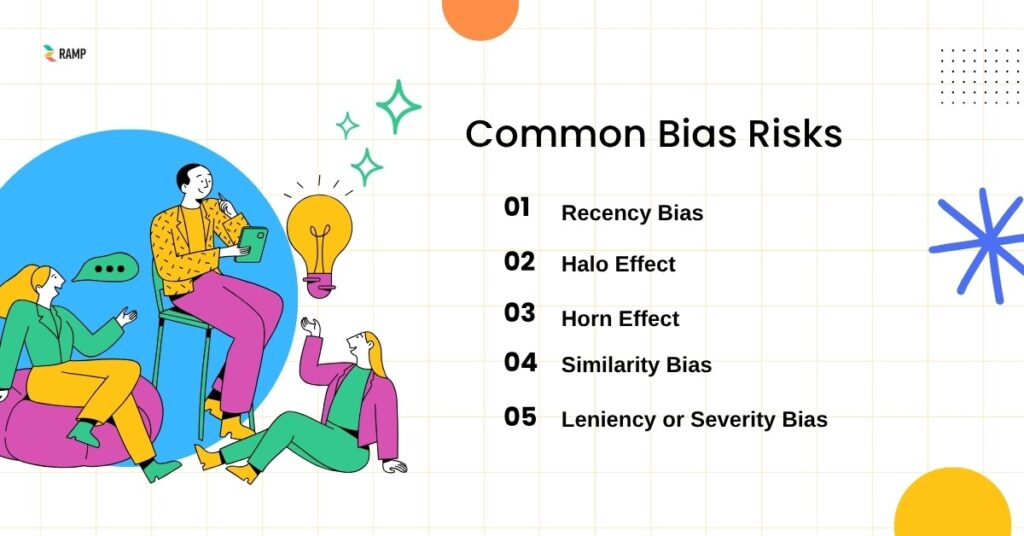
The details of the biases include:
- Recency Bias: Recent successes or mistakes influence evaluations more than earlier performance.
- Halo Effect: One strong positive quality unfairly biases the entire evaluation.
- Horn Effect: A single weakness or mistake negatively affects the overall review.
- Similarity Bias: Managers may favor employees with similar personalities or work styles.
- Leniency or Severity Bias: Some managers consistently rate employees too high or too low.
Organizations should actively monitor these risks to improve fairness and credibility.
Safeguards for Effective Annual Performance Reviews
Several safeguards help improve review accuracy and consistency. Below is a given checklist.
- Use Clear Evaluation Criteria: Define measurable goals, KPIs, and role expectations before the review cycle begins.
- Document Performance Regularly: Managers should keep performance notes throughout the year rather than rely on memory.
- Train Managers on Bias Awareness: Bias training improves evaluation consistency and decision-making.
- Encourage Two-Way Communication: Employees should have opportunities to openly discuss challenges, achievements, and feedback.
- Use Evidence-Based Feedback: Managers should support comments with real examples and measurable outcomes.
- Combine Reviews with Regular Check-Ins: Ongoing feedback reduces surprises during the annual review meeting.
When to Use Annual Performance Reviews
Annual performance reviews work best when organizations need formal evaluation systems and long-term performance tracking. The diagram below shows when to use annual performance reviews.
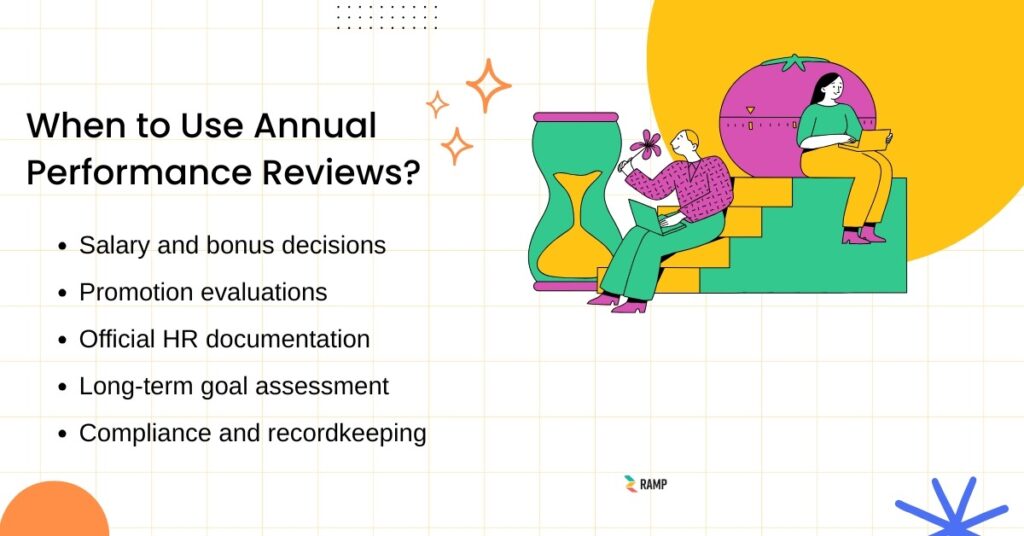
The points above include:
- Salary and bonus decisions
- Promotion evaluations
- Official HR documentation
- Long-term goal assessment
- Compliance and recordkeeping
This method is especially useful in organizations with structured hierarchies and standardized performance systems.
Best Roles for Annual Performance Reviews
Annual reviews are particularly effective for roles with measurable objectives and long-term responsibilities.
Common Examples
- Administrative positions
- Corporate office roles
- Government employees
- Financial professionals
- Operations staff
- Manufacturing employees
- Long-term managerial positions
These roles often require formal documentation and stable performance measurement over time.
Situations Where Annual Performance Reviews May Not Work Well
Annual reviews may be less effective in fast-changing or highly dynamic work environments.
- Rapidly Changing Industries: In industries where priorities shift frequently, yearly feedback can quickly become outdated.
- Agile or Project-Based Teams: Teams working in short project cycles often need faster feedback and more frequent communication.
- Remote or Hybrid Work Environments: Limited daily interaction may require continuous feedback rather than relying solely on yearly evaluations.
- Development-Focused Organizations: Companies emphasizing continuous coaching and employee growth may find annual-only reviews too restrictive.
In these situations, organizations often combine annual reviews with continuous feedback systems for better results.
Annual performance reviews remain an important part of performance management because they provide structured evaluation, accountability, documentation, and alignment between employee performance and organizational goals. However, their effectiveness depends heavily on preparation, fairness, communication quality, and ongoing feedback throughout the year.
When combined with regular coaching and continuous performance discussions, annual reviews become more meaningful, balanced, and development-focused for both employees and organizations.