
A self-assessment performance review is a performance evaluation method in which employees assess their own work performance, achievements, strengths, challenges, and development needs before or during the formal review process. It allows employees to reflect on their contributions, participate actively in performance discussions, and provide additional context that managers may not fully observe during daily operations.
Self-assessment reviews are widely used in modern performance management because they encourage accountability, self-awareness, communication, and professional growth while making the review process more collaborative and balanced.
Why Self-Assessments Matter?
Self-assessments improve employee participation and make performance reviews more collaborative.
They help organizations:
- Understand employee perspectives
- Encourage accountability
- Identify hidden contributions
- Improve communication
- Support development planning
Employees also have the opportunity to reflect more thoughtfully on progress, challenges, and future career goals.
Research on self-evaluation as a method for reinforcing strengths and eliminating weaknesses describes it as a systematic process of reviewing and analyzing personal and professional performance. The article explains that honest, regular reflection helps individuals recognize effective practices, identify weaknesses, and overcome barriers to improvement. This supports the use of self-assessment performance reviews to strengthen self-awareness and guide continuous professional growth.
How Self-Assessment Performance Reviews Work?
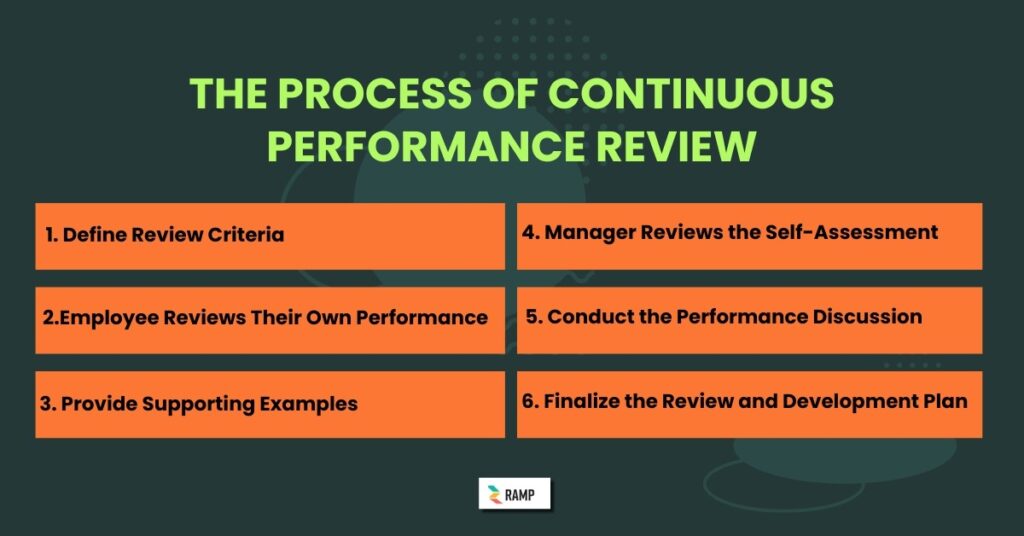
A self-assessment performance review usually follows a structured process to ensure clarity and consistency. The diagram below shows the process of self-assessment performance review.
The details of the process are given below.
1. Define Review Criteria
Organizations first establish the performance areas employees should evaluate.
These may include:
- Goal achievement
- Productivity
- Communication
- Leadership
- Teamwork
- Problem-solving
- Technical skills
- Professional behavior
Clear criteria help employees provide focused and relevant feedback.
2. Employee Reviews Their Own Performance
Employees reflect on their work during the review period and prepare written responses.
They typically assess:
- Accomplishments
- Challenges faced
- Skills developed
- Contributions to the team
- Areas needing improvement
- Career goals
Strong self-assessments use specific examples and evidence rather than vague statements.
3. Provide Supporting Examples
Employees are encouraged to support their evaluation with specific examples.
Examples may include:
- Completed projects
- KPI improvements
- Customer feedback
- Process improvements
- Leadership contributions
- Team achievements
Evidence-based self-assessments improve accuracy and credibility.
4. Manager Reviews the Self-Assessment
The manager compares the employee's self-evaluation with their own observations and performance records.
Managers may review:
- Goal completion
- Work quality
- Collaboration
- Behavioral patterns
- Organizational impact
This comparison helps identify alignment or differences in perception.
5. Conduct the Performance Discussion
The manager and employee meet to discuss the self-assessment openly.
The conversation usually includes:
- Achievements
- Strengths
- Development areas
- Feedback from both sides
- Future goals
- Support needed for improvement
A constructive discussion strengthens communication and trust.
6. Finalize the Review and Development Plan
After the discussion, the organization documents:
- Final evaluation
- Performance feedback
- Development goals
- Training plans
- Career objectives
The review often becomes part of the employee's official performance record.
Advantages of Self-Assessment Performance Reviews
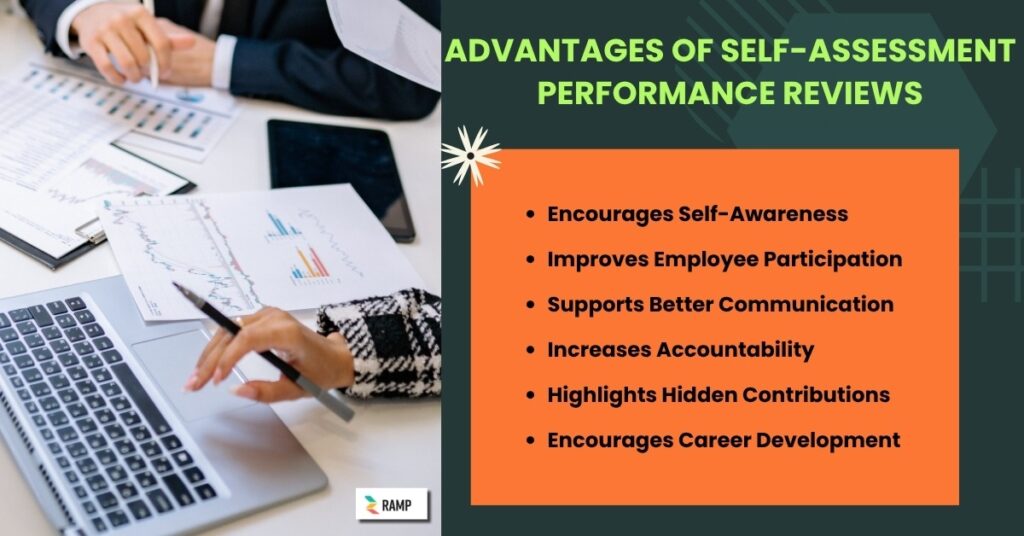
Self-assessment reviews offer several important benefits. The diagram below shows the advantages of self-assessment performance reviews.
The advantages of self-assessment performance reviews are explained in detail below.
- Encourages Self-Awareness: Employees reflect more carefully on their strengths, weaknesses, and work habits.
- Improves Employee Participation: Employees become active participants rather than passive recipients of evaluations.
- Supports Better Communication: Managers gain additional insight into employee perspectives and workplace challenges.
- Increases Accountability: Employees take greater ownership of their performance and development.
- Highlights Hidden Contributions: Employees can mention accomplishments or responsibilities that managers may not fully see.
- Encourages Career Development: Self-reflection often helps employees identify growth opportunities and future goals.
Disadvantages of Self-Assessment Performance Reviews
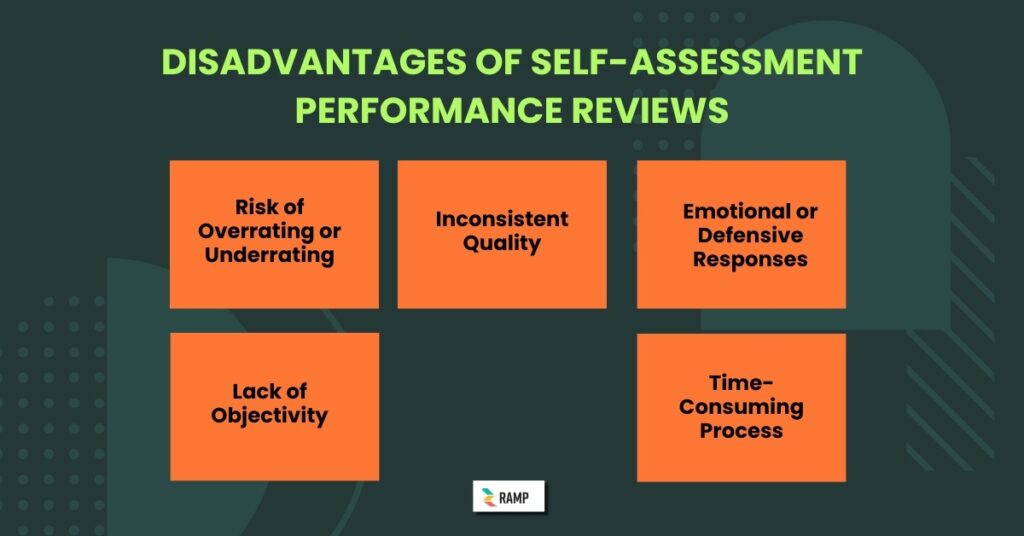
Despite their benefits, self-assessments also have limitations. The diagram below shows the limitations of self-assessment performance reviews.
The details of the limitations are given below.
- Risk of Overrating or Underrating: Some employees may exaggerate achievements, while others underestimate their contributions.
- Inconsistent Quality: Not all employees have strong self-evaluation or communication skills.
- Emotional or Defensive Responses: Employees may focus too heavily on frustrations or personal opinions.
- Lack of Objectivity: Self-assessments can become biased if not supported by evidence and measurable outcomes.
- Time-Consuming Process: Reviewing detailed self-assessments may require managers to spend additional time.
Common Bias Risks
Several biases can affect the accuracy of self-assessment reviews. The diagram below shows the common biases in self-assessment performance reviews.
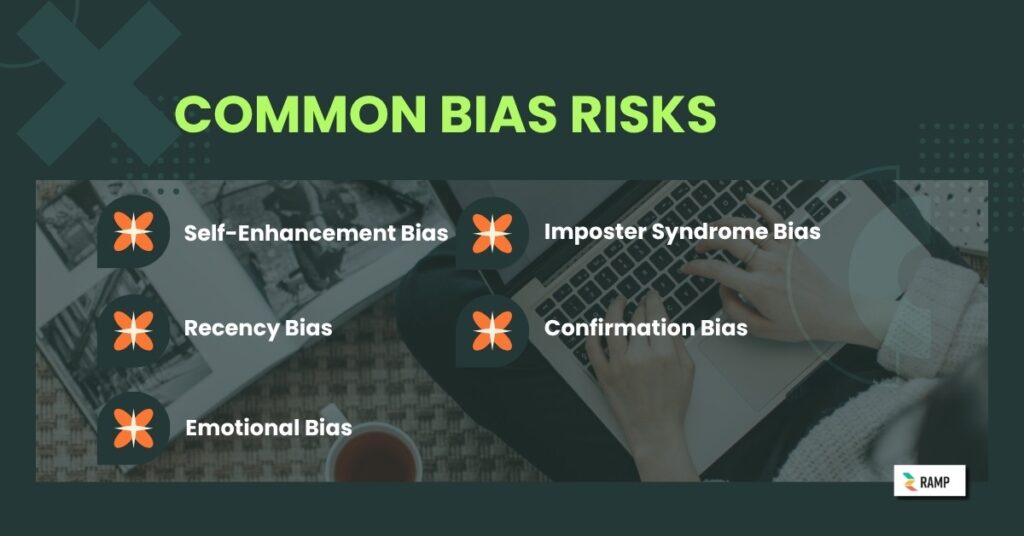
The details of the bias risks are given below.
- Self-Enhancement Bias: Employees may overestimate their performance and contributions.
- Imposter Syndrome Bias: Some employees may undervalue their achievements despite strong performance.
- Recency Bias: Employees may focus mainly on recent accomplishments or recent problems.
- Confirmation Bias: Employees may selectively mention examples that support their existing self-image.
- Emotional Bias: Personal frustration or workplace dissatisfaction may bias the evaluation.
Organizations should manage these risks carefully to maintain fairness and accuracy.
Safeguards for Effective Self-Assessment Performance Reviews
Strong safeguards improve the usefulness and credibility of self-assessments. The diagram below outlines safeguards for effective self-assessment performance reviews.
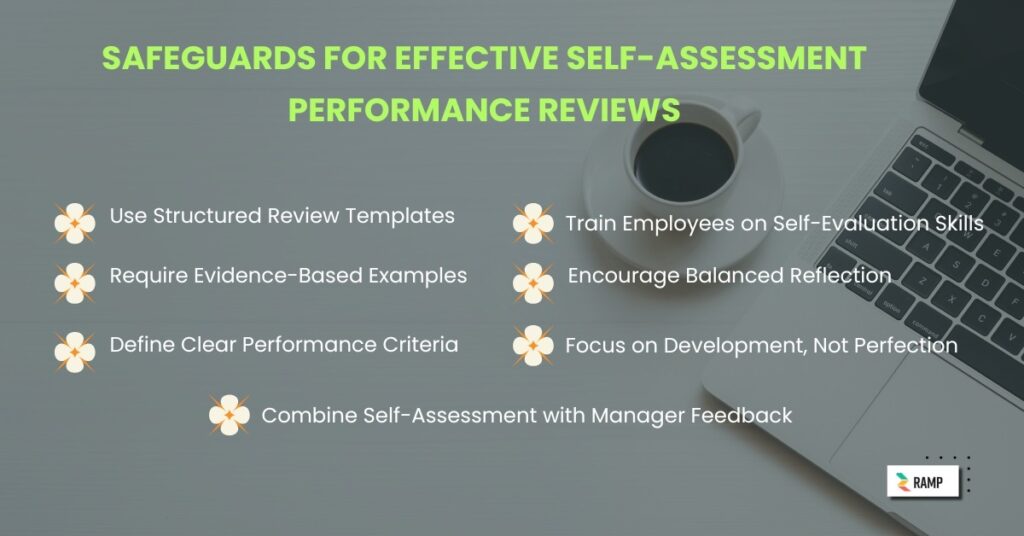
The details include:
- Use Structured Review Templates: Clear templates help employees consistently organize their responses.
- Require Evidence-Based Examples: Employees should support claims with measurable results and specific situations.
- Define Clear Performance Criteria: Well-defined expectations reduce confusion and subjective interpretation.
- Train Employees on Self-Evaluation Skills: Employees should understand how to write balanced and professional self-assessments.
- Combine Self-Assessment with Manager Feedback: Self-assessments work best when combined with supervisor evaluation and discussion.
- Focus on Development, Not Perfection: The goal should be honest reflection and improvement, not self-promotion.
- Encourage Balanced Reflection: Employees should openly discuss both their strengths and areas for improvement.
When to Use Self-Assessment Performance Reviews
Self-assessment reviews are most useful when organizations want employees to participate actively in performance management.
They are commonly used for:
- Annual reviews
- Quarterly evaluations
- Career development discussions
- Leadership development
- Performance improvement planning
- Continuous feedback systems
Organizations focused on employee engagement and development often benefit from this approach.
Best Roles for Self-Assessment Performance Reviews
Self-assessments work especially well for roles requiring independence, creativity, problem-solving, or personal accountability.
Common Examples
- Managers and supervisors
- Project managers
- Creative professionals
- Remote employees
- Knowledge workers
- Consultants
- Researchers
- Software developers
These roles often involve responsibilities and contributions that may not always be fully visible to management.
Situations Where Self-Assessment Performance Reviews May Not Work Well
Self-assessment reviews may be less effective in certain situations.
- Employees with Limited Self-Awareness: Some individuals may struggle to evaluate themselves realistically.
- Highly Structured or Repetitive Roles: Simple task-based roles may not require detailed self-reflection.
- Weak Feedback Cultures: Employees may fear honesty if the workplace lacks trust and psychological safety.
- Organizations Without Clear Evaluation Standards: Poorly defined expectations can lead to inconsistent and unreliable self-assessment.
- Employees with Poor Communication Skills: Some employees may perform well but struggle to explain their contributions effectively.
In these situations, self-assessments should be supported with manager guidance and additional evaluation methods.
Self-assessment performance reviews foster a more collaborative, reflective approach to employee evaluation by giving employees an active voice in the review process. They encourage accountability, self-awareness, communication, and professional development while helping managers better understand employee perspectives.
However, their effectiveness depends on clear expectations, evidence-based evaluation, balanced communication, and proper review structure. When combined with manager feedback and ongoing performance discussions, self-assessment reviews become a valuable tool for employee growth and fairer performance management.