
Real-time feedback is the process of giving immediate observations, suggestions, or recognition shortly after a behavior, action, or event occurs. Instead of waiting for formal reviews or scheduled evaluations, feedback is shared in the moment or very close to the situation itself.
The purpose of real-time feedback is to encourage faster improvement, reinforce positive behaviors, and address issues before they become repeated habits.
Why Does It Matter?
Real-time feedback matters because it connects feedback directly to recent actions, making it easier for individuals to understand and apply improvements immediately. Timely communication also reduces confusion and helps teams respond more quickly to challenges.
It matters because it:
- Encourages immediate learning and improvement
- Strengthens communication within teams
- Prevents repeated mistakes
- Reinforces positive behavior quickly
- Improves productivity and accountability
- Builds stronger workplace relationships
- Supports faster decision-making and adaptability
Organizations that practice real-time feedback often create more responsive and collaborative work environments.
Research on real-time performance feedback explains that immediate feedback can help workers understand their actions quickly and adjust performance without waiting for delayed evaluations. The article highlights that real-time feedback supports faster learning, timely correction, and stronger performance awareness when it is clear, relevant, and actionable. This supports the value of real-time feedback as a practical approach for improving communication, reinforcing positive behavior, and addressing small issues before they become repeated problems.
Core Structure of Real-Time Feedback Using the SBI Framework
A simple and effective way to deliver real-time feedback is through the SBI Framework, which stands for:
- Situation — Explain where and when the event happened.
- Behavior — Describe the observable action.
- Impact — Explain the result or outcome of that behavior.
This method keeps feedback focused on facts and outcomes instead of emotions or assumptions.
Short Example
"In today's client call, I observed that you answered difficult questions calmly and clearly without interrupting the discussion. The impact was that the client felt more confident in the team's solution and the meeting stayed productive."
The SBI structure helps make real-time feedback more professional, direct, and actionable.
Characteristics of Real-Time Feedback
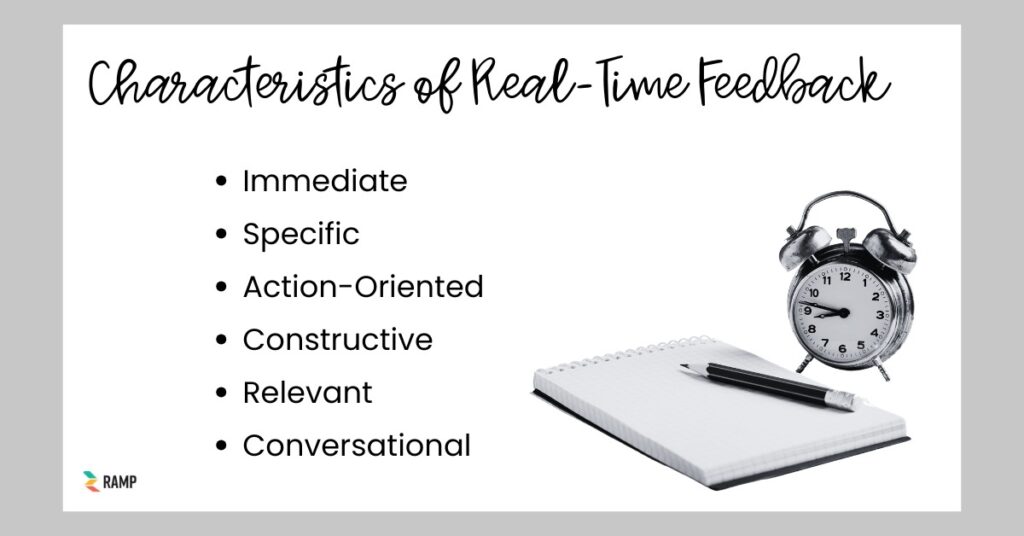
Real-time feedback has several important characteristics that make it effective for improving communication, encouraging immediate learning, and helping individuals adjust their performance quickly.
The diagram below shows the characteristics of real-time feedback.
The characteristics are explained in detail below.
- Immediate: It is delivered shortly after the event or behavior occurs.
- Specific: It focuses on clear actions and observable behaviors.
- Action-Oriented: The feedback encourages immediate improvement or reinforcement.
- Constructive: Its purpose is development, not criticism.
- Relevant: The feedback directly relates to a recent situation or task.
- Conversational: Real-time feedback often occurs naturally through brief discussions rather than formal evaluations.
The chart below highlights situations where real-time feedback is most effective, as well as scenarios where immediate feedback can become stressful, reactive, or less productive.
| When to Use It | When Not to Use It |
| After meetings, presentations, or client interactions | During emotionally charged conflicts or stressful moments |
| During ongoing projects or teamwork | When feedback is based on assumptions instead of facts |
| When employees are learning new responsibilities | If the issue requires formal investigation or disciplinary action |
| In fast-paced work environments | When individuals are overwhelmed or unable to process feedback properly |
| When correcting small issues before they grow larger | During urgent operational emergencies requiring immediate execution |
| During coaching, mentoring, or training sessions | If feedback is delivered too frequently without a meaningful purpose |
| When recognizing strong performance immediately | |
| It is especially useful when quick adjustments and continuous communication are important. | In these situations, real-time feedback can feel reactive, stressful, or unproductive. |
When to Use It?
Real-time feedback is most effective in situations such as:
- After meetings, presentations, or client interactions
- During ongoing projects or teamwork
- When employees are learning new responsibilities
- In fast-paced work environments
- When correcting small issues before they grow larger
- During coaching, mentoring, or training sessions
- When recognizing strong performance immediately
It is especially useful when quick adjustments and continuous communication are important.
When Not to Use It?
Real-time feedback may be less effective in certain situations, including:
- During emotionally charged conflicts or stressful moments
- When feedback is based on assumptions instead of facts
- If the issue requires formal investigation or disciplinary action
- When individuals are overwhelmed or unable to process feedback properly
- During urgent operational emergencies requiring immediate execution
- If feedback is delivered too frequently without a meaningful purpose
In these situations, real-time feedback can feel reactive, stressful, or unproductive.
Sentence Starters for Effective Real-Time Feedback
The following sentence starters help organize feedback clearly and professionally:
- "In [situation], I observed…"
- "The impact was…"
Example
"In yesterday's project discussion, I observed that you summarized the key decisions clearly at the end of the meeting. The impact was that the team left with a better understanding of responsibilities and deadlines."
These sentence starters make feedback more objective, respectful, and easier to apply.
Common Mistakes to Avoid
Many people make avoidable mistakes while giving real-time feedback. The diagram below shows such mistakes.
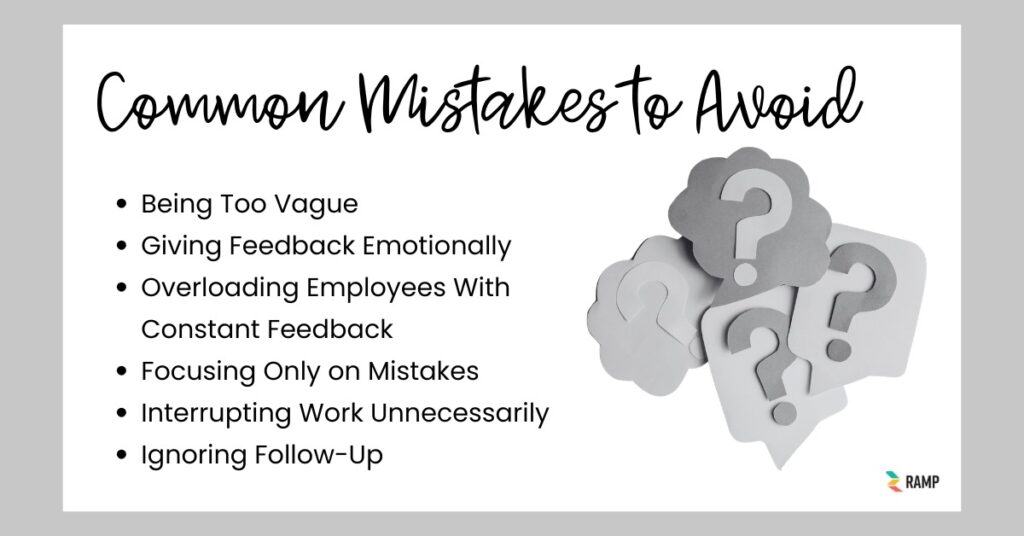
The details are given below.
- Being Too Vague: General comments like "Good job" or "You need improvement" provide little direction.
- Giving Feedback Emotionally: Strong emotions can make feedback feel personal instead of constructive.
- Overloading Employees With Constant Feedback: Too much feedback can become overwhelming and reduce motivation.
- Focusing Only on Mistakes: Positive actions should also be recognized and reinforced.
- Interrupting Work Unnecessarily: Feedback should support productivity, not disrupt it excessively.
- Ignoring Follow-Up: Without follow-up conversations, improvement may not continue over time.
Real-time feedback is an effective approach for improving communication, performance, and continuous learning in the workplace. By providing immediate, constructive input, organizations can address issues quickly, reinforce positive behaviors, and foster stronger collaboration.
When delivered respectfully and clearly, real-time feedback helps individuals grow with confidence and adapt more effectively to changing situations. Using structured methods, such as the SBI framework, keeps feedback focused, professional, and easier to apply in daily work environments.