

Sandwich feedback is a communication method in which constructive criticism is sandwiched between two positive comments. The purpose of this approach is to make feedback feel more balanced, supportive, and easier to accept while still addressing areas that need improvement. Workplaces, schools, coaches, and leaders commonly use this method to maintain motivation while addressing performance concerns.
Why Does It Matter?
Sandwich feedback matters because it helps reduce defensiveness and encourages more open communication. Starting and ending with positive observations can make difficult conversations feel less intimidating and more constructive.
It matters because it:
- Makes feedback easier to receive
- Encourages positive communication
- Protects confidence and motivation
- Helps maintain professional relationships
- Supports employee development
- Balances praise with improvement suggestions
- Creates a more supportive feedback environment
When used correctly, sandwich feedback can improve both performance and workplace morale.
Core Structure of Sandwich Feedback Using the SBI Framework
A structured way to deliver sandwich feedback is by combining it with the SBI Framework, which stands for:
- Situation — Explain the specific event or context.
- Behavior — Describe the observable action.
- Impact — Explain the result of that behavior.
In sandwich feedback, positive feedback comes first, followed by constructive improvement feedback, and then ends with encouragement or recognition.
Short Example
"In yesterday's client presentation, I observed that you explained the project timeline very clearly and kept the discussion organized. One area to improve is slowing down during technical explanations so the client can follow more easily. The impact was that the meeting remained professional and the client responded positively overall."
This structure keeps the conversation balanced and easier to accept.
Characteristics of Sandwich Feedback
Sandwich feedback has several important characteristics that make it different from direct criticism or formal evaluation methods.
The diagram below shows the characteristics of sandwich feedback.
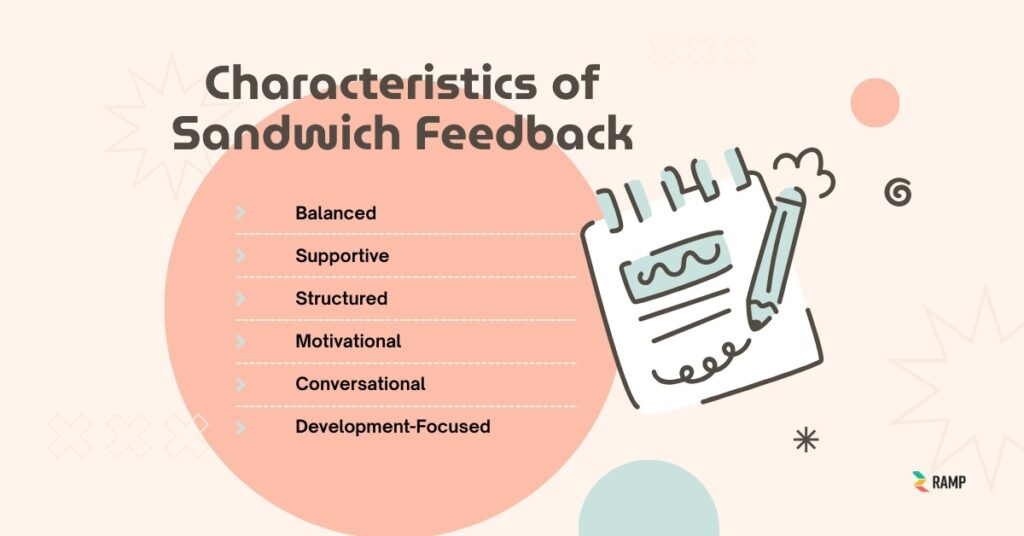
The following section explains the characteristics in detail.
- Balanced: It combines positive feedback with constructive suggestions.
- Supportive: The approach reduces defensiveness and encourages improvement.
- Structured: The feedback follows a clear order: a positive comment, an improvement area, and a positive conclusion.
- Motivational: It helps maintain confidence while addressing weaknesses.
- Conversational: The method often feels more natural and less confrontational.
- Development-Focused: Its purpose is improvement and growth rather than punishment.
When to Use It?
Sandwich feedback is most effective in situations such as:
- During employee coaching or mentoring
- When discussing minor performance improvements
- While training new employees
- During presentations, meetings, or project reviews
- When maintaining employee confidence is important
- In leadership and communication development
- When giving feedback to individuals who are sensitive to criticism
It is especially useful in supportive work environments that encourage learning and collaboration.
When Not to Use It?
Sandwich feedback may be less effective in certain situations, including:
- When serious performance or behavioral issues must be addressed directly
- If the positive comments sound forced or insincere
- When employees begin expecting criticism after every compliment
- During urgent operational or disciplinary situations
- If the feedback becomes vague to avoid discomfort
- When clear and direct communication is required immediately
In these situations, sandwich feedback can feel confusing, repetitive, or less genuine.
Research on the sandwich feedback method explains that while this approach is commonly used to make corrective feedback easier to receive, it can also create problems when used carelessly. The article argues that sandwich feedback may confuse employees, weaken the corrective message, and make positive comments feel less genuine. This supports the idea that people should use sandwich feedback thoughtfully by providing clear improvement points, sincere recognition, and follow-up rather than following it as a routine formula.
The chart below highlights the situations where sandwich feedback is most effective, along with scenarios where this approach may become unclear, ineffective, or less genuine.
| When to Use It | When Not to Use It |
| During employee coaching or mentoring | When serious performance or behavioral issues must be addressed directly |
| When discussing minor performance improvements | If the positive comments sound forced or insincere |
| While training new employees | When employees begin expecting criticism after every compliment |
| During presentations, meetings, or project reviews | During urgent operational or disciplinary situations |
| When maintaining employee confidence is important | If the feedback becomes vague to avoid discomfort |
| In leadership and communication development | When clear and direct communication is required immediately |
| When giving feedback to individuals who are sensitive to criticism | |
| It is especially useful in supportive work environments that encourage learning and collaboration. | In these situations, sandwich feedback can feel confusing, repetitive, or less genuine. |
Sentence Starters for Effective Sandwich Feedback
The following sentence starters help keep feedback clear, professional, and structured:
- "In [situation], I observed…"
- "The impact was…"
Example
"In the weekly team meeting, I observed that you encouraged participation from quieter team members and kept the discussion focused. One improvement area is allowing slightly more time for questions before moving to the next topic. The impact was that the meeting stayed productive and team engagement improved."
These sentence starters help feedback remain objective and constructive.
Common Mistakes to Avoid
Many people misuse sandwich feedback without realizing it. The diagram below shows the common mistakes to avoid while giving sandwich feedback.
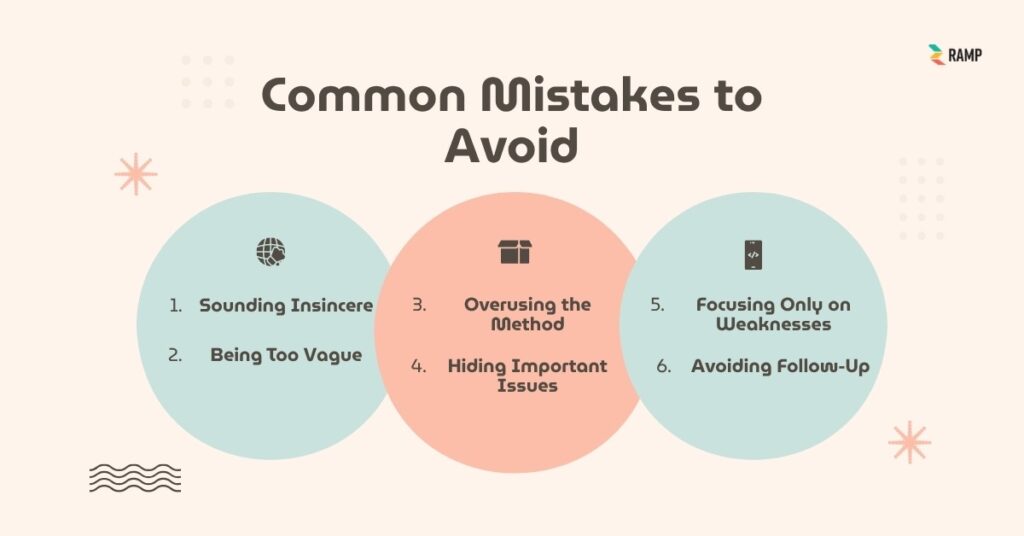
The common mistakes in sandwich feedback are explained in detail below.
- Sounding Insincere: Positive comments should be genuine, not added only to soften criticism.
- Being Too Vague: Unclear improvement suggestions reduce the value of the feedback.
- Overusing the Method: Using the same pattern repeatedly can make feedback predictable and ineffective.
- Hiding Important Issues: Serious concerns should not be softened to the point that the message becomes unclear.
- Focusing Only on Weaknesses: The positive sections should provide meaningful recognition.
- Avoiding Follow-Up: Improvement should be reviewed after feedback is given.
Sandwich feedback is a useful communication method that balances encouragement with constructive improvement. Combining positive observations with actionable suggestions helps individuals receive feedback more comfortably and remain motivated to improve.
When used thoughtfully, sandwich feedback strengthens communication, supports professional growth, and creates a more positive workplace environment. Structured approaches like the SBI framework make the feedback clearer, more respectful, and easier to apply in real workplace situations.