
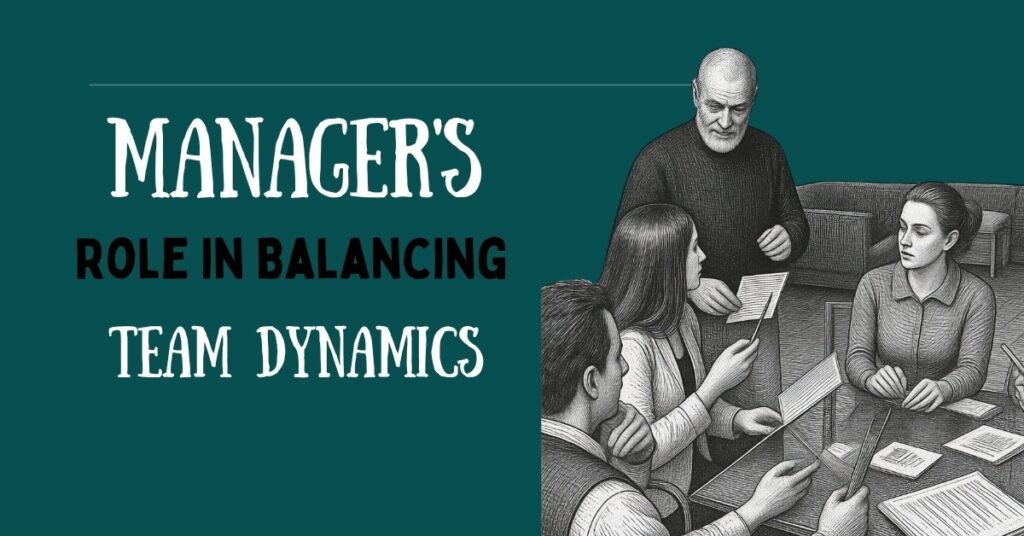
Strong teams rarely happen by accident. In most workplaces, employees bring diverse personalities, communication styles, work preferences, experiences, and emotional responses into a single environment. These differences can enhance creativity and problem-solving, but they can also lead to misunderstandings, tension, and imbalance if not carefully managed.
Managers play a central role in shaping how teams interact. Their responsibility is not only to manage tasks and deadlines but also to create an environment where different people can work effectively together. A skilled manager understands how to balance personalities, encourage healthy collaboration, and prevent unhealthy group behavior from affecting performance.
Balancing team dynamics requires observation, adaptability, emotional intelligence, and consistent communication.
Understanding Team Dynamics
Team dynamics refer to the patterns of interaction between team members. These patterns influence:
- Communication quality
- Trust levels
- Collaboration
- Decision-making
- Conflict management
- Participation
- Productivity
- Morale
Healthy team dynamics help employees feel respected, heard, and motivated. Poor dynamics often lead to disengagement, frustration, communication breakdowns, and reduced performance.
Managers influence these dynamics every day through:
- Leadership style
- Communication approach
- Meeting structure
- Conflict handling
- Feedback practices
- Work allocation
- Team expectations
Because of this, managers must actively shape team culture rather than assume it will develop naturally.
Research on behavioral analysis and team dynamics explains that managing a team becomes more effective when leaders understand how people behave, communicate, and interact within group settings. The article shows that behavioral analysis can help managers turn team management from a difficult problem into a more structured and engaging leadership challenge. This supports the manager's role in balancing team dynamics, as managers must recognize different work styles, adapt their communication, prevent one-style dominance, resolve conflict early, and foster psychological safety.
Recognizing Different Work Styles
Every employee approaches work differently. Some employees prefer structure and planning, while others thrive in flexible environments. Some communicate directly and quickly, while others are more thoughtful and cautious.
Managers must recognize these differences to avoid unfair expectations and communication problems.
Common work-style differences include:
| Work Style Area | Example Differences |
| Communication | Direct vs diplomatic |
| Decision-making | Fast vs analytical |
| Collaboration | Independent vs team-oriented |
| Planning | Structured vs flexible |
| Feedback preference | Public vs private |
| Work pace | Rapid execution vs careful review |
Managers who understand these differences can:
- Reduce misunderstandings
- Improve cooperation
- Increase engagement
- Prevent unnecessary conflict
- Build stronger working relationships
For example, a highly detail-oriented employee may need more preparation time before meetings, while a fast-moving employee may prefer quick discussions and immediate action.
Effective managers avoid labeling one style as "better" than another. Instead, they focus on how different styles can complement each other.
Adapting Communication to Different Employees
One communication style rarely works for everyone. Managers who communicate the same way with every employee often create confusion or disengagement.
Adaptable communication improves clarity, trust, and collaboration.
Managers can adjust communication by considering:
Communication Speed
Some employees process information quickly and respond immediately. Others prefer time to think before replying.
Managers should:
- Avoid forcing instant responses from reflective employees
- Provide preparation time for complex discussions
- Balance fast-paced and thoughtful communication
Level of Detail
Certain employees prefer concise instructions, while others need context and explanation.
Managers should clarify:
- Goals
- Expectations
- Deadlines
- Decision-making rationale
Feedback Delivery
Employees react differently to feedback.
Some prefer:
- Direct feedback
- Immediate correction
- Brief conversations
Others respond better to:
- Supportive framing
- Context-rich discussions
- Private conversations
Adapting communication does not mean changing standards. It means delivering information in a way that employees can best understand and apply.
Preventing One-Style Dominance
In many teams, one personality type or communication style begins to dominate discussions and decisions. This often happens when:
- Extroverted employees speak more frequently
- Senior employees control conversations
- Aggressive communicators overpower quieter voices
- Fast decision-makers dismiss careful analysis
When one style dominates, teams lose perspective and balance.
Managers must actively prevent this imbalance.
Risks of One-Style Dominance
Over time, dominance creates:
- Reduced participation
- Lower psychological safety
- Groupthink
- Poor decision-making
- Employee frustration
- Hidden disagreements
Quiet employees may stop contributing entirely if they believe their input is ignored.
How Managers Can Prevent It?
Managers can balance participation by:
- Inviting quieter employees into discussions
- Rotating speaking opportunities
- Structuring meetings carefully
- Limiting interruptions
- Asking for written input before meetings
- Encouraging multiple viewpoints
Balanced participation improves both inclusion and decision quality.
Improving Psychological Safety
Psychological safety refers to an employee's belief that they can speak honestly without fear of humiliation, punishment, or exclusion.
Teams with high psychological safety are more likely to:
- Share ideas openly
- Admit mistakes
- Ask questions
- Challenge assumptions
- Collaborate effectively
- Learn from failure
Managers strongly influence whether employees feel psychologically safe.
Behaviors That Build Psychological Safety
Managers can improve psychological safety by:
- Listening without interruption
- Responding respectfully to disagreement
- Avoiding public embarrassment
- Encouraging questions
- Admitting their own mistakes
- Thanking employees for honest feedback
- Treating concerns seriously
Behaviors That Damage Psychological Safety
Psychological safety weakens when managers:
- Dismiss opinions quickly
- Punish disagreement
- Mock mistakes
- Ignore concerns
- Favor only outspoken employees
- React emotionally during conflict
Employees who feel unsafe often become quiet, defensive, or disengaged.
Strong managers create environments where respectful disagreement is normal rather than threatening.
Resolving Conflict Early
Conflict is natural in team environments. Different priorities, personalities, and communication styles will eventually create tension.
The real issue is not whether conflict exists, but whether it is handled properly.
Managers must address conflict early to prevent it from damaging trust and collaboration.
Signs of Unresolved Conflict
Managers should watch for:
- Passive-aggressive behavior
- Reduced communication
- Increased defensiveness
- Avoidance between employees
- Frequent misunderstandings
- Declining cooperation
- Emotional reactions during meetings
Ignoring these signs usually allows tension to grow.
Effective Conflict Resolution
Managers should:
- Address issues privately and quickly
- Focus on behavior, not personality
- Allow both sides to explain concerns
- Clarify misunderstandings
- Re-establish shared goals
- Define expectations moving forward
Strong conflict resolution focuses on restoring productive working relationships rather than assigning blame.
Assigning Roles Based on Strengths
Balanced teams perform better when employees work in areas that match their strengths.
Managers should understand:
- Individual capabilities
- Communication strengths
- Problem-solving approaches
- Leadership tendencies
- Technical expertise
- Organizational skills
Role assignments should consider both skill and working style.
Examples
A manager may assign:
- Analytical employees for data review
- Strong communicators in stakeholder discussions
- Organized employees for project coordination
- Creative thinkers for brainstorming sessions
This approach improves:
- Productivity
- Engagement
- Confidence
- Collaboration quality
Employees are generally more motivated when they feel their strengths are recognized and used effectively.
Creating Balanced Participation
Some employees naturally dominate discussions, while others hesitate to contribute. Managers must ensure participation remains balanced so all perspectives are considered.
Balanced participation improves:
- Team engagement
- Decision quality
- Inclusion
- Innovation
- Accountability
Practical Methods Managers Can Use
Managers can encourage broader participation by:
- Asking open-ended questions
- Giving employees time to prepare
- Using round-table discussion formats
- Encouraging written contributions
- Following up with quieter team members individually
- Preventing interruptions during meetings
Managers should also recognize that silence does not always mean disengagement. Some employees contribute more effectively through written communication or smaller group discussions.
Supporting Feedback Quality
Feedback affects both performance and team relationships. Poor feedback practices can damage morale, trust, and motivation.
Managers must create a feedback culture that is constructive, specific, and respectful.
Characteristics of Effective Feedback
Good feedback is:
- Clear
- Timely
- Specific
- Action-oriented
- Balanced
- Respectful
Instead of vague criticism, managers should explain:
- What happened
- Why it matters
- What improvement looks like
- What support is available
Encouraging Peer Feedback
Managers should also encourage healthy peer-to-peer feedback.
This helps teams:
- Solve problems faster
- Improve accountability
- Strengthen collaboration
- Reduce dependence on management intervention
However, managers must ensure feedback remains professional and solution-focused.
Coaching Employees on Collaboration
Collaboration is a skill that often requires active coaching.
Managers should not assume employees automatically know how to:
- Communicate effectively
- Handle disagreement
- Share responsibilities
- Listen actively
- Adapt to different personalities
Managers can coach collaboration by:
- Modeling respectful communication
- Teaching active listening
- Encouraging empathy
- Clarifying team expectations
- Discussing communication styles openly
- Providing collaboration feedback during reviews
Helping Employees Build Self-Awareness
Strong managers also help employees understand how their behavior affects others.
For example:
- Direct communicators may need to soften their delivery
- Reserved employees may need encouragement to speak up
- Highly independent employees may need stronger collaboration habits
Coaching should focus on growth rather than criticism.
The Long-Term Impact of Balanced Team Dynamics
When managers consistently balance team dynamics, organizations benefit from:
- Higher employee engagement
- Better communication
- Stronger trust
- Reduced workplace conflict
- Improved collaboration
- Better decision-making
- Increased retention
- Higher productivity
Balanced teams are usually more resilient in the face of stress, change, and uncertainty because employees trust both leadership and one another.
Managing team dynamics is one of the most important responsibilities of leadership. Managers shape how employees communicate, collaborate, solve problems, and handle conflict. Without active leadership, differences in personality and work style can create imbalance and tension.
Effective managers recognize individual differences, adapt communication methods, encourage balanced participation, and build psychologically safe environments. They address conflict early, assign responsibilities based on strengths, and coach employees to work together more effectively.
A balanced team does not mean everyone behaves the same way. It means different people can contribute productively, respectfully, and collaboratively toward shared goals.