

A feedback culture is a workplace atmosphere where employees and leaders consistently offer constructive, respectful, and growth-focused feedback to boost performance, improve communication, strengthen collaboration, and drive continuous development.
A strong feedback culture thrives not only on formal performance reviews. Instead, it infuses everyday work, drives regular conversations, nurtures mutual trust, and reinforces consistent communication practices. The following sections identify the primary components that build and sustain this workplace environment.
A strong feedback culture emerges through several interconnected components that drive open communication, build trust, and sustain continuous improvement in the workplace. These components encourage organizations to surpass occasional feedback sessions and embed constructive conversations into daily work. The diagram below illustrates the components of a strong feedback culture.
Research on professional culture and feedback explains that feedback is strongly influenced by the culture in which people work and learn. The study highlights that different professional environments define useful, credible, and constructive feedback in different ways. This supports the importance of building a strong feedback culture where trust, psychological safety, and regular communication make feedback more meaningful and easier to act on.
Components of Feedback Culture
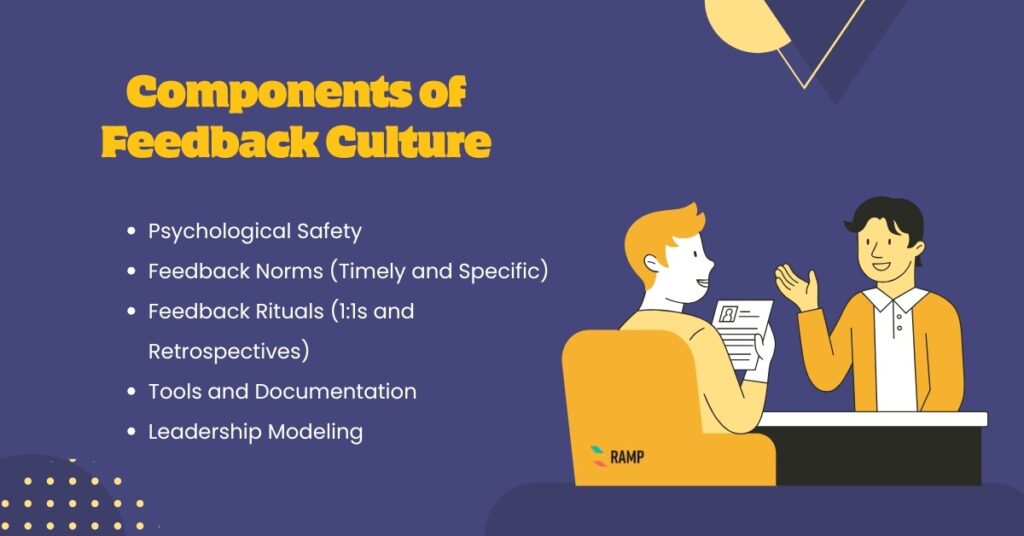
Below, each component of a strong feedback culture is explained in detail to help put these concepts into practice.
1. Psychological Safety
Feedback culture begins with psychological safety. Employees must feel safe offering ideas, asking questions, admitting mistakes, and accepting feedback without fearing embarrassment, punishment, or retaliation.
When psychological safety is strong:
- Employees communicate more openly
- Teams solve problems faster
- Feedback becomes more honest and useful
- People focus on improvement instead of self-protection
Managers play a major role in creating this environment through respectful communication and supportive leadership.
2. Feedback Norms (Timely and Specific)
Healthy feedback cultures use clear communication norms. Give feedback promptly, target specific actions, balance positive and constructive input, and comment on observable behavior, not personality.
Effective feedback usually:
- Happens close to the event
- Uses real examples
- Focuses on actions and outcomes
- Explains impact clearly
- Encourages improvement
Example of Strong Feedback
“Your project update was very clear and helped the team make decisions faster.”
Example of Weak Feedback
“Good job.”
Delivering specific feedback creates learning opportunities, while using vague comments breeds confusion.
3. Feedback Rituals (1:1s and Retrospectives)
Feedback becomes sustainable when organizations build regular feedback discussions into daily work routines.
Common feedback rituals include:
One-on-One Meetings (1:1s)
Managers and employees discuss:
- Progress
- Challenges
- Goals
- Support needs
- Development opportunities
Team Retrospectives
Teams reflect on:
- What worked well
- What did not work
- Lessons learned
- Process improvements
Project Debriefs
Teams review outcomes after completing projects or major tasks.
Informal Check-Ins
Quick conversations catch issues before they escalate into larger problems.
Regular rituals normalize feedback and reduce anxiety around performance discussions.
4. Tools and Documentation
Organizations often use tools and documentation systems to support consistent feedback practices.
Common tools include:
- Performance management software
- Goal-tracking systems
- Feedback forms
- Employee engagement platforms
- Shared development plans
- Meeting notes and action trackers
Documentation helps:
- Track progress over time
- Maintain accountability
- Reduce misunderstandings
- Support performance discussions with evidence
However, tools should support conversations, not replace human interaction.
5. Leadership Modeling
Leaders define feedback culture through their actions. Employees watch how managers deliver, receive, and respond to feedback.
Strong leaders:
- Ask for feedback openly
- Accept criticism professionally
- Give constructive feedback respectfully
- Recognize employee contributions
- Encourage honest communication
- Respond calmly to mistakes
When leaders avoid feedback or react defensively, employees usually do the same.
A feedback culture becomes stronger when leaders consistently model openness, accountability, and continuous learning.
Do This Weekly / Monthly
Simple routines help organizations maintain a healthy feedback culture consistently.
Weekly
- Hold short 1:1 check-ins
- Recognize employee achievements publicly
- Give timely feedback on completed work
- Ask employees for input and suggestions
Monthly
- Conduct team retrospectives
- Review development goals and progress
- Identify recurring communication or workflow challenges
- Document improvement actions and follow-up plans
Small but consistent actions build stronger communication habits over time.
Q&A
How do you start a feedback culture if people avoid feedback?
Step 1: Create Psychological Safety
Encourage respectful communication and ensure employees can speak honestly without fear of punishment.
Step 2: Start Small and Consistent
Use short, low-pressure feedback conversations during regular meetings rather than relying solely on formal reviews.
Step 3: Train Leaders First
Managers should learn how to give constructive, balanced, and specific feedback before expecting employees to participate openly.
A strong feedback culture improves communication, performance, collaboration, and employee development through ongoing, respectful feedback. It creates an environment of support, inclusion, and motivation.
Feedback cultures depend on psychological safety, clear norms, regular rituals, supportive tools, and strong leadership. When feedback becomes routine rather than occasional, organizations adapt and grow.