
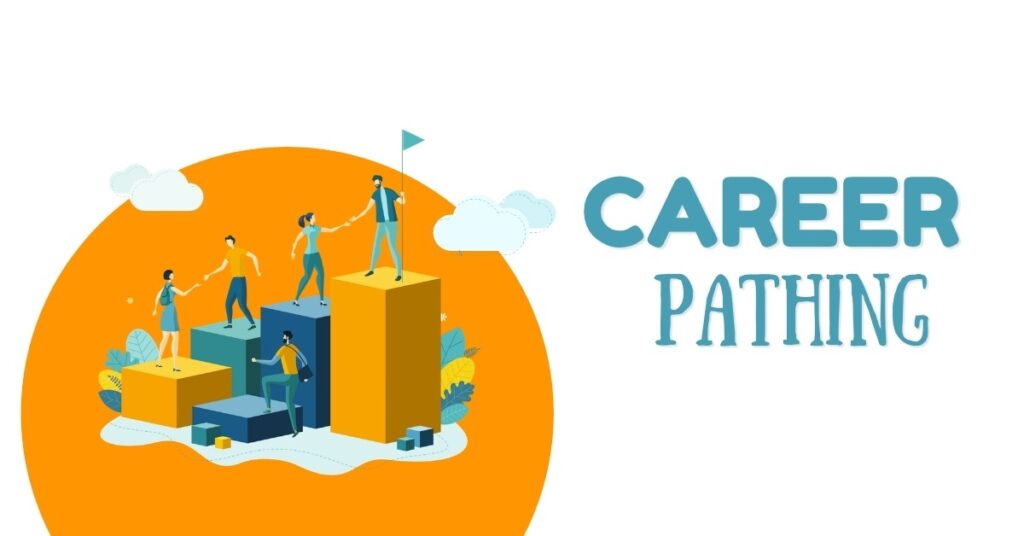
Career pathing is a structured system that shows employees how they can progress within an organization through defined roles, skill requirements, development opportunities, and advancement criteria. It helps employees understand possible career routes and the capabilities needed to move from one role to another over time.
Career pathing is different from general career advice because it is built around organizational structures, workforce needs, and clearly defined progression frameworks.
Career Pathing vs. Career Planning
Although the terms are related, they are not the same.
- Career planning focuses on an individual's personal career goals and aspirations.
- Career pathing provides the organizational structure and progression routes that support those goals.
Career planning is personal and flexible, while career pathing is organizational and structured.
Succession Planning vs. Career Pathing
Career pathing also differs from succession planning.
- Succession planning identifies employees who may eventually fill critical leadership or business roles.
- Career pathing supports broader workforce progression across many functions and levels, not only leadership positions.
Succession planning focuses on organizational continuity. Career pathing focuses on long-term employee growth and internal mobility.
Why Career Pathing Matters?
In modern organizations, employees want visibility into future opportunities. Without a clear path for growth, motivation and retention often decline.
Career pathing matters because it supports both employee experience and long-term business strategy.
How Career Pathing Supports Employees?
Career pathing helps employees:
- Understand potential growth opportunities
- Stay motivated and engaged
- Build confidence in long-term career progression
- Focus learning and development efforts more effectively
- See how their work connects to future opportunities
Employees are more likely to stay committed when they can clearly see where their careers can go.
Research on career path planning and organizational performance explains that structured career path planning can positively influence both employee performance and organizational performance. The study highlights that clear career movement, promotion, transfer, and development systems help employees understand their future opportunities and align their growth with organizational needs. This underscores the importance of career pathing, as transparent progression routes improve motivation, retention, internal mobility, and long-term workforce readiness.
How Career Pathing Supports Organizations?
For organizations, career pathing helps:
- Improve employee retention
- Strengthen internal mobility
- Increase performance through development clarity
- Build stronger leadership pipelines
- Support workforce planning and succession readiness
- Reduce external hiring dependence
Career pathing transforms talent development into a long-term workforce strategy rather than a short-term HR activity.
Core Components of Career Pathing
An effective career pathing system typically includes several interconnected elements.
Role Progression Frameworks
Organizations should define how roles progress from entry-level to advanced positions.
Examples may include:
- Junior → Mid-Level → Senior → Lead → Director
- Associate → Specialist → Manager → Senior Manager
Clear structures reduce confusion around advancement.
Skill Requirements for Each Level
Each role level should include defined skill expectations.
These may involve:
- Technical competencies
- Leadership abilities
- Communication capability
- Strategic thinking
- Decision-making skills
Employees need clarity about what is required to advance.
Competency Mapping
Competency mapping identifies the knowledge, behaviors, and abilities associated with specific roles.
This helps organizations:
- Standardize expectations
- Evaluate readiness consistently
- Align development efforts with business needs
Development Milestones
Career paths should include measurable growth checkpoints.
Milestones may involve:
- Completing certifications
- Leading projects
- Achieving performance benchmarks
- Demonstrating leadership behaviors
Milestones help employees track progress toward advancement.
Promotion Criteria
Employees should understand how promotion decisions are made.
Promotion criteria may include:
- Performance results
- Skill mastery
- Behavioral competencies
- Leadership readiness
- Business impact
Clear criteria improve fairness and transparency.
Performance Expectations
Every career level should include performance standards that define successful role execution.
This creates alignment between:
- Daily responsibilities
- Growth expectations
- Advancement readiness
Learning Pathways
Career pathing should connect employees to relevant learning opportunities.
Learning pathways may include:
- Training programs
- Online learning
- Certifications
- Coaching
- Cross-functional assignments
Development resources make progression achievable rather than theoretical.
Manager Support
Managers play a major role in career progression.
Their responsibilities include:
- Conducting career conversations
- Identifying readiness gaps
- Recommending development activities
- Supporting employee growth plans
Employee Ownership
Career pathing works best when employees actively participate in their own growth.
Employees should:
- Explore opportunities
- Build required skills
- Seek feedback
- Take initiative in development activities
Vertical, Lateral, and Nonlinear Career Paths
Modern organizations no longer rely on only one type of career progression.
Vertical Career Pathing
Vertical pathing involves upward promotion into higher-level positions.
Examples:
- Coordinator → Manager → Director
- Analyst → Senior Analyst → Department Head
This is the traditional advancement model focused on increased responsibility and leadership.
Lateral Career Pathing
Lateral pathing involves movement across functions or specialties at a similar organizational level.
Examples:
- Marketing specialist moving into product management
- HR coordinator transitioning into talent development
Lateral moves help employees broaden their experience and develop cross-functional capability.
Nonlinear Career Pathing
Nonlinear career paths involve flexible movement across roles, projects, teams, and skill areas.
Examples may include:
- Project-based leadership assignments
- Temporary cross-functional work
- Hybrid technical and operational roles
This approach reflects modern workplaces where careers are less rigid and more skill-driven.
How Career Pathing Connects to Employee Development?
Career pathing depends heavily on development systems. Without development support, career paths remain theoretical.
Organizations typically connect career pathing with:
- Training programs
- Coaching and mentoring
- Stretch assignments
- Skill-building initiatives
- Professional certifications
- Internal projects
- Leadership readiness programs
Development activities help employees gain the capabilities required for future roles.
For example:
- Leadership training prepares employees for management tracks
- Cross-functional projects support lateral movement
- Certifications strengthen technical progression pathways
Career pathing and employee development should operate as one integrated system.
Role of Managers, HR, and Employees
Successful career pathing requires shared responsibility.
People Operations and HR Responsibilities
HR and People Ops teams typically:
- Define career frameworks
- Map skills and competencies
- Create role visibility across the organization
- Support internal mobility processes
- Align career paths with workforce strategy
- Maintain consistency across departments
HR creates the structure that enables career progression.
Manager Responsibilities
Managers are responsible for:
- Discussing employee aspirations
- Identifying development gaps
- Supporting development plans
- Providing ongoing feedback
- Helping employees navigate progression opportunities
Managers act as development partners, not just performance supervisors.
Employee Responsibilities
Employees should:
- Explore career interests
- Build required capabilities
- Seek learning opportunities
- Request feedback regularly
- Take ownership of progression decisions
Career growth is more effective when employees actively participate rather than wait for advancement opportunities to appear automatically.
How Organizations Build Career Paths?
Organizations typically create career pathing systems through a structured process.
Step 1: Define Job Families
Roles are grouped into functional categories such as:
- Finance
- Marketing
- Operations
- Engineering
- Customer support
This creates organizational clarity.
Step 2: Map Role Levels
Each job family should include progression levels with increasing responsibility.
Step 3: Identify Competencies and Skills
Organizations define:
- Technical skills
- Leadership behaviors
- Functional competencies
- Communication expectations
Step 4: Define Progression Criteria
Clear advancement standards should explain:
- What performance is expected
- What capabilities must be demonstrated
- What experiences are required
Step 5: Connect Learning Resources
Employees should have access to:
- Courses
- Certifications
- Mentoring programs
- Development assignments
Step 6: Train Managers on Career Conversations
Managers need guidance on:
- Development discussions
- Readiness evaluation
- Career coaching
Step 7: Create Employee Visibility Into Paths
Employees should be able to see:
- Potential career routes
- Skill requirements
- Available opportunities
Transparency improves engagement and trust.
Step 8: Review and Update Career Paths
Career structures should evolve as:
- Business priorities change
- Technology changes work requirements
- New skills emerge
Career pathing systems must remain flexible and up to date.
Performance Management and Career Pathing
Career pathing works closely with performance management systems.
It connects directly to:
- Performance reviews
- Development plans
- Skill-gap analysis
- Promotion readiness evaluations
- Succession planning
- Feedback systems
- Employee growth goals
Performance discussions become more meaningful when employees understand how current performance connects to future opportunities.
For example:
- A performance review may identify leadership gaps
- A development plan addresses those gaps
- Career pathing shows where leadership capability could lead
This creates continuity between evaluation, development, and progression.
Employee Outcomes and Organizational Outcomes
Employee Outcomes
Effective career pathing helps employees achieve:
- Clearer career direction
- Stronger motivation and engagement
- Better learning focus
- Increased confidence about future growth
- Greater commitment to staying with the organization
Organizational Outcomes
For organizations, career pathing supports:
- Higher employee retention
- Stronger internal hiring capability
- Lower turnover and recruitment costs
- Improved leadership pipeline strength
- Better workforce planning
- Higher return on development investments
Organizations benefit when internal talent becomes more visible, prepared, and mobile.
Common Challenges and Mistakes
Many organizations struggle with career pathing because systems are incomplete or unclear.
Common mistakes include:
- Unclear promotion criteria
- Limited visibility into internal opportunities
- Overreliance on manager discretion
- Career paths focused only on management advancement
- Weak development support systems
- Lack of skills mapping
- Poor internal mobility processes
- Career conversations that never result in action
When career pathing lacks transparency or fails to execute, employees may lose trust in the process.
Career Pathing in Remote and Hybrid Work
Remote and hybrid work environments create new challenges for career visibility.
Employees working remotely may:
- Have fewer informal networking opportunities
- Receive less visibility with leadership
- Experience slower access to advancement discussions
Organizations can address these issues through:
- Digital career pathing platforms
- Documented competency frameworks
- Transparent internal opportunities
- Remote mentoring programs
- Virtual development initiatives
- Structured career conversations
Companies must also avoid proximity bias, where employees physically present in the office receive more advancement opportunities than remote workers.
Career progression systems should remain fair and accessible regardless of work location.
Best Practices for Effective Career Pathing
Organizations can strengthen career pathing systems by following several best practices:
- Make career paths visible and easy to understand
- Define skills and competencies clearly
- Support multiple growth routes, not only management tracks
- Connect career pathing directly to employee development
- Train managers to conduct effective career conversations
- Use workforce data to evaluate mobility and readiness
- Review and update career frameworks regularly as business needs evolve
Career pathing is a structured progression system that helps employees understand how they can grow within an organization while strengthening internal talent pipelines. When connected to development, performance management, and workforce planning, career pathing improves engagement, retention, leadership readiness, and organizational agility. Modern career pathing works best when it is transparent, skill-based, flexible, and actively supported by HR, managers, and employees together.