

Common HiPo metrics help organizations measure the effectiveness of their high-potential employee programs by tracking talent retention, leadership readiness, succession strength, employee development, and long-term organizational impact. These metrics provide data-driven insights that support better talent management and future leadership planning.
The HiPo metrics are discussed in detail below.
HiPo Retention Rate
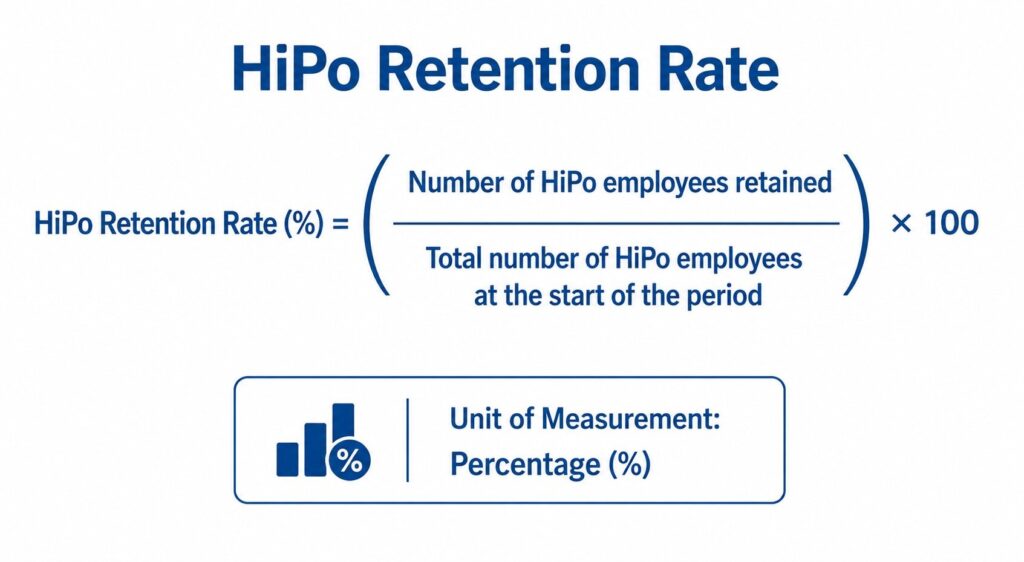
HiPo Retention Rate measures how effectively an organization retains its high-potential employees over a specific period. This metric indicates whether talented employees see long-term growth opportunities within the company and choose to stay. A high retention rate reflects strong employee satisfaction, career development, and organizational commitment. The formula used is: (Number of HiPo employees retained ÷ Total number of HiPo employees at the start of the period) × 100. The unit of measurement is expressed as a percentage (%).
The diagram below shows the formula and unit of measurement of HiPo Retention Rate.
The article "Retaining High Potential Employee (HiPos) in the Organization: A Why & How" explains that retaining high-potential employees is essential because they are valuable future contributors and possible leaders. It highlights the need to create growth opportunities, strengthen commitment, and help strong performers develop into high-potential talent. This underscores the importance of HiPo metrics, as organizations need to track retention, engagement, promotion, readiness, and movement into larger roles to determine whether their HiPo programs are actually working.
Internal Promotion Rate
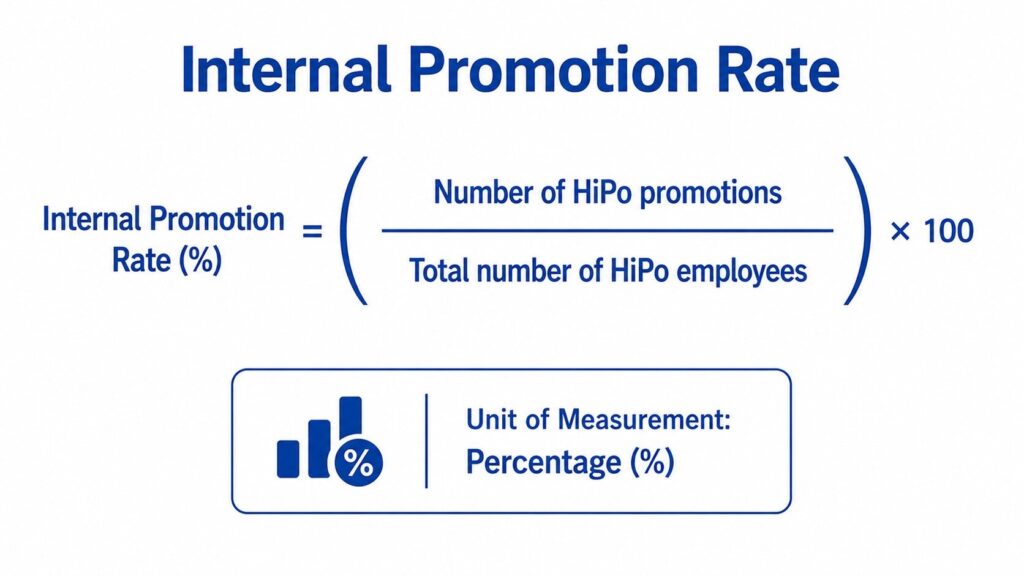
Internal Promotion Rate measures the percentage of high-potential employees who are promoted into higher-level or leadership positions within the organization. It reflects the effectiveness of leadership development and internal talent mobility strategies. Organizations with strong internal promotion rates are often more successful in building leadership pipelines from within. The formula is: (Number of HiPo promotions ÷ Total number of HiPo employees) × 100. The unit of measurement is percentage (%).
The diagram below shows the formula and unit of measurement of the internal promotion Rate.
Readiness for Key Roles
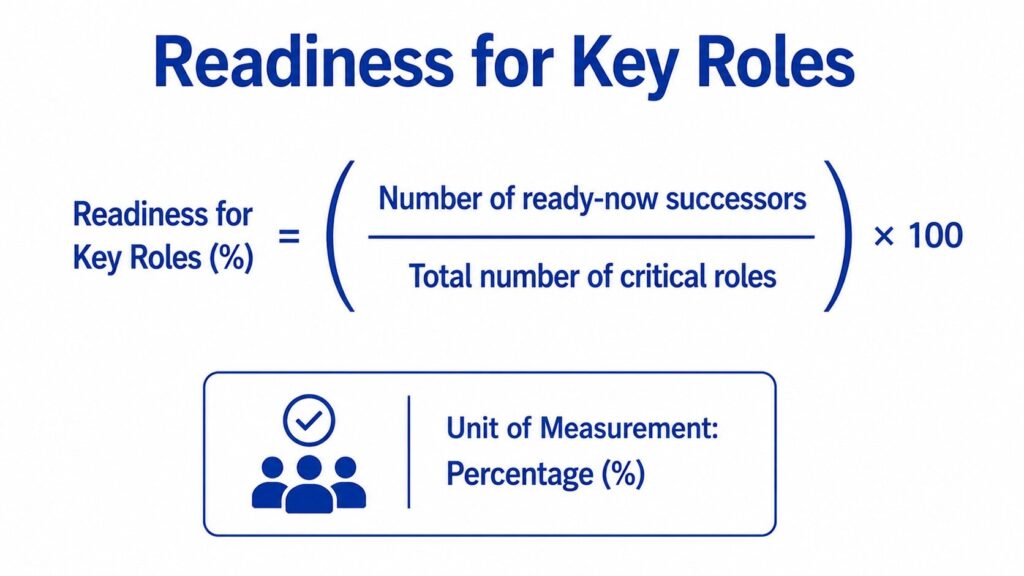
Readiness for Key Roles evaluates how prepared high-potential employees are to step into critical leadership or business positions when vacancies arise. This is one of the hiPo metrics that is essential for succession planning because it indicates whether the organization has capable successors ready to fill key roles. The formula is: (Number of ready-now successors ÷ Total number of critical roles) × 100. e calculation produces a percentage (%).
The diagram below shows the formula and unit of measurement for the readiness for key roles.
Succession Coverage
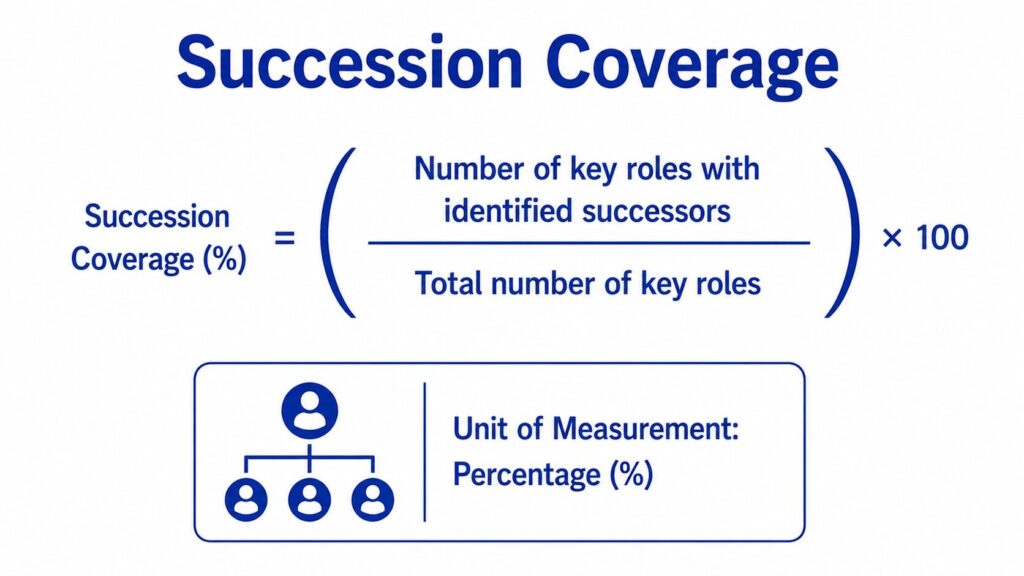
Succession Coverage measures the extent to which important organizational roles have identified successors. It shows how effectively the company maintains leadership continuity and addresses unexpected talent gaps. Strong succession coverage reduces organizational risk and supports business stability. The formula used is: (Number of key roles with identified successors ÷ Total number of key roles) × 100. The unit of measurement is percentage (%).
The diagram below shows the formula and unit of measurement of the succession coverage.
Program Completion Rates
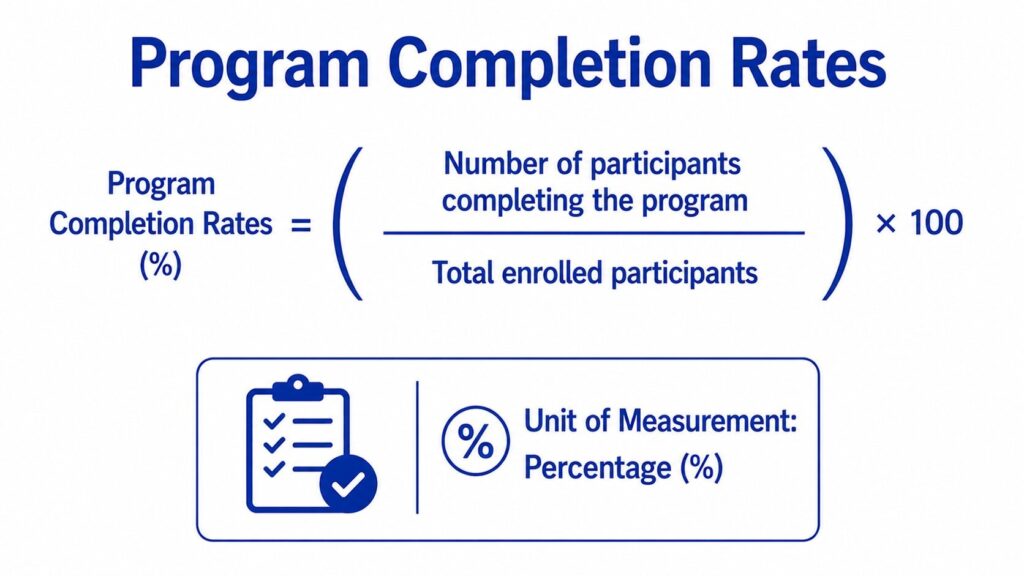
Program Completion Rates track the percentage of employees who successfully complete high-potential development programs, leadership training, or learning initiatives. This metric helps organizations assess participation levels, engagement, and the effectiveness of development programs. The formula is: (Number of participants completing the program ÷ Total enrolled participants) × 100. The unit of measurement is percentage (%).
The diagram below shows the formula and unit of measurement of the program completion rates.
Performance Growth Over Time
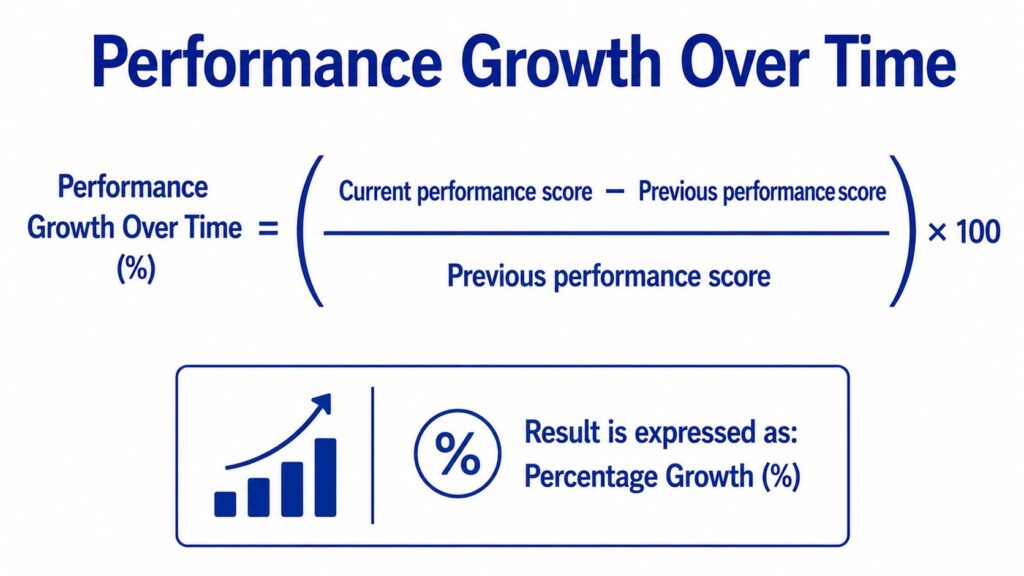
Performance Growth Over Time measures the improvement in employee performance, leadership capability, or business contribution over a defined period. It helps determine whether development programs are producing measurable long-term results. Organizations use this metric to evaluate the effectiveness of talent investment strategies. The formula is: ((Current performance score − Previous performance score) ÷ Previous performance score) × 100. The result is expressed as a percentage growth (%).
The diagram below shows the formula and unit of measurement of the performance growth over time metric.
Employee Engagement
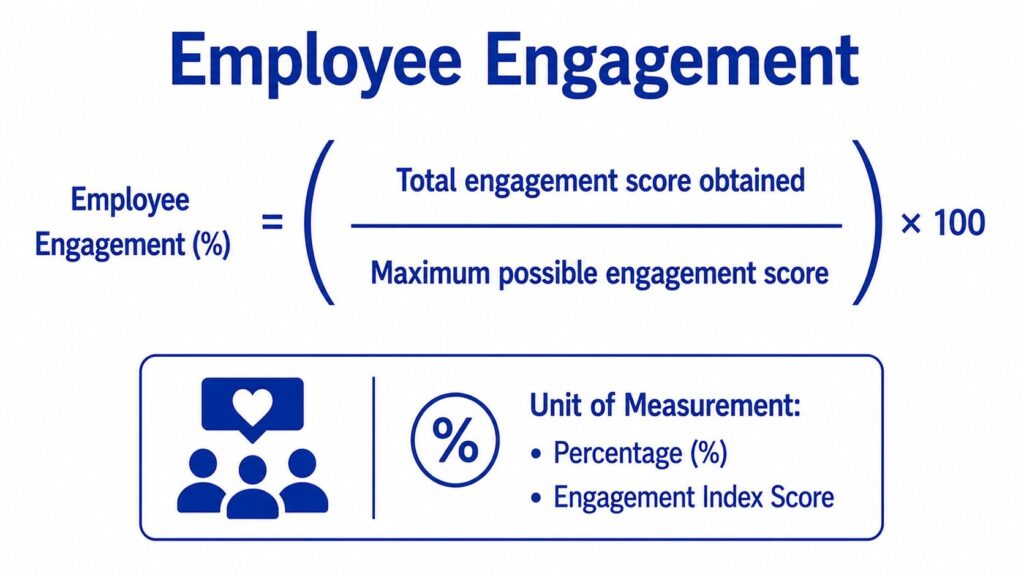
Employee Engagement measures the level of motivation, commitment, satisfaction, and emotional connection that high-potential employees have toward the organization and its development initiatives. High engagement levels are often associated with stronger performance, retention, and leadership readiness. The formula commonly used is: (Total engagement score obtained ÷ Maximum possible engagement score) × 100. The unit of measurement is usually a percentage (%) or an engagement index score.
The diagram below shows the formula and unit of measurement of employee engagement.
Movement into Larger Roles
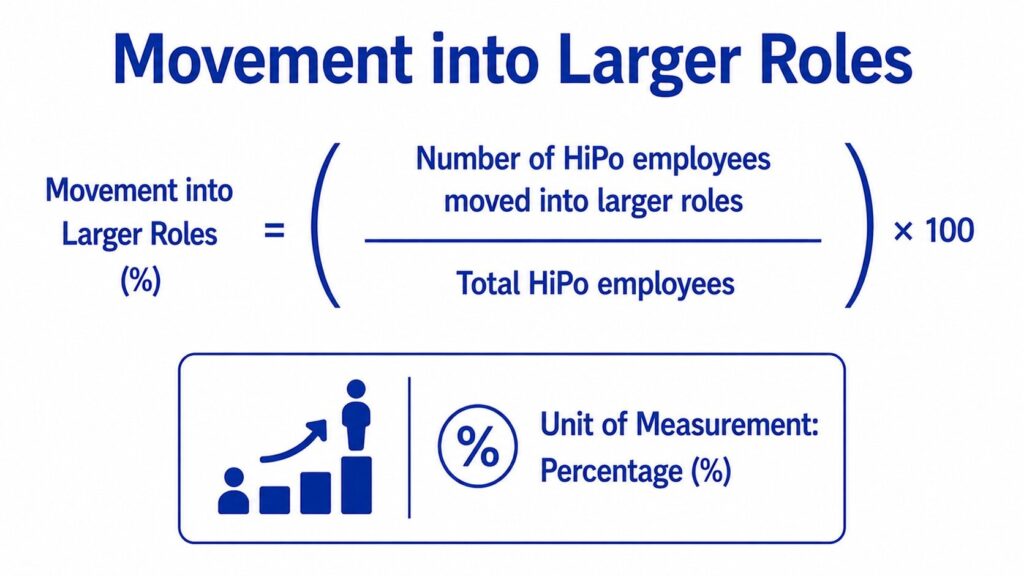
Movement into Larger Roles tracks how many high-potential employees transition into broader, more complex, or higher-responsibility positions over time. This metric helps organizations understand whether HiPo employees are progressing into roles that expand their leadership and strategic impact. The formula is: (Number of HiPo employees moved into larger roles ÷ Total HiPo employees) × 100. The unit of measurement is percentage (%).
The diagram below shows the formula and unit of measurement of Movement into Larger Roles.
Effective measurement of these metrics helps organizations strengthen leadership pipelines, improve succession planning, enhance employee development programs, and make more informed talent management decisions over time.