
A continuous performance review is an ongoing performance management approach that focuses on regular feedback, frequent check-ins, and real-time coaching throughout the year, rather than relying solely on a single formal annual evaluation. This method encourages continuous communication between managers and employees, allowing performance issues, achievements, and development opportunities to be addressed quickly. Continuous reviews improve employee engagement, adaptability, accountability, and overall performance improvement through consistent support and feedback.
Research on continuous, real-time feedback in the workplace shows that many organizations are moving away from traditional, formal reviews toward systems that allow frequent employee evaluation. The study explains that real-time feedback tools help supervisors and employees give, request, and receive competency-based feedback through digital platforms. This supports the value of continuous performance reviews as a more flexible and development-focused approach to improving employee performance.
How Continuous Performance Reviews Work?
Continuous performance reviews operate through ongoing interaction rather than a single scheduled evaluation. The diagram below summarizes the process of continuous performance review.
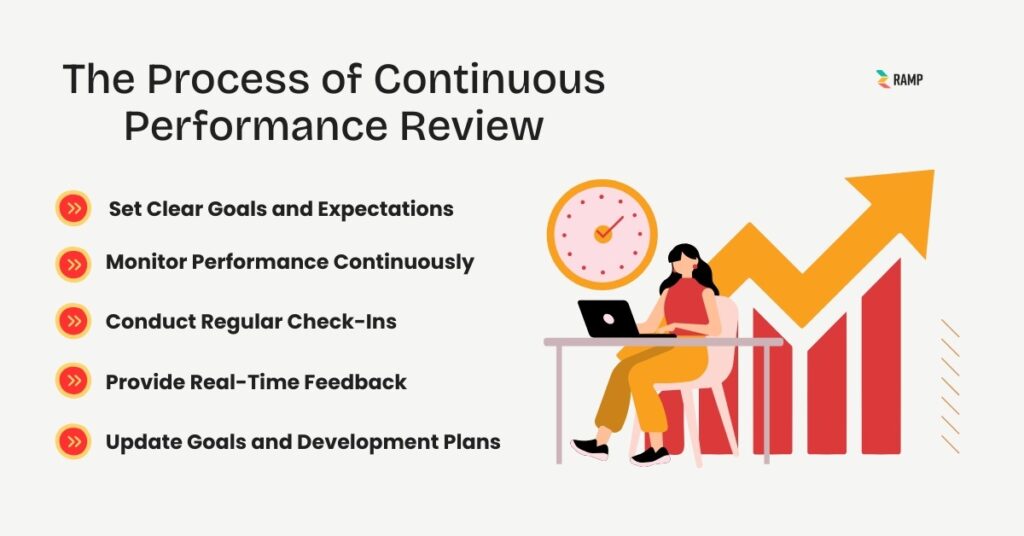
The details of the process are given below.
1. Set Clear Goals and Expectations
Managers and employees begin by defining performance expectations, responsibilities, and measurable objectives.
Goals may include:
- Project targets
- Productivity goals
- Customer service standards
- Skill development objectives
- Team collaboration expectations
Goals are often flexible and updated as priorities change.
2. Monitor Performance Continuously
Managers observe employee performance regularly during daily work activities.
Performance tracking may include:
- KPI progress
- Project outcomes
- Work quality
- Communication effectiveness
- Collaboration and teamwork
- Customer or client feedback
Frequent observation creates a more accurate understanding of employee performance.
3. Conduct Regular Check-Ins
Managers and employees hold frequent one-on-one conversations instead of waiting for annual meetings.
These discussions may occur:
- Weekly
- Biweekly
- Monthly
- After major projects
Check-ins focus on:
- Current progress
- Challenges
- Feedback
- Development needs
- Goal adjustments
Short and consistent conversations help prevent misunderstandings and performance gaps.
4. Provide Real-Time Feedback
Feedback is given close to the actual event or behavior instead of months later.
Managers discuss:
- Positive achievements
- Areas needing improvement
- Workplace behavior
- Communication issues
- Skill development opportunities
Real-time feedback allows employees to make faster corrections and improvements.
5. Update Goals and Development Plans
Performance goals are reviewed and adjusted continuously based on business needs and employee progress.
Organizations may update:
- Responsibilities
- Priorities
- Training plans
- Career development goals
- Performance expectations
This flexibility helps organizations respond to changing work environments more effectively.
Advantages of Continuous Performance Reviews
Continuous reviews provide several important benefits for both organizations and employees. The diagram below shows the advantages of continuous performance reviews.
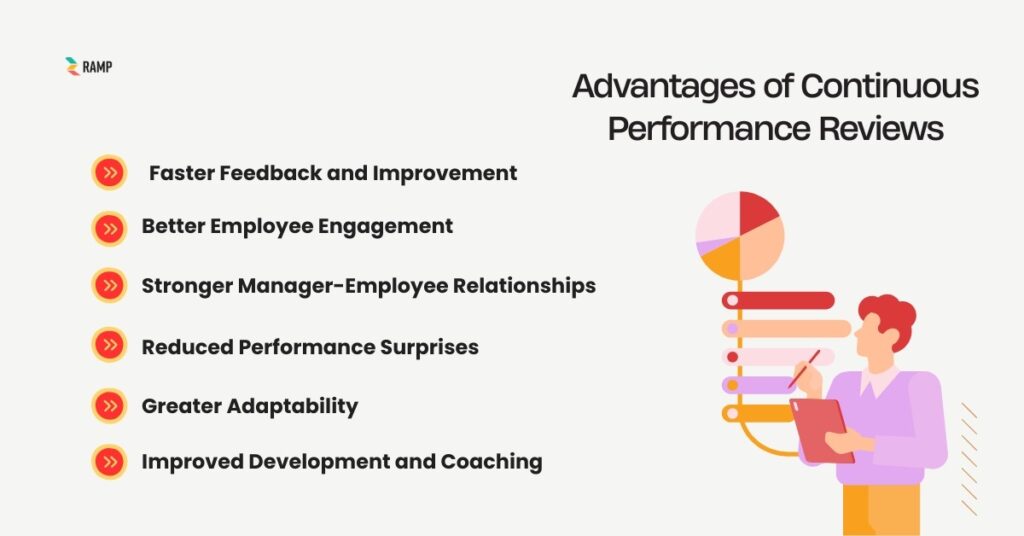
The advantages are explained in detail below.
- Faster Feedback and Improvement: Employees receive guidance immediately, allowing quicker correction of mistakes and stronger performance improvement.
- Better Employee Engagement: Frequent communication improves trust, motivation, and involvement.
- Stronger Manager-Employee Relationships: Regular conversations encourage openness and collaboration.
- Reduced Performance Surprises: Employees are less likely to face unexpected criticism during formal evaluations.
- Greater Adaptability: Goals and priorities can change quickly without waiting for yearly review cycles.
- Improved Development and Coaching: Managers can provide continuous support, mentoring, and skill-building opportunities.
Disadvantages of Continuous Performance Reviews
Despite their strengths, continuous review systems also have challenges. The diagram below shows the challenges of continuous performance reviews.
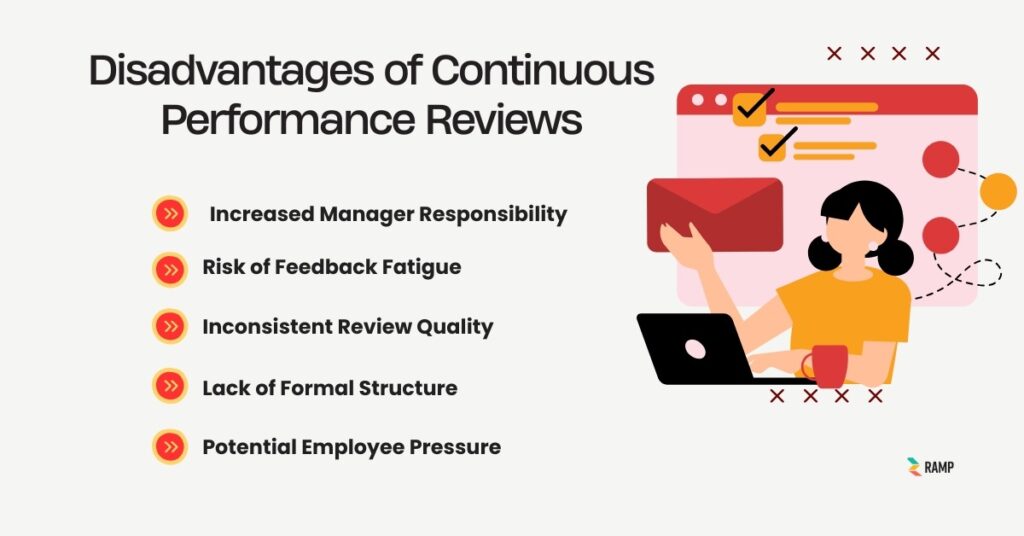
The details of the disadvantages are given below:
- Increased Manager Responsibility: Managers must dedicate more time to ongoing feedback and communication.
- Risk of Feedback Fatigue: Too much feedback may overwhelm employees if not delivered carefully.
- Inconsistent Review Quality: Some managers may struggle to consistently provide useful, balanced feedback.
- Lack of Formal Structure: Without proper systems, discussions may become informal and poorly documented.
- Potential Employee Pressure: Frequent performance discussions may make some employees feel constantly evaluated.
Common Bias Risks
Continuous feedback systems can still be affected by evaluation bias. The diagram below shows the common bias risks.
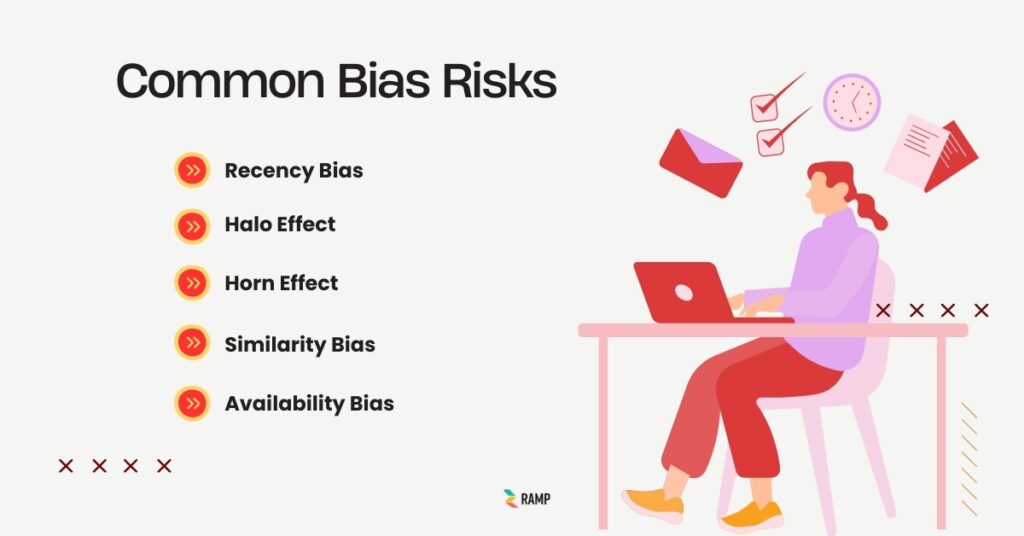
The details are given below.
- Recency Bias: Managers may focus heavily on the most recent performance events during discussions.
- Halo Effect: One strong achievement may positively influence all future evaluations.
- Horn Effect: A single mistake may unfairly affect overall performance perception.
- Similarity Bias: Managers may unconsciously favor employees with similar personalities or working styles.
- Availability Bias: Managers may rely solely on easily recalled situations rather than reviewing broader performance patterns.
Organizations must actively manage these risks to maintain fairness and credibility.
Safeguards for Effective Continuous Performance Reviews
Strong safeguards improve consistency, fairness, and effectiveness.
- Use Clear Performance Expectations: Employees should understand goals, responsibilities, and evaluation standards clearly.
- Document Feedback Regularly: Managers should keep brief records of important discussions, achievements, and concerns.
- Train Managers in Coaching Skills: Managers need training on communication, feedback delivery, and bias awareness.
- Balance Positive and Constructive Feedback: Employees should receive both recognition and improvement guidance.
- Focus on Observable Behaviors: Feedback should address actions, outcomes, and workplace behaviors rather than personal opinions.
- Schedule Structured Check-Ins: Regular meeting schedules improve consistency and accountability.
- Encourage Employee Participation: Encourage employees to actively discuss challenges, goals, and development needs.
When to Use Continuous Performance Reviews
Continuous performance reviews work best in environments that require flexibility, rapid adaptation, and ongoing communication. The diagram below shows when continuous performance reviews are used.
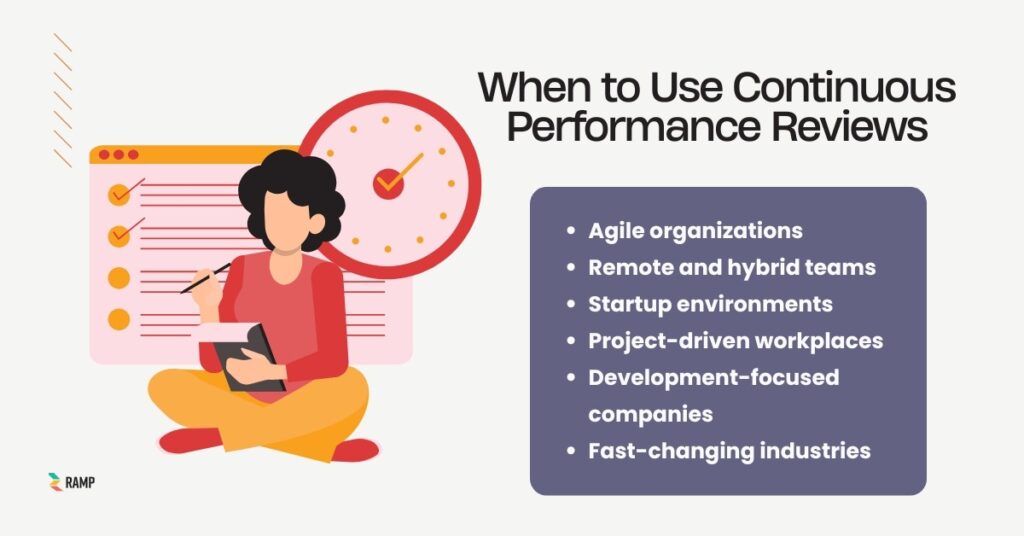
They are commonly used for:
- Agile organizations
- Remote and hybrid teams
- Startup environments
- Project-driven workplaces
- Development-focused companies
- Fast-changing industries
Organizations emphasizing employee growth and collaboration often prefer this approach.
Best Roles for Continuous Performance Reviews
Continuous reviews are especially effective for roles that involve changing priorities, teamwork, and ongoing collaboration.
Common Examples
- Software developers
- Project managers
- Sales professionals
- Customer support teams
- Marketing teams
- Creative professionals
- Remote employees
- Startup staff
These roles often benefit from fast feedback and flexible goal adjustments.
Situations Where Continuous Performance Reviews May Not Work Well
Continuous review systems may not suit every workplace or role.
- Highly Structured Organizations: Organizations relying heavily on formal hierarchy and annual documentation may struggle with continuous systems alone.
- Managers with Limited Time: Frequent feedback requires active manager involvement, which may be difficult in overloaded teams.
- Roles with Stable Long-Term Tasks: Jobs with repetitive responsibilities and slow-changing objectives may not require constant evaluation.
- Weak Feedback Cultures: If managers lack communication skills, continuous reviews may create confusion or frustration.
- Poor Documentation Practices: Without proper records, ongoing feedback may become inconsistent and difficult to track fairly.
In these situations, organizations often combine continuous feedback with periodic formal reviews for a better balance.
Continuous performance reviews create a more flexible, communication-driven approach to employee performance management. By replacing delayed yearly feedback with ongoing discussions and real-time coaching, organizations can improve employee engagement, adaptability, accountability, and development more effectively.
However, successful continuous review systems require clear expectations, skilled managers, consistent communication, and proper documentation. When implemented correctly, they help organizations build stronger teams, healthier feedback cultures, and more responsive performance management systems.