
Employee performance appraisal is a formal and structured process used to evaluate an employee's job performance, achievements, skills, behavior, and overall contribution during a specific review period. The appraisal usually involves performance measurement, feedback discussions, goal assessment, and development planning.
To support this understanding, EBSCO's article on Performance Appraisal explains that performance appraisal is a systematic process used to evaluate employee performance against defined standards. It highlights that appraisals not only provide feedback but also help identify improvement areas, training needs, and employee contributions toward organizational goals. This makes performance appraisal an important HR tool for both employee development and organizational decision-making.
Organizations use performance appraisals to:
- Measure employee effectiveness
- Identify strengths and weaknesses
- Support promotions and compensation decisions
- Improve communication between managers and employees
- Plan training and development
- Align employee goals with business objectives
Performance appraisals may be conducted annually, quarterly, continuously, or after specific projects, depending on organizational needs.
Difference Between Performance Review and Performance Appraisal
Although the terms are often used interchangeably, performance review and performance appraisal are not identical. The chart below highlights the key differences between the two approaches.
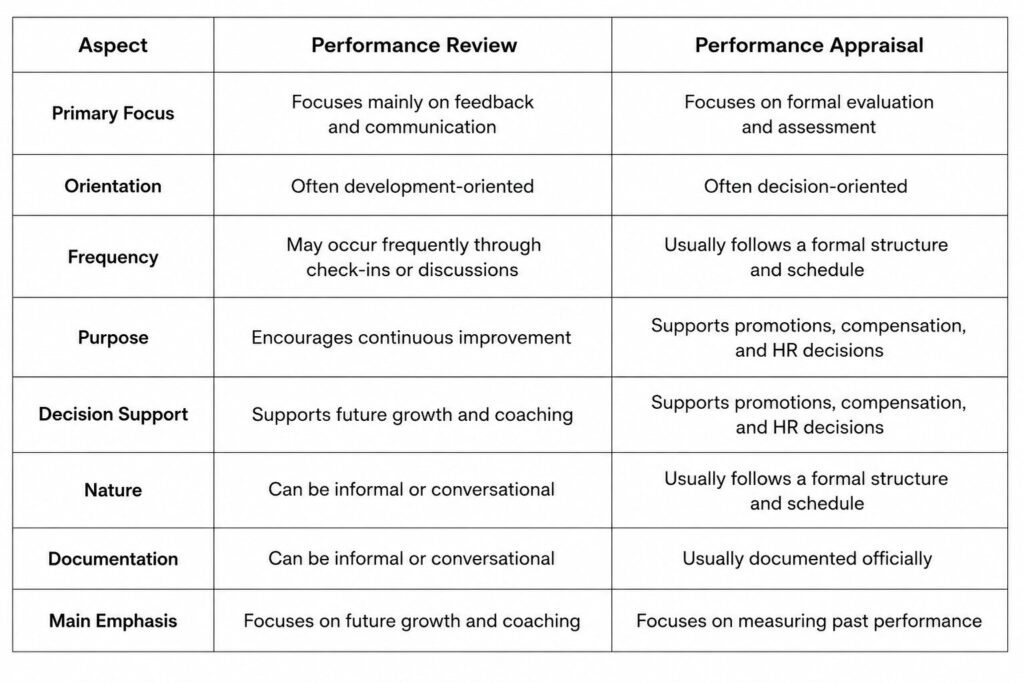
In practice, many organizations combine both approaches to create a balanced performance management system.
Types of Employee Performance Appraisal
The types of employee performance appraisal include:
1. Annual Performance Appraisal
2. Quarterly Performance Appraisal
3. Continuous Performance Appraisal
4. Self-Assessment Appraisal
5. Peer Performance Appraisal
6. Managerial Performance Appraisal
7. 360-Degree Performance Appraisal
8. Project-Based Performance Appraisal
9. Probationary Performance Appraisal
10. Rating Scale Performance Appraisal
11. Behaviorally Anchored Rating Scale (BARS) Appraisal
12. Objective-Based Appraisal (Management by Objectives – MBO)
Advantages of Employee Performance Appraisal
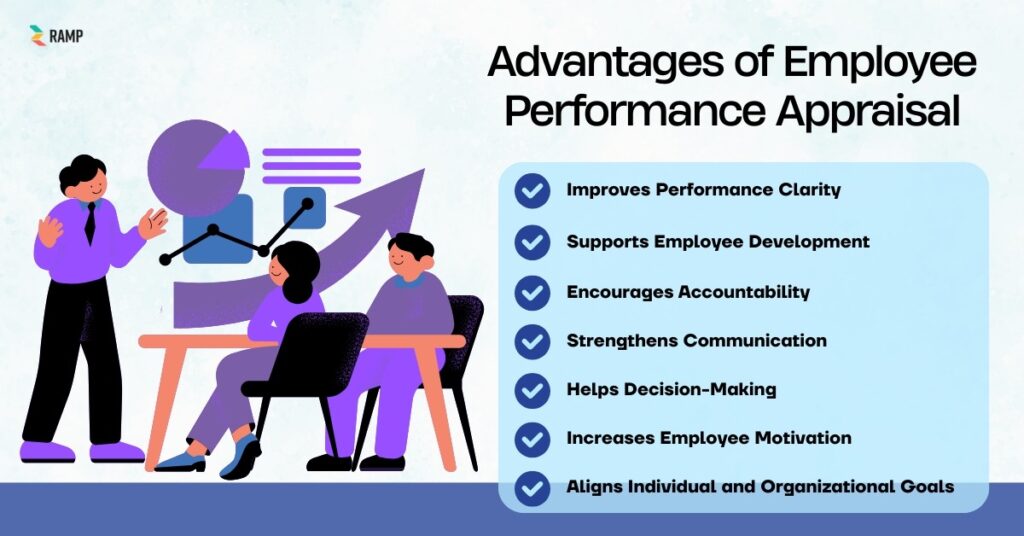
A properly managed appraisal system provides several important benefits. The diagram below shows the advantages of employee performance appraisal.
The details of the advantages are given below.
- Improves Performance Clarity: Employees gain a clearer understanding of expectations, goals, and workplace standards.
- Supports Employee Development: Appraisals help identify skill gaps, training needs, and career development opportunities.
- Encourages Accountability: Employees become more aware of their responsibilities and performance outcomes.
- Strengthens Communication: Regular appraisal discussions improve communication and trust between managers and employees.
- Helps Decision-Making: Organizations use appraisal results for promotions, salary adjustments, bonuses, and succession planning.
- Increases Employee Motivation: Recognition of achievements often improves engagement and morale.
- Aligns Individual and Organizational Goals: Employees understand how their work contributes to broader business objectives.
Disadvantages of Employee Performance Appraisal
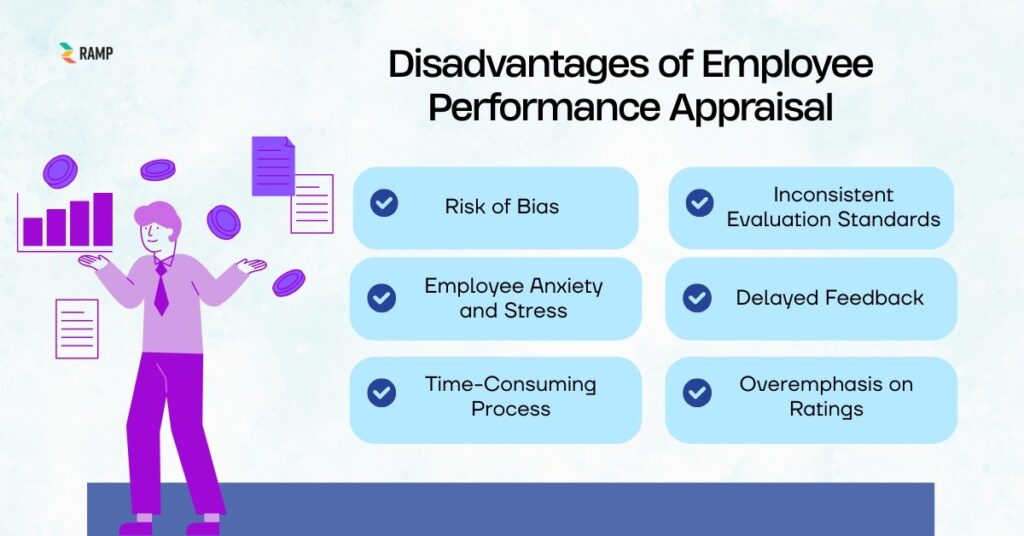
Despite their value, appraisal systems also have several challenges. The diagram below shows the disadvantages of employee performance appraisal.
The disadvantages are explained in detail below.
- Risk of Bias: Personal opinions and favoritism may bias evaluations.
- Employee Anxiety and Stress: Formal evaluations can create pressure and fear among employees.
- Time-Consuming Process: Large organizations may spend significant time managing appraisal systems.
- Inconsistent Evaluation Standards: Different managers may apply performance standards differently.
- Delayed Feedback: Traditional annual appraisals may provide feedback too late for immediate improvement.
- Overemphasis on Ratings: Employees may focus more on scores than on actual development and learning.
Organizations must manage these challenges carefully to maintain fairness and effectiveness.
How to Conduct an Effective Employee Performance Appraisal
An effective appraisal process requires preparation, structure, communication, and fairness. The diagram below shows the process of conducting an effective employee performance appraisal.
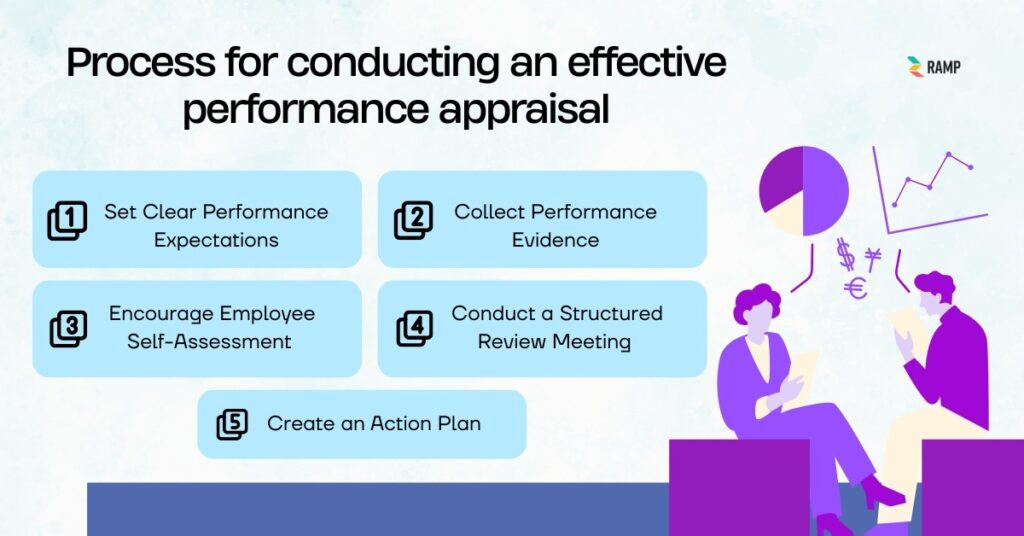
The process is explained in detail below.
1. Set Clear Performance Expectations
Employees should understand:
- Job responsibilities
- Performance goals
- KPIs
- Behavioral expectations
- Organizational standards
Clear expectations create a strong foundation for evaluation.
2. Collect Performance Evidence
Managers should gather information throughout the review period.
Evidence may include:
- KPI reports
- Project outcomes
- Customer feedback
- Attendance records
- Team collaboration observations
- Work quality examples
Evidence-based evaluations improve accuracy.
3. Encourage Employee Self-Assessment
Employees should reflect on:
- Achievements
- Challenges
- Strengths
- Improvement areas
- Career goals
Self-assessment increases participation and accountability.
4. Conduct a Structured Review Meeting
The appraisal discussion should focus on:
- Achievements and contributions
- Areas needing improvement
- Feedback from both sides
- Development opportunities
- Future goals
Managers should maintain respectful and constructive communication.
5. Create an Action Plan
The appraisal should end with a development-focused plan.
This may include:
- New performance goals
- Training opportunities
- Coaching support
- Skill development objectives
- Career progression planning
Clear action plans improve follow-through and accountability.
How Organizations Can Improve Employee Performance Appraisal Systems
Organizations can improve appraisal effectiveness by focusing on fairness, consistency, and development.
- Use Continuous Feedback
Regular feedback reduces surprises during formal appraisals.
- Train Managers Properly
Managers should learn:
- Feedback delivery
- Bias awareness
- Coaching techniques
- Communication skills
- Evaluation consistency
3. Use Measurable Performance Standards
Clear KPIs and observable behaviors improve objectivity.
4. Combine Multiple Evaluation Methods
Organizations can combine:
- Manager reviews
- Self-assessments
- Peer feedback
- Project-based reviews
- Continuous check-ins
Multiple perspectives improve evaluation accuracy.
5. Focus on Development Instead of Punishment
Employees respond better when appraisals support growth and learning.
6. Use Technology Carefully
Performance management systems can improve tracking and documentation, but should not replace meaningful conversations.
Best Practices for Performance Reviews
Strong performance review practices improve employee trust and organizational effectiveness.
- Maintain Regular Communication: Feedback should happen continuously, not only during annual reviews.
- Be Specific and Evidence-Based: Managers should use real examples and measurable outcomes.
- Focus on Observable Behaviors: Reviews should evaluate actions and outcomes rather than personal traits.
- Encourage Two-Way Discussion: Employees should actively participate in appraisal conversations.
- Recognize Achievements: Positive feedback is just as important as constructive criticism.
- Set Realistic Development Goals: Goals should be achievable, measurable, and relevant.
- Document Performance Consistently: Regular documentation improves fairness and accuracy.
- Address Problems Early: Managers should not wait until formal appraisals to discuss serious performance concerns.
Avoid These Common Mistakes
Many appraisal systems become ineffective because of avoidable mistakes. The diagram below shows common mistakes to avoid when conducting employee performance appraisals.
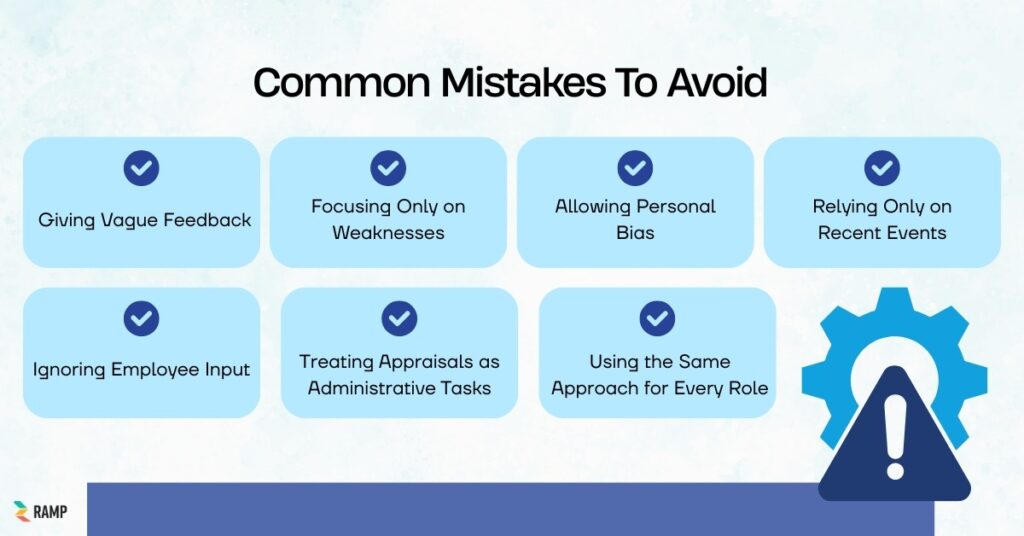
The details are given below.
- Giving Vague Feedback: General comments without examples confuse employees and limit opportunities for improvement.
- Focusing Only on Weaknesses: Employees also need recognition for achievements and strengths.
- Allowing Personal Bias: Managers should avoid favoritism, assumptions, and emotional judgment.
- Relying Only on Recent Events: Performance should be evaluated across the entire review period.
- Ignoring Employee Input: Employees should have opportunities to share perspectives and concerns.
- Treating Appraisals as Administrative Tasks: Performance discussions should support development, not just paperwork.
- Using the Same Approach for Every Role: Different roles require different evaluation methods and expectations.
Employee performance appraisal is a critical process that helps organizations evaluate performance, support employee development, improve communication, and align individual contributions with business goals. When designed properly, appraisal systems create fairness, accountability, and continuous growth for both employees and organizations.
However, effective performance appraisal requires more than formal ratings and yearly meetings. Organizations must focus on clear expectations, regular feedback, manager training, evidence-based evaluation, and employee involvement. When these elements work together, performance appraisal becomes a valuable tool for long-term organizational success and employee development.