A one-on-one meeting is a recurring manager–employee conversation designed to support coaching, alignment, problem-solving, performance development, and ongoing communication in a structured but personal setting.
Purpose of One-on-One Meetings
One-on-one meetings help managers and employees stay aligned on priorities, discuss challenges early, strengthen working relationships, and support long-term professional growth. Unlike status meetings, effective 1:1s focus on communication, feedback, development, and support rather than just task reporting.
An internal research "Hold Effective 1:1 Meetings "by Google on effective managers found that their high-scoring managers were those who held more frequent 1:1 ("one-on-one") meetings with their team members. The research further included tips from the organization's best managers on conducting effective 1:1 meetings.
Standard One-on-One Meeting Agenda
1. Personal and Work Check-In
Start with a brief check-in to understand how the employee is doing professionally and personally. This helps build trust and creates a more open conversation.
Typical discussion areas:
- Workload and stress levels
- Team dynamics
- Energy and motivation
- General wellbeing
2. Wins and Current Challenges
Review recent accomplishments, progress, and obstacles affecting work performance.
Discuss:
- Completed projects or milestones
- Positive outcomes and achievements
- Current blockers or risks
- Areas needing support or resources
3. Feedback in Both Directions
One-on-one meetings should allow feedback to flow both ways, not only from manager to employee.
Manager feedback may include:
- Performance observations
- Communication improvements
- Recognition and coaching
Employee feedback may include:
- Management support
- Workflow concerns
- Process frustrations
- Team communication issues
4. Priorities and Alignment
Clarify immediate priorities to keep expectations clear and manageable.
Focus on:
- Upcoming deadlines
- Key objectives
- Role expectations
- Priority shifts or organizational changes
5. Growth and Development
Dedicate time to long-term employee development instead of discussing only current tasks.
Topics may include:
- Skill development
- Career goals
- Leadership opportunities
- Training needs
- Professional growth plans
6. Commitments and Next Steps
End the meeting with clear action items and accountability.
Confirm:
- Decisions made
- Follow-up actions
- Ownership responsibilities
- Deadlines or next checkpoints
Recommended Meeting Cadence
The ideal frequency depends on role complexity, experience level, and pace of work.
- Weekly 1:1s work best for new hires, fast-moving roles, high-priority projects, or employees needing closer support.
- Biweekly 1:1s are effective for stable roles where communication rhythms are already strong.
Consistency matters more than meeting length. Short, focused conversations held regularly are usually more effective than infrequent, long meetings.
Documentation Rule
Managers should capture key decisions, action items, and commitments rather than attempting to document full meeting transcripts. Brief notes improve accountability without making conversations feel overly formal.
What Should Never Be in a 1:1?
One-on-one meetings should not become status-report sessions, disciplinary ambushes, or manager-only monologues. Employees should never be surprised by major criticism during a recurring 1:1, as important performance concerns should already have been addressed through ongoing feedback and communication.
How Do You Follow Up?
Follow-up should be simple, clear, and timely. Managers should summarize agreed actions, confirm responsibilities, and revisit previous commitments during the next meeting to maintain accountability and show progress over time.
One-on-One Meeting Templates
One-on-one meeting templates are structured conversation frameworks that help managers and employees run consistent, productive discussions by organizing feedback, priorities, coaching topics, and follow-up actions in a repeatable format.
Below, there are three templates given:
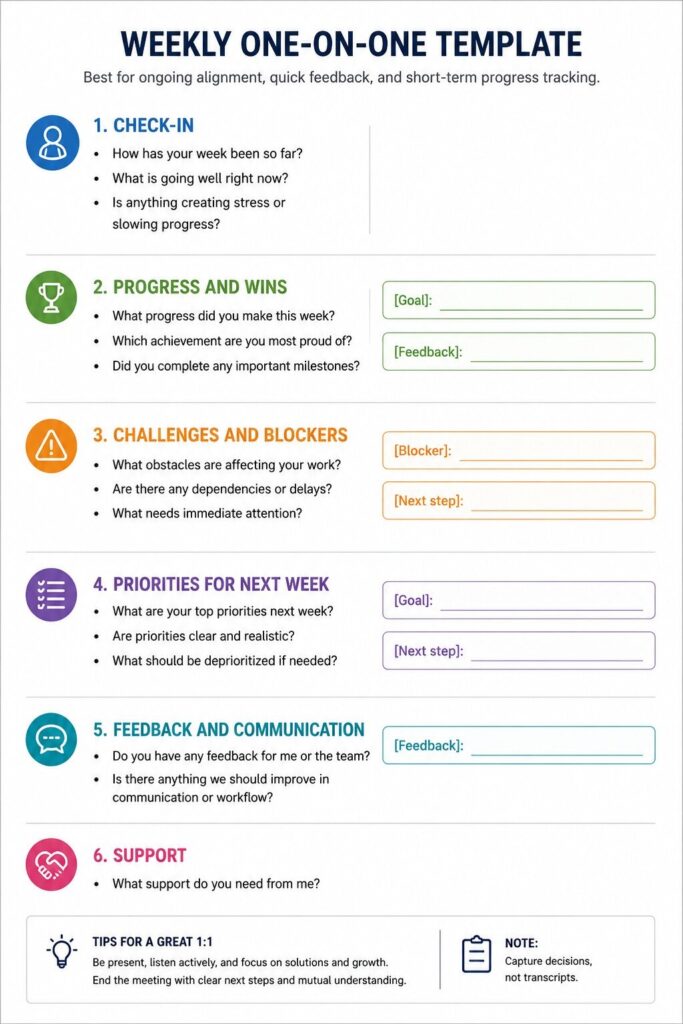
- Weekly one-on-one template
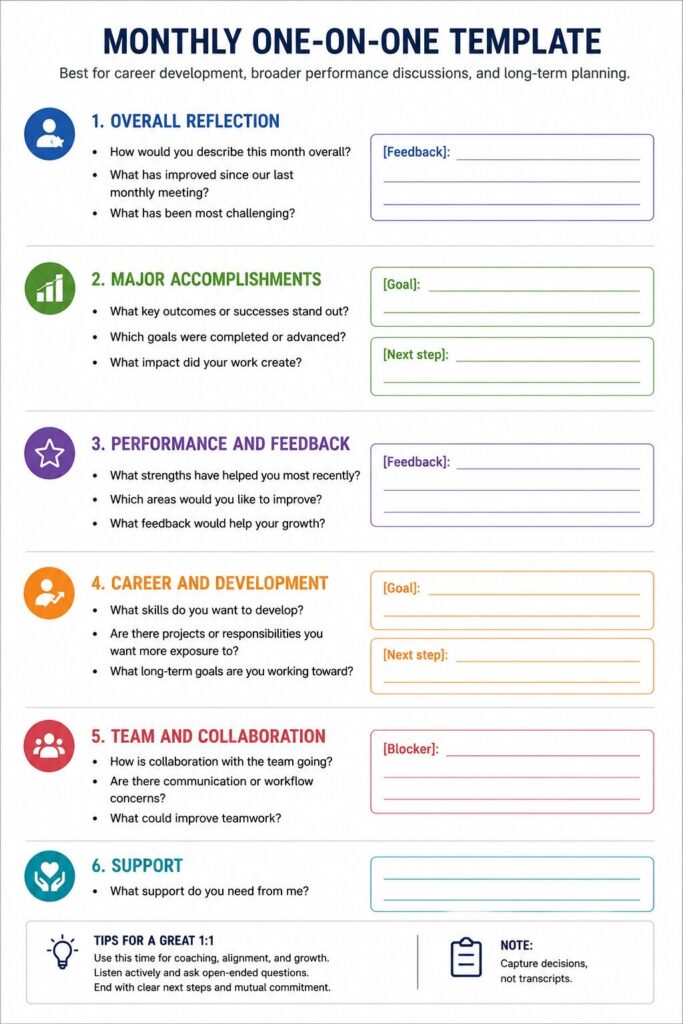
- Monthly one-on-one template
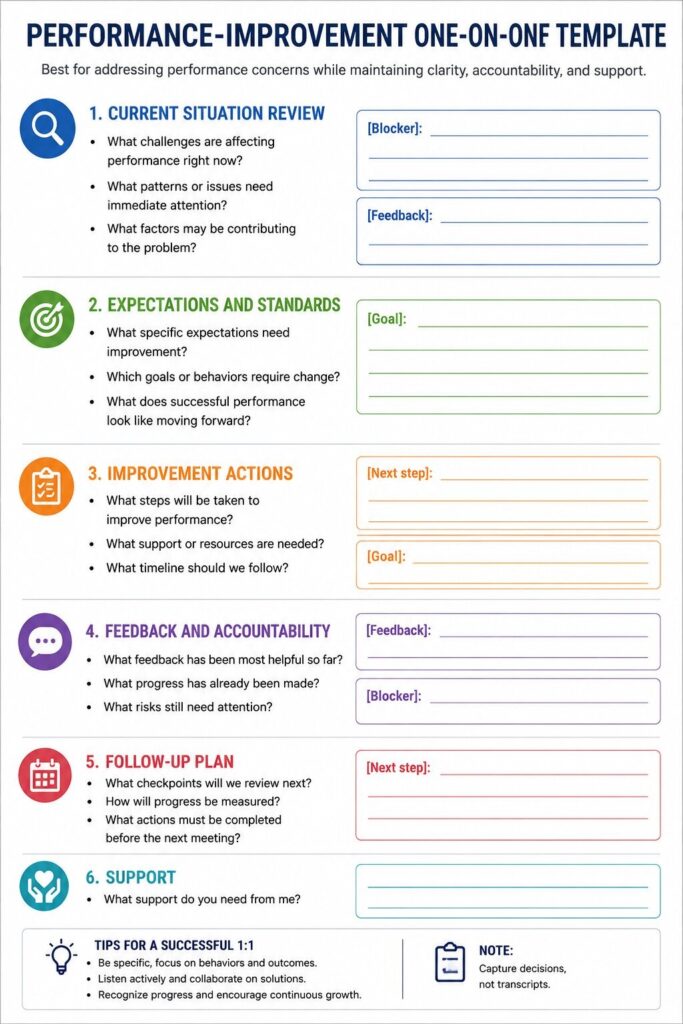
- Performance-Improvement One-on-One Template
Weekly One-on-One Template
Best for ongoing alignment, quick feedback, and short-term progress tracking.
Monthly One-on-One Template
Best for career development, broader performance discussions, and long-term planning.
Performance-Improvement One-on-One Template
Best for addressing performance concerns while maintaining clarity, accountability, and support.