
A rating scale performance review is a structured evaluation method that measures employee performance using numerical scores or descriptive rating levels across different performance categories. Managers assess areas such as productivity, communication, teamwork, leadership, technical skills, and reliability based on predefined scales. This method establishes a standardized approach to performance evaluation, making it easier for organizations to consistently compare employee performance across teams and departments.
How Rating-Scale Performance Reviews Work?
Rating-scale performance reviews usually follow a structured, standardized evaluation process. The diagram below shows the process of a rating-scale performance review.
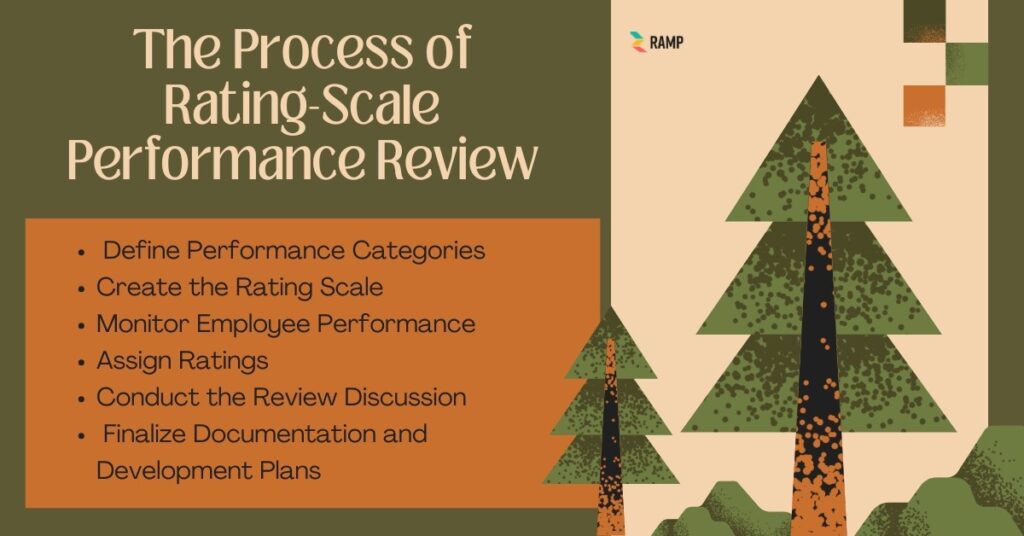
The details of the process are given below.
1. Define Performance Categories
Organizations first identify the performance areas that will be evaluated.
Common categories include:
- Work quality
- Productivity
- Communication
- Teamwork
- Leadership
- Problem-solving
- Reliability
- Attendance
- Goal achievement
Clear categories help maintain consistency across evaluations.
2. Create the Rating Scale
Organizations develop a scoring system for managers to use during evaluations.
Common examples include:
- 1 to 5 scale
- Poor to Excellent
- Needs Improvement to Outstanding
- Below Expectations to Exceeds Expectations
Each rating level should have clear definitions to reduce confusion.
Example:
- 1 = Unsatisfactory
- 2 = Needs Improvement
- 3 = Meets Expectations
- 4 = Exceeds Expectations
- 5 = Outstanding Performance
3. Monitor Employee Performance
Managers observe and document employee performance throughout the review period.
Performance information may come from:
- KPI reports
- Project results
- Attendance records
- Workplace observations
- Customer feedback
- Team collaboration
- Productivity data
Continuous documentation improves evaluation accuracy.
4. Assign Ratings
Managers evaluate each performance category using the predefined scale.
The evaluation may include:
- Numerical scores
- Written comments
- Performance examples
- Development notes
Managers should support ratings with measurable evidence whenever possible.
5. Conduct the Review Discussion
The manager and employee discuss the ratings during the performance review meeting.
The conversation may include:
- Areas of strong performance
- Improvement opportunities
- Goal achievement
- Feedback and clarification
- Development planning
- Future expectations
Employees should have the opportunity to ask questions and provide feedback.
6. Finalize Documentation and Development Plans
After the review meeting, the organization records the final evaluation.
The review may influence:
- Salary adjustments
- Promotions
- Bonuses
- Training plans
- Performance improvement actions
- Career development opportunities
The completed review becomes part of the employee's official record.
Advantages of Rating Scale Performance Reviews
Rating scale reviews offer several important organizational benefits. The diagram below shows the advantages of a rating-scale performance review.
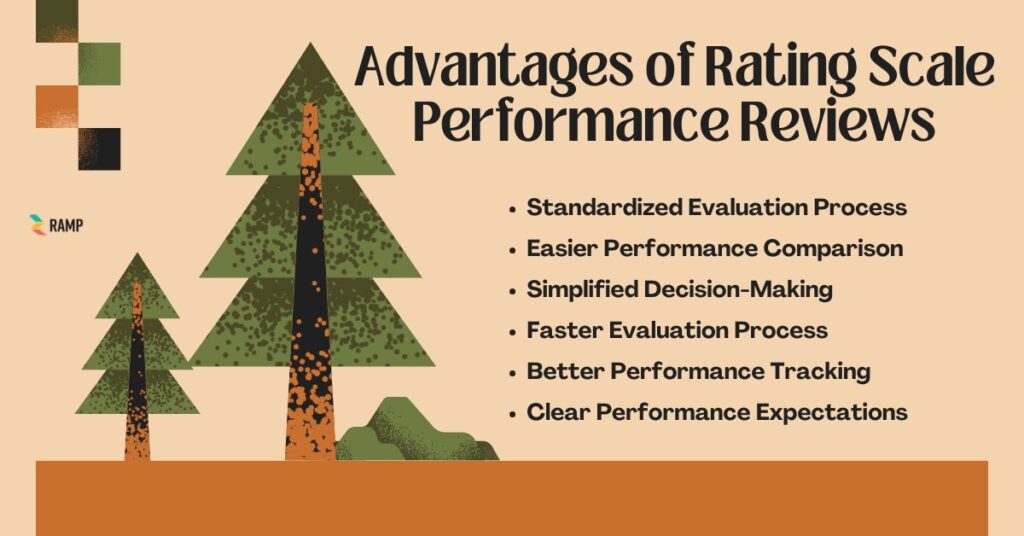
The details of the advantages are given below.
- Standardized Evaluation Process: The structured scale creates greater consistency across teams and departments.
- Easier Performance Comparison: Organizations can compare employee performance more efficiently using measurable ratings.
- Simplified Decision-Making: Numerical ratings support compensation, promotion, and development decisions.
- Faster Evaluation Process: Managers can complete reviews more efficiently compared to highly detailed narrative evaluations.
- Better Performance Tracking: Organizations can monitor performance trends over time using scoring data.
- Clear Performance Expectations: Employees understand the evaluation criteria and performance standards more easily.
A study on the application of the rating scale method in an employee performance assessment system found that standardized ratings can reduce subjectivity and improve evaluation consistency and accuracy. The digital system also made performance records more transparent and accessible to employees and managers. These findings demonstrate how structured rating scales can support fairer evaluations and more informed performance decisions.
Disadvantages of Rating Scale Performance Reviews
Despite their advantages, rating scale reviews also have limitations. The diagram below shows the disadvantages of a rating-scale performance review.
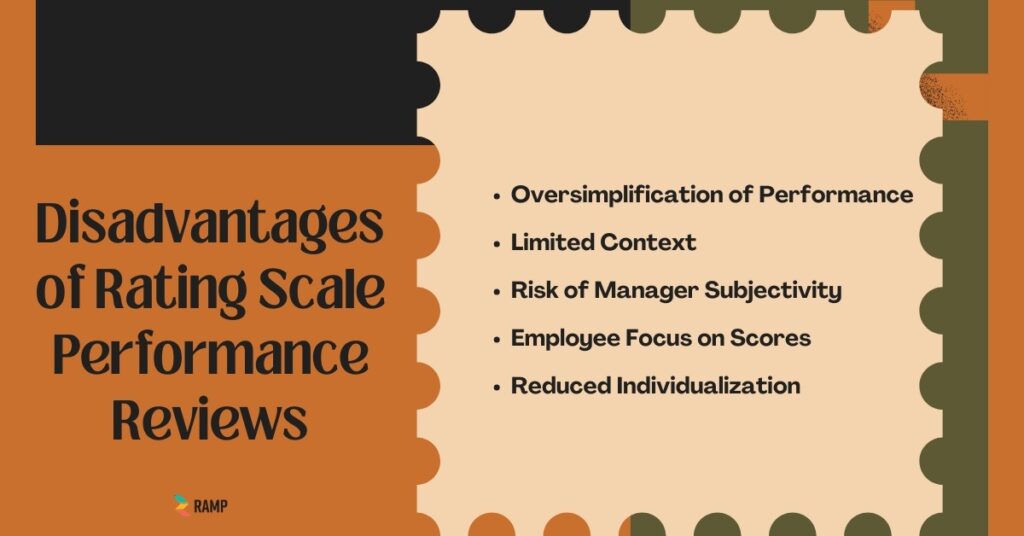
The details of the disadvantages are given below.
- Oversimplification of Performance: Numerical ratings may fail to fully capture the complexity of employee contributions.
- Limited Context: Scores alone may not explain why performance problems or successes occurred.
- Risk of Manager Subjectivity: Managers may interpret rating categories differently.
- Employee Focus on Scores: Employees may focus more on ratings than on development discussions.
- Reduced Individualization: Standardized forms may not accurately reflect role-specific responsibilities.
Common Bias Risks
Several biases can affect the performance of rating scales in performance reviews. The diagram below shows the common biases in a rating-scale performance review.
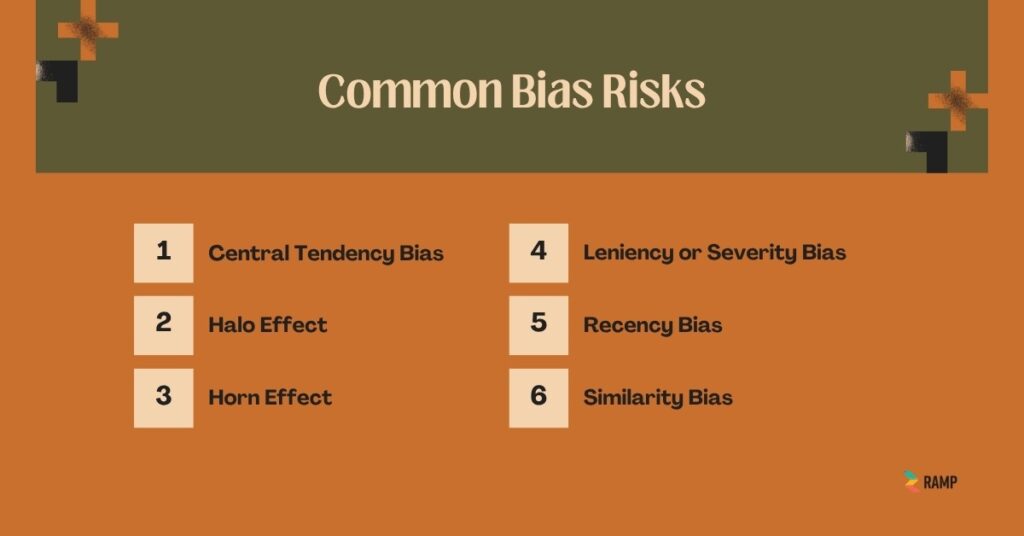
The details of the biases are given below.
- Central Tendency Bias: Managers avoid extreme ratings and place most employees near the middle of the scale.
- Halo Effect: One strong positive quality influences ratings across all categories.
- Horn Effect: One weakness negatively affects the entire evaluation.
- Leniency or Severity Bias: Some managers consistently rate employees too high or too low.
- Recency Bias: Managers may overemphasize recent performance events.
- Similarity Bias: Managers may favor employees with similar work styles or personalities.
Organizations should actively manage these risks to improve fairness and consistency.
Safeguards for Effective Rating Scale Performance Reviews
Several safeguards enhance the effectiveness and credibility of rating-scale reviews.
- Define Rating Criteria Clearly: Each rating level should include specific behavioral and performance descriptions.
- Use Evidence-Based Evaluation: Managers should support ratings with measurable results and real examples.
- Train Managers on Evaluation Standards: Training improves consistency and reduces bias.
- Combine Ratings with Written Feedback: Narrative comments provide context beyond numerical scores.
- Conduct Calibration Sessions: Organizations can compare ratings across managers to improve fairness.
- Review Performance Throughout the Year: Managers should document performance continuously rather than relying on memory.
- Encourage Two-Way Communication: Employees should participate actively in review discussions.
When to Use Rating Scale Performance Reviews
Rating-scale reviews work best when organizations need structured, measurable evaluation systems.
They are commonly used for:
- Annual performance reviews
- Large organizations
- Compensation decisions
- Promotion evaluations
- HR reporting and analytics
- Standardized workforce management
Organizations requiring consistent evaluation across many employees often prefer this method.
Best Roles for Rating Scale Performance Reviews
Rating scale reviews are especially effective for roles with measurable responsibilities and standardized expectations.
Common Examples
- Administrative employees
- Customer service representatives
- Retail employees
- Manufacturing staff
- Operations teams
- Call center employees
- Corporate office staff
- Entry-level and mid-level positions
These roles usually involve clearly defined performance expectations and measurable outcomes.
Situations Where Rating Scale Performance Reviews May Not Work Well
Rating scale reviews may be less effective in certain work environments.
- Creative or Innovation-Focused Roles: Creative contributions may be difficult to measure through standardized scoring systems.
- Highly Complex Leadership Roles: Leadership performance often requires deeper qualitative evaluation.
- Fast-Changing Work Environments: Rigid rating systems may not adapt quickly to changing responsibilities.
- Small Organizations with Informal Cultures: Formal rating systems may feel unnecessary or overly restrictive.
- Organizations with Weak Evaluation Training: Poor managers' understanding of rating systems can reduce consistency and fairness.
In these situations, organizations often combine rating scales with narrative feedback, continuous coaching, or multi-source evaluations.
Rating-scale performance reviews provide a structured, measurable approach to employee evaluation by using standardized scoring systems across defined performance categories. They help organizations improve consistency, simplify performance comparison, support decision-making, and track employee progress over time.
However, their effectiveness depends on clear rating criteria, manager training, evidence-based evaluation, and balanced communication. When combined with constructive feedback and ongoing performance discussions, rating scale reviews become a more accurate and development-focused performance management tool.