

Measuring workplace culture involves evaluating employee experiences, organizational behaviors, leadership practices, communication patterns, and the overall work environment using qualitative and quantitative methods. It helps organizations identify cultural strengths, detect workplace issues early, improve employee engagement, and align everyday behaviors with business goals and organizational values.
Workplace culture cannot be measured solely by assumptions. Organizations need structured tools, consistent data collection, and ongoing analysis to understand how employees truly experience the workplace. Effective culture measurement combines employee feedback, behavioral trends, operational metrics, and organizational performance indicators.
Why Measuring Workplace Culture Matters?
A strong workplace culture directly affects employee engagement, productivity , retention, collaboration, and business performance. Measuring culture allows organizations to move beyond opinions and make evidence-based decisions.
Organizations measure workplace culture to:
- Understand employee sentiment
- Identify leadership or communication problems
- Detect disengagement early
- Improve retention and morale
- Strengthen collaboration and trust
- Evaluate inclusion and psychological safety
- Support organizational change initiatives
- Align culture with strategic objectives
Without measurement, culture problems often remain hidden until they begin affecting productivity, turnover, customer experience, or organizational reputation.
Research on measuring corporate culture indicates that workplace culture should be monitored through clear indicators, as it influences behavior, management effectiveness, and organizational performance. The article highlights that culture is an intangible asset, so organizations need structured ways to define, represent, and measure it. This supports the importance of measuring company culture through engagement surveys, culture audits, pulse surveys, turnover metrics, absenteeism, sentiment analysis, and performance trends.
Key Methods for Measuring Workplace Culture
1. Engagement Surveys
Engagement surveys measure how emotionally committed, motivated, and connected employees feel toward their work, team, leadership, and organization.
These surveys help organizations understand whether employees:
- Feel valued
- Trust leadership
- Understand company goals
- Feel motivated to perform
- Intend to remain with the company
- Believe their work has meaning
Engagement surveys are typically anonymous to encourage honest feedback.
Common Areas Measured
- Job satisfaction
- Leadership trust
- Team collaboration
- Career development
- Recognition
- Work-life balance
- Communication effectiveness
Example Questions
- “Do you feel recognized for your contributions?”
- “Do you trust senior leadership?”
- “Would you recommend this company as a workplace?”
- “Do you understand organizational goals?”
Metrics Used for Engagement Surveys
| Metric | Definition | Unit | Common Timeframe |
| Engagement Score | Average positive employee response rate across survey questions | Percentage (%) | Quarterly or annually |
| Participation Rate | Percentage of employees who completed the survey | Percentage (%) | Per survey cycle |
| Employee Net Promoter Score (eNPS) | Measures willingness to recommend the organization as a workplace | Score ranging from -100 to +100 | Quarterly or semiannually |
Example
A company conducts an annual engagement survey and receives:
- Engagement score: 82%
- Participation rate: 91%
- eNPS: +45
This may indicate generally positive employee sentiment and strong organizational commitment.
2. Culture Audits
A culture audit is a structured assessment that evaluates whether the organization’s actual workplace behaviors align with its stated values, leadership expectations, and strategic goals.
Unlike engagement surveys, culture audits examine systems, policies, leadership practices, and operational behaviors in depth.
Culture Audits Typically Review
- Leadership behavior
- Communication systems
- Decision-making practices
- Diversity and inclusion efforts
- Accountability structures
- Employee experiences
- Workplace policies
- Organizational values alignment
Methods Used
- Employee interviews
- Focus groups
- Policy reviews
- Observation
- Surveys
- Performance data analysis
Metrics Used for Culture Audits
| Metric | Definition | Unit | Common Timeframe |
| Values Alignment Score | Degree to which employees believe company actions reflect stated values | Percentage (%) | Annual |
| Leadership Trust Rating | Employee confidence in leadership integrity, and behavior | Rating scale (1-5 or 1-10) | Annual |
| Policy Compliance Rate | Percentage of teams following cultural and operational standards | Percentage (%) | Quarterly or annual |
Example
A culture audit may reveal that a company publicly promotes collaboration but internally rewards mostly individual performance, creating a cultural inconsistency.
3. Pulse Surveys
Pulse surveys are short, frequent employee surveys designed to monitor workplace sentiment in real time.
Unlike annual engagement surveys, pulse surveys focus on quick feedback and emerging issues.
Pulse Surveys Commonly Measure
- Stress levels
- Workload concerns
- Team morale
- Leadership communication
- Employee well-being
- Change management reactions
Characteristics
- Short format
- Usually 5–15 questions
- Conducted frequently
- Fast reporting cycles
Metrics Used for Pulse Surveys
Example
A monthly pulse survey shows declining morale after a restructuring announcement, allowing leadership to address concerns before disengagement increases.
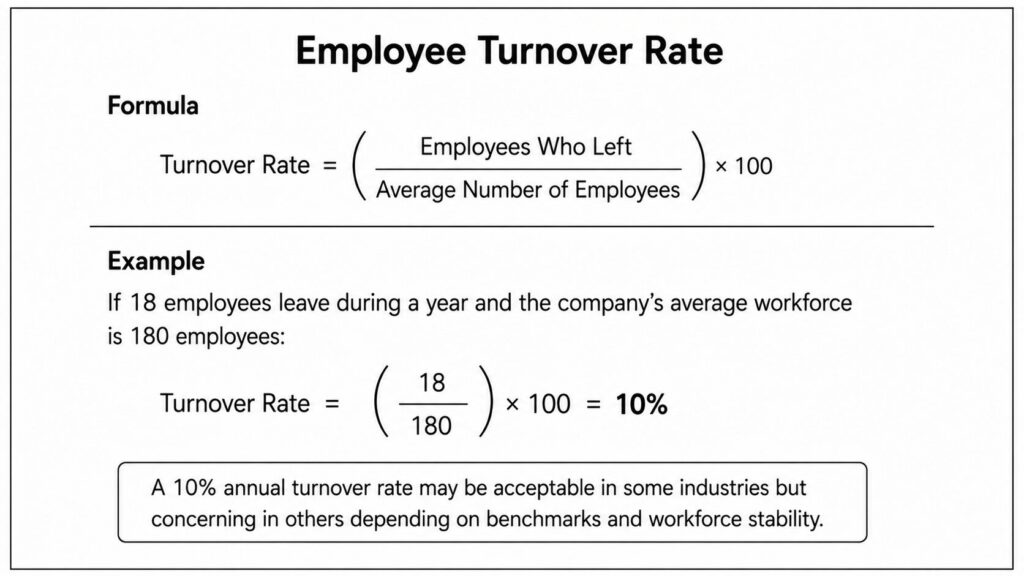
4. Turnover Metrics
Turnover metrics measure the frequency with which employees leave the organization, voluntarily or involuntarily.
High turnover often signals cultural issues such as:
- Poor leadership
- Burnout
- Lack of growth opportunities
- Toxic work environments
- Weak communication
- Low employee engagement
Types of Turnover
- Voluntary Turnover: Employees choose to leave.
- Involuntary Turnover: Employees are terminated or laid off.
- Regrettable Turnover: High-performing employees leave unexpectedly.
Metrics Used for Turnover Metrics
| Metric | Definition | Unit | Common Timeframe |
| Employee Turnover Rate | Percentage of employees leaving during a specific period | Percentage (%) | Monthly, quarterly, annually |
| Retention Rate | Percentage of employees remaining employed over time | Percentage (%) | Annual |
| Regrettable Attrition Rate | Percentage of high-performing employees who resign | Percentage (%) | Annual |
Formula Example
5. Absenteeism
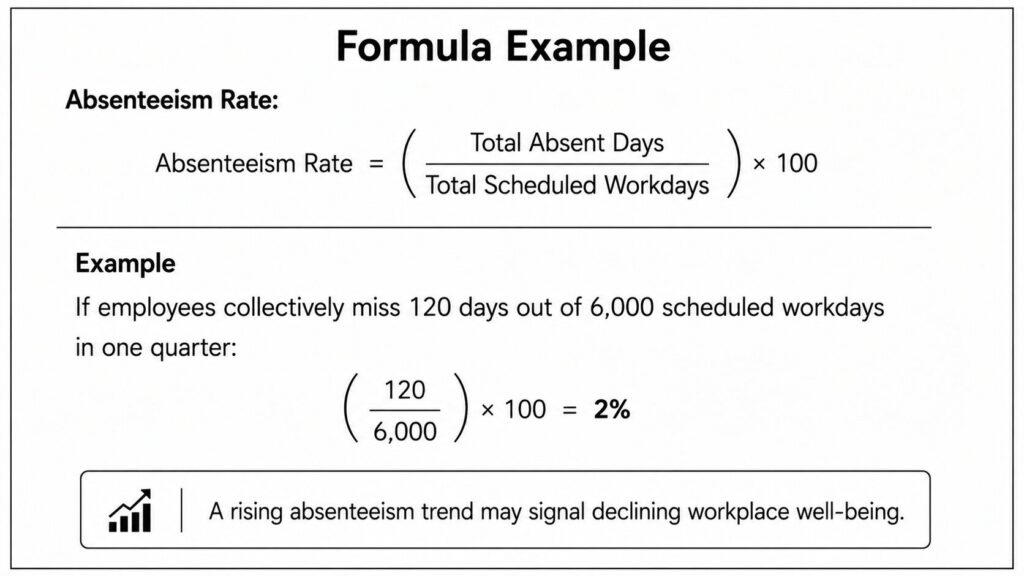
Absenteeism measures the frequency with which employees miss work unexpectedly.
Consistently high absenteeism can indicate:
- Low morale
- Burnout
- Workplace stress
- Poor management
- Health and well-being concerns
- Disengagement
Metrics Used for Absenteeism
| Metric | Definition | Unit | Common Timeframe |
| Absenteeism Rate | Percentage of scheduled workdays missed unexpectedly | Percentage (%) | Monthly or quarterly |
| Average Sick Days | Average number of sick days taken per employee | Days | Quarterly or annually |
Formula Example
6. Internal Mobility
Internal mobility measures how often employees move into new roles, departments, or promotions within the organization.
Strong internal mobility often reflects:
- Career development opportunities
- Employee trust in the organization
- Effective talent management
- Healthy learning culture
Low internal mobility may indicate limited growth opportunities or weak succession planning.
Types of Internal Mobility
- Promotions
- Department transfers
- Cross-functional movement
- Leadership development progression
Metrics Used for Internal Mobility
| Metric | Definition | Unit | Common Timeframe |
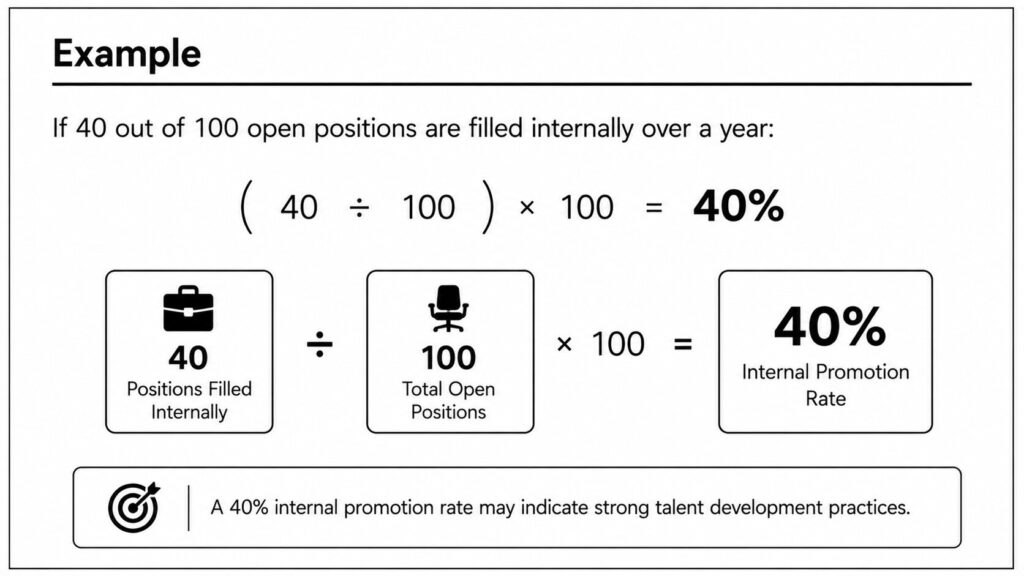
| Internal Promotion Rate | Percentage of open positions filled internally | Percentage (%) | Annual |
| Internal Mobility Rate | Percentage of employees changing roles internally | Percentage (%) | Annual |
| Average Time to Promotion | Average time employees take to receive promotions | Months or years | Annual |
Example
7. Sentiment Analysis
Sentiment analysis uses technology, surveys, written comments, and communication data to evaluate employee emotions, attitudes, and workplace perceptions.
Organizations analyze employee language patterns to identify:
- Positive sentiment
- Frustration
- Burnout
- Trust levels
- Morale trends
Sources of Sentiment Data
- Survey comments
- Internal communication platforms
- Exit interviews
- Employee reviews
- Feedback forms
Metrics Used for Sentiment Analysis
| Metric | Definition | Unit | Common Timeframe |
| Positive Sentiment Rate | Percentage of positive employee responses or comments | Percentage (%) | Monthly or quarterly |
| Negative Sentiment Rate | Percentage of negative employee responses or comments | Percentage (%) | Monthly or quarterly |
| Sentiment Trend Score | Change in sentiment over time | Index score | Monthly |
Example
An organization may discover an increase in negative sentiment about workload pressure after analyzing employee feedback over six months.
8. Performance Trends
Performance trends evaluate whether workplace culture supports productivity, collaboration, accountability, and long-term business performance.
Culture influences how employees:
- Work together
- Solve problems
- Adapt to change
- Meet goals
- Maintain quality standards
Performance Indicators Linked to Culture
- Productivity
- Goal achievement
- Customer satisfaction
- Innovation output
- Team effectiveness
- Quality performance
Metrics Used for Performance Trends
| Metric | Definition | Unit | Common Timeframe |
| Goal Achievement Rate | Percentage of organizational goals successfully completed | Percentage (%) | Quarterly or annual |
| Productivity Rate | Output produced relative to time or workforce size | Units per employee or hour | Monthly or quarterly |
| Performance Review Scores | Average employee performance evaluation rating | Rating scale | Annual or semiannual |
Example
A department with strong collaboration and leadership support may consistently exceed performance goals while maintaining low turnover and high engagement.
Combining Multiple Culture Metrics
No single metric can fully measure workplace culture. Organizations achieve more accurate insights when they combine multiple data sources.
Effective Culture Measurement Often Includes
- Surveys
- Operational metrics
- Behavioral analysis
- Employee interviews
- Retention data
- Leadership evaluations
- Performance outcomes
Using multiple indicators helps organizations identify patterns instead of relying on isolated data points.
Challenges in Measuring Workplace Culture
Although culture measurement is valuable, organizations may face several challenges. The common challenges are given below.
- Employee Fear of Honesty: Employees may hesitate to provide honest feedback if confidentiality is unclear.
- Data Misinterpretation: Metrics without context can create misleading conclusions.
- Survey Fatigue: Too many surveys can reduce participation and response quality.
- Leadership Resistance: Some leaders may resist feedback that highlights management weaknesses.
- Overreliance on Quantitative Data: Numbers alone cannot fully explain employee experiences.
Organizations should combine measurable metrics with open conversations and qualitative feedback.
Best Practices for Measuring Workplace Culture
Organizations that successfully measure workplace culture usually follow consistent practices.
Recommended Best Practices
- Use both quantitative and qualitative methods
- Measure culture regularly, not occasionally
- Ensure employee anonymity and confidentiality
- Communicate survey results transparently
- Act on employee feedback
- Track long-term cultural trends
- Compare department-level data carefully
- Align culture metrics with business goals
Culture measurement is most effective when organizations treat it as an ongoing improvement process rather than a one-time exercise.