
Enterprise performance management is a structured system used by large organizations to align employee performance with corporate strategy through standardized processes, measurable metrics, governance controls, and continuous feedback mechanisms. It ensures consistency, accountability, and data-driven decision-making across departments, geographies, and management layers to achieve long-term business objectives.
Core Attributes of Performance Management for Enterprises
Enterprise-Specific Challenges
Enterprises operate at a scale where complexity is the default. Performance management must function across thousands of employees, multiple departments, and often global locations. This creates several challenges, as illustrated in the diagram.
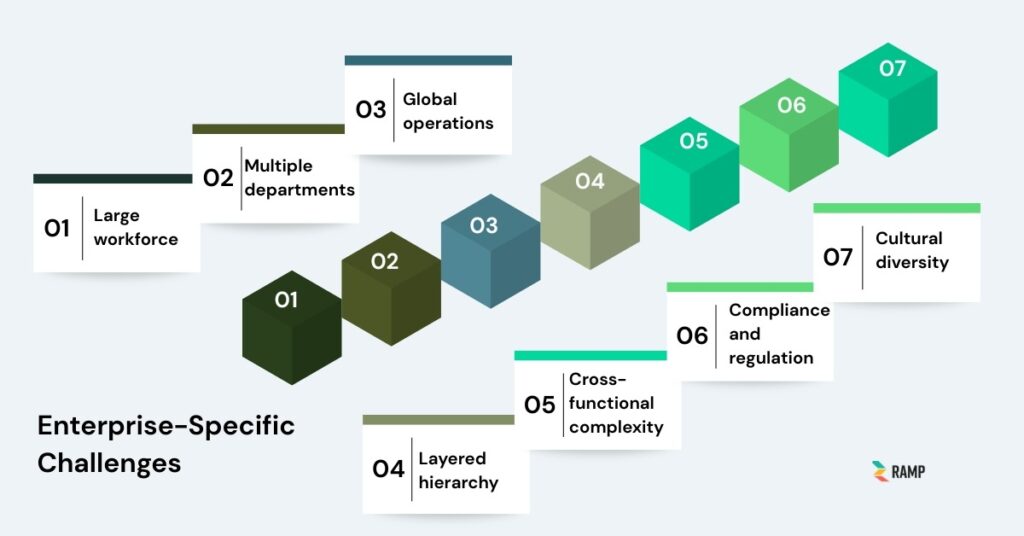
The details of the challenges include:
- Large workforce: Managing consistency across thousands of employees requires structured systems, not informal judgment.
- Multiple departments: Each function (HR, finance, operations) has different performance expectations.
- Global operations: Time zones, laws, and cultures vary widely.
- Layered hierarchy: Decision-making passes through multiple managerial levels, increasing the risk of distortion.
- Cross-functional complexity: Teams must collaborate across departments without conflicting priorities.
- Compliance and regulation: Enterprises must meet strict legal and industry standards.
- Cultural diversity: Feedback styles and expectations differ across regions.
If alignment breaks at any level, the entire system becomes fragmented, leading to silos and inefficiency.
A useful perspective from Performance Management Authority explains that performance management in large enterprises requires more than simply scaling up smaller-company practices. Large organizations need structured goal cascading, regular check-ins, integrated performance data, cross-manager calibration, and clear links between performance outcomes and compensation or development. These mechanisms help maintain consistency and accountability across large, distributed workforces.
Strategic Alignment & Cascading Goals
This is the backbone of enterprise performance management. Without alignment, scale becomes a liability.
- Corporate strategy translation: High-level goals are broken into actionable objectives.
- Cascading objectives: Goals flow from executives to departments, teams, and individuals.
- OKRs at scale: Objectives and Key Results define what to achieve and how success is measured.
- Balanced scorecards: Combine financial, customer, internal process, and learning metrics.
- Department-level KPIs: Each unit tracks performance using relevant indicators.
- Cross-functional alignment: Ensures departments do not work at cross purposes.
Alignment prevents silos by ensuring every role contributes to the same strategic direction.
Standardization & Governance
Enterprises require strict control to maintain fairness and compliance. The following diagram shows the required approaches.
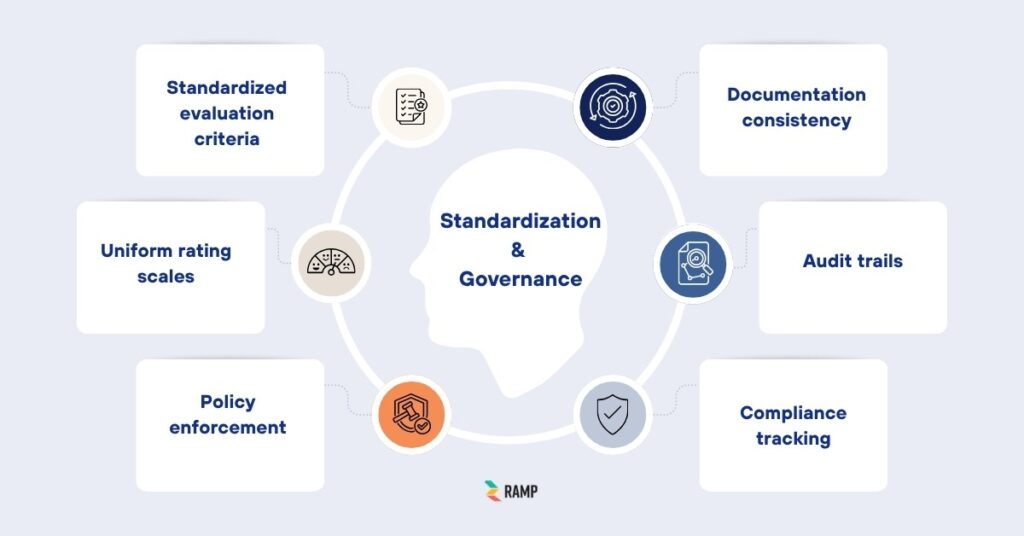
The details include:
- Standardized evaluation criteria: Same performance expectations across similar roles.
- Uniform rating scales: For example, a 1–5 rating scale applied consistently across the organization.
- Policy enforcement: Clear rules for evaluations, promotions, and disciplinary actions.
- Documentation consistency: Written records for every evaluation cycle.
- Audit trails: Track who evaluated whom, when, and why.
- Compliance tracking: Ensures adherence to laws and internal policies.
Governance is what separates enterprise systems from smaller, informal approaches.
Performance Measurement Systems
Enterprise-level measurement is data-intensive and multi-dimensional. The diagram shows the following performance measurement systems.
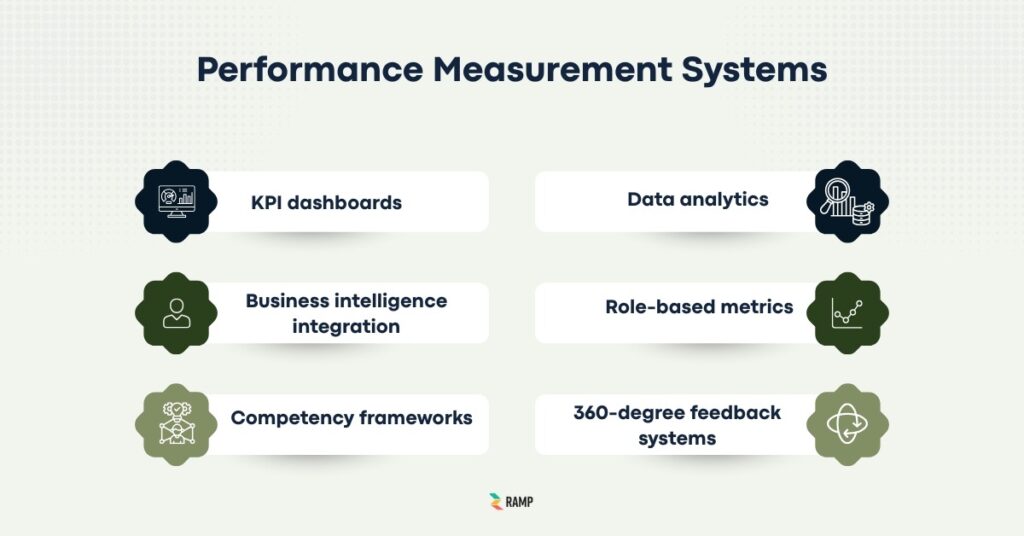
The details are given below.
- KPI dashboards: Visual tools showing real-time performance.
- Data analytics: Identifies trends and anomalies.
- Business intelligence integration: Connects HR data with financial and operational data.
- Role-based metrics: Different KPIs for sales, operations, leadership, etc.
- Competency frameworks: Define required skills and behaviors.
- 360-degree feedback systems: Input from peers, managers, and subordinates.
Additional mechanisms:
- Calibration sessions: Managers review ratings collectively to ensure fairness.
- Performance rating normalization: Adjusts ratings to reduce bias and inflation.
Example metric:
- Sales Conversion Rate (% per quarter) = (Number of successful sales ÷ Total leads) × 100, measured quarterly.
Technology Infrastructure
Enterprise systems depend heavily on integrated technologies, as do tech companies. The relevant technology includes:
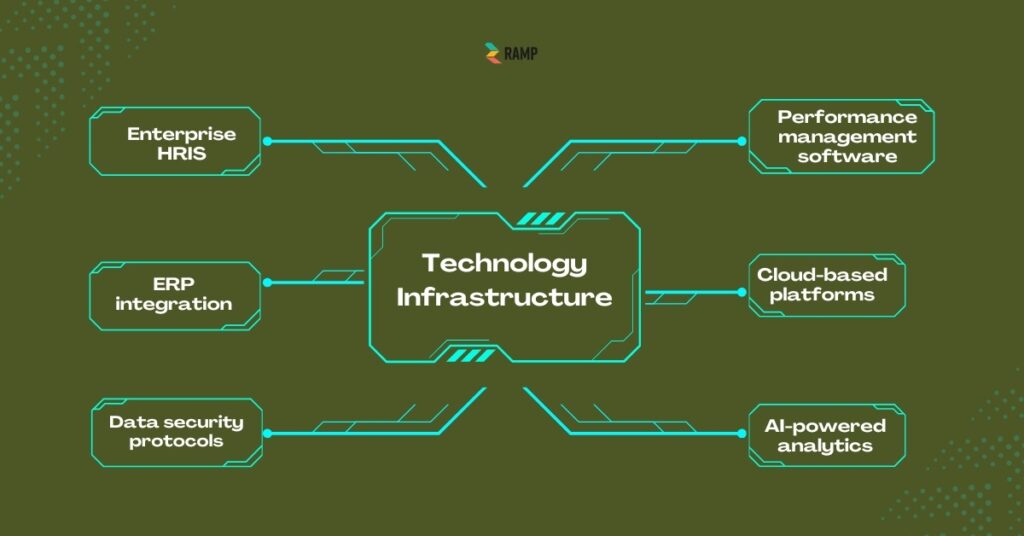
The technology infrastructure includes:
- Enterprise HRIS: Central system for employee data.
- Performance management software: Tracks goals, reviews, and feedback.
- ERP integration: Links performance data with financial and operational systems.
- Cloud-based platforms: Enable global access and scalability.
- Data security protocols: Protect sensitive employee information.
- AI-powered analytics: Predict trends and suggest actions.
Integration ensures performance data informs decisions in finance, operations, and talent management.
Continuous Performance vs Annual Appraisal
Enterprises have moved beyond once-a-year reviews.
- Traditional annual reviews: Structured but often outdated by the time they occur.
- Continuous feedback: Ongoing discussions between managers and employees.
- Quarterly reviews: Formal check-ins every three months.
- Real-time dashboards: Immediate visibility into performance.
Most enterprises now blend both approaches: continuous tracking with periodic formal evaluations.
Leadership & Manager Accountability
Managers are the execution layer of performance management. The diagram below shows the core elements that ensure effective leadership and manager accountability.
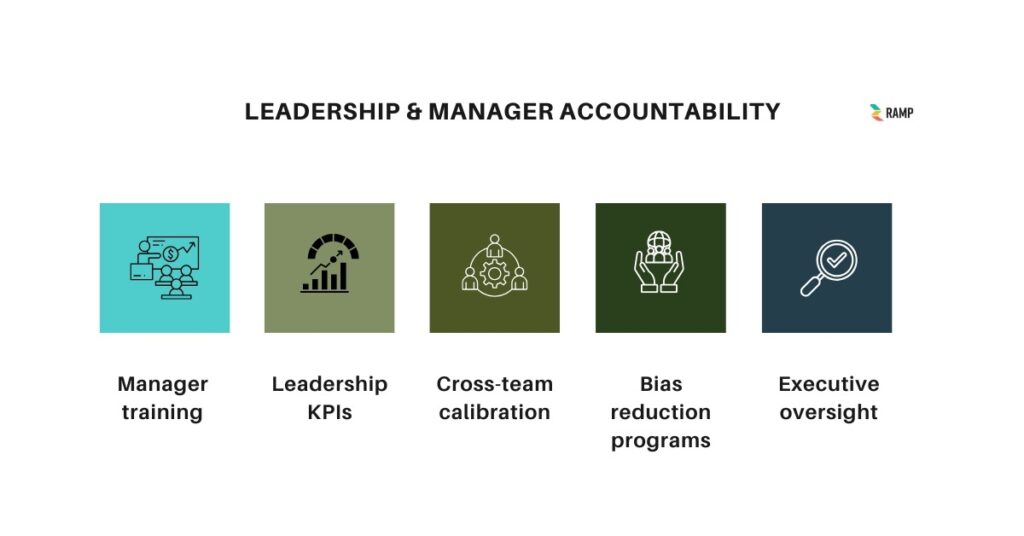
The details are given below.
- Manager training: Ensures consistent evaluation practices.
- Leadership KPIs: Managers are evaluated on team performance and engagement.
- Cross-team calibration: Aligns standards across departments.
- Bias reduction programs: Minimize subjectivity in evaluations.
- Executive oversight: Senior leadership monitors system effectiveness.
Without accountable leadership, even the best system fails in practice.
Compliance & Legal Risk Management
Enterprises must protect themselves from legal exposure. The diagram below outlines the key components of compliance and legal risk management that protect organizations from regulatory and legal issues.
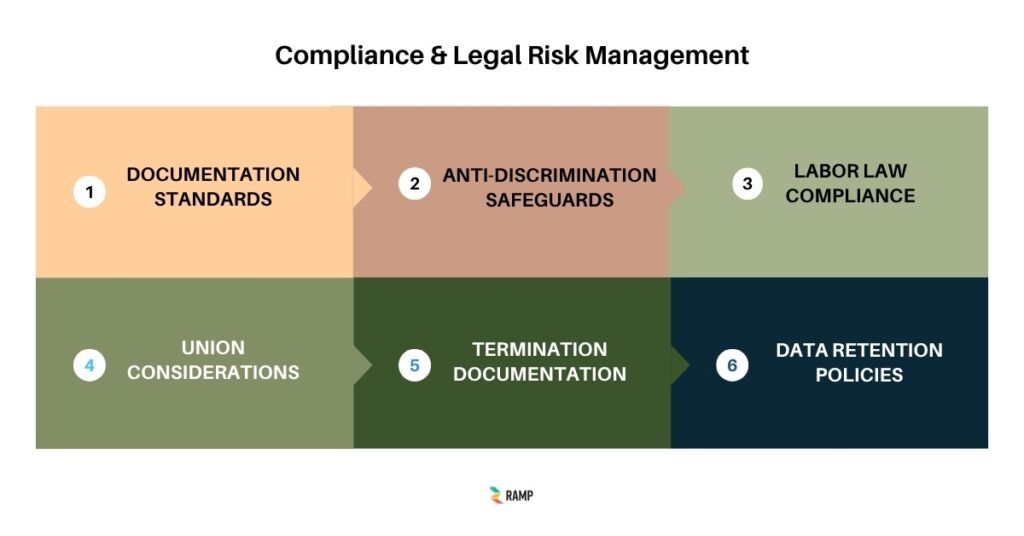
The key components of compliance and legal risk management are given in detail below.
- Documentation standards: Every decision must be recorded.
- Anti-discrimination safeguards: Ensure fair and unbiased evaluations.
- Labor law compliance: Align with regional employment laws.
- Union considerations: Respect collective agreements where applicable.
- Termination documentation: Clear records to justify decisions.
- Data retention policies: Define how long performance data is stored.
Strong compliance reduces legal risk and builds organizational trust.
Performance Improvement Framework
Enterprises formalize underperformance handling.
- Performance Improvement Plans (PIPs): Structured plans with defined goals and timelines.
- HR involvement: Ensures fairness and compliance.
- Escalation policies: Clear steps for unresolved issues.
- Documentation workflows: Track progress and decisions.
- Appeals process: Employees can challenge evaluations.
This ensures underperformance is managed systematically, not arbitrarily.
Global & Cultural Considerations
Operating globally requires a balance between consistency and flexibility. The diagram below shows the global and cultural considerations.
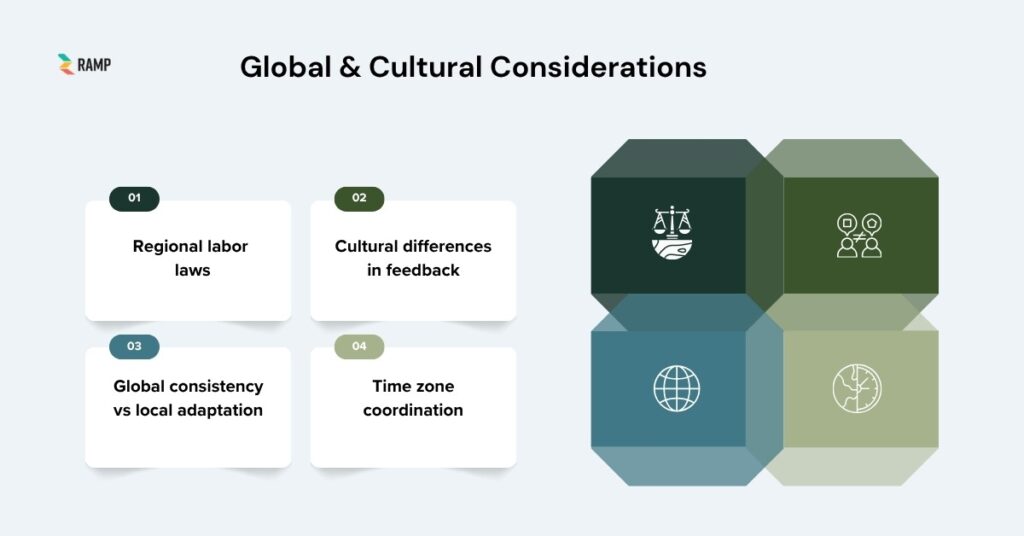
The details include:
- Regional labor laws: They vary across countries.
- Cultural differences in feedback: Some cultures prefer direct feedback; others value subtlety.
- Global consistency vs local adaptation: Standard frameworks with regional customization.
- Time zone coordination: Necessary for global collaboration.
Ignoring cultural context can undermine even well-designed systems.
Data Analytics & Predictive Insights
Advanced enterprises use data as a strategic asset. The diagram below highlights how data analytics and predictive insights help organizations anticipate trends and make informed workforce decisions.
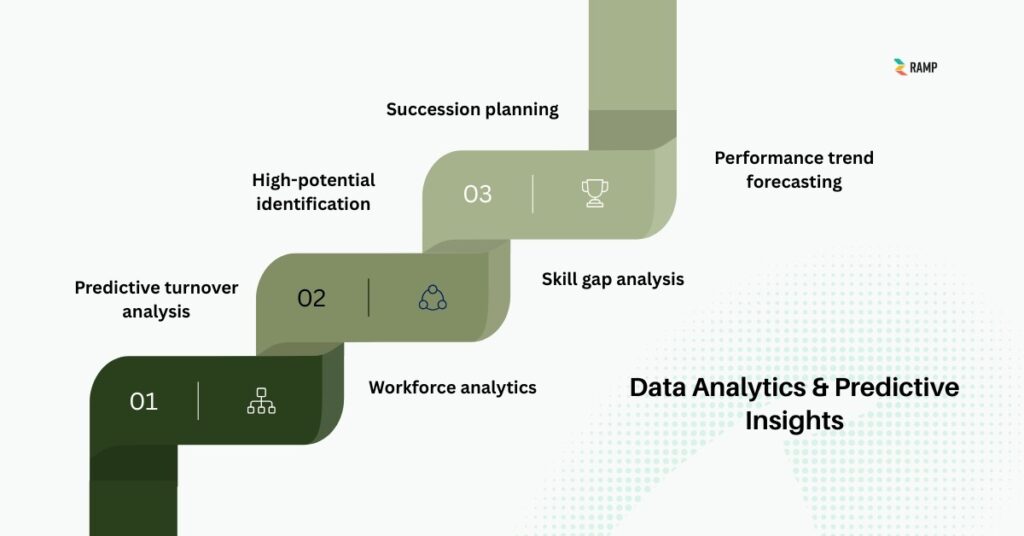
The details include:
- Predictive turnover analysis: Identifies employees likely to leave within a defined period (e.g., next 6–12 months).
- High-potential identification: Spots future leaders based on performance trends.
- Succession planning: Prepares replacements for key roles.
- Workforce analytics: Measures productivity, engagement, and efficiency.
- Skill gap analysis: Identifies missing capabilities across teams.
- Performance trend forecasting: Predicts future outcomes based on historical data.
These insights shift performance management from reactive to proactive.
Change Management
Even the best system fails without adoption.
- Employee buy-in: Employees must see value in the system.
- Leadership alignment: Leaders must consistently support it.
- Communication strategy: Clear messaging about purpose and benefits.
- Training programs: Teach managers and employees how to use the system.
- System rollout planning: Phased implementation reduces resistance.
Adoption is not automatic; it must be managed deliberately.
Lifecycle Structure of Enterprise Performance Management
A typical enterprise system follows a structured lifecycle:
- Define corporate strategic goals (e.g., increase revenue by 10% annually).
- Cascade goals to departments (e.g., sales targets by region).
- Define measurable KPIs (clear metrics with units and timeframes).
- Track performance using enterprise software (real-time dashboards).
- Conduct continuous check-ins (monthly or quarterly).
- Perform formal evaluations (biannual or annual reviews).
- Calibrate ratings across departments (ensure fairness).
- Link to compensation and promotion (bonuses, salary increases).
- Manage performance improvement (PIPs and interventions).
- Analyze performance data for strategic decisions (long-term planning).