
A quarterly performance review is a structured evaluation conducted every three months to assess employee progress, short-term goal achievement, productivity, and overall work performance. This review method allows managers and employees to identify challenges early, adjust priorities quickly, and maintain continuous alignment with organizational objectives. Quarterly reviews provide more timely feedback than annual evaluations and help improve accountability and consistency in performance throughout the year.
How Quarterly Performance Reviews Work?
Quarterly performance reviews follow a shorter, more frequent evaluation cycle than annual reviews. The diagram below shows the process of a quarterly performance review.
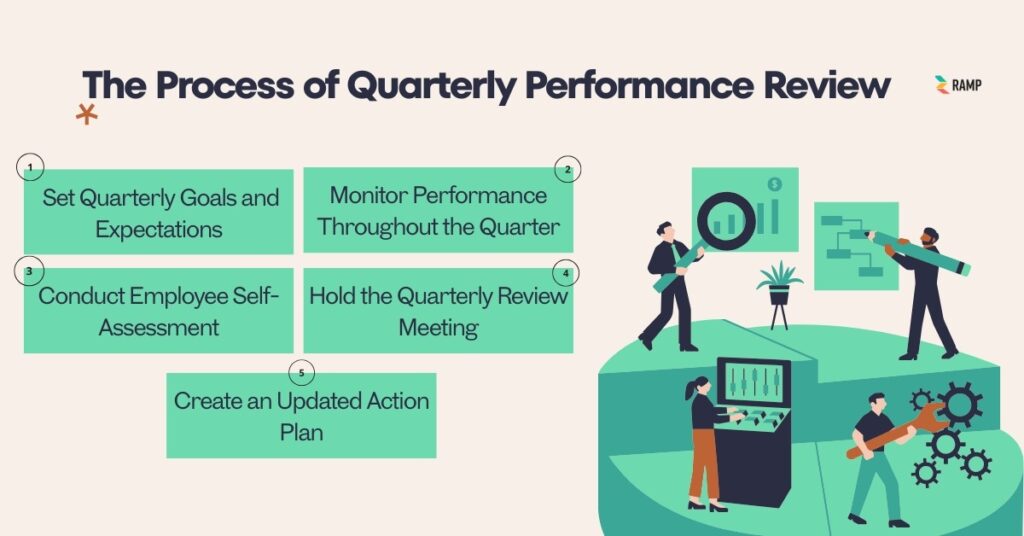
The details of the process are given below.
1. Set Quarterly Goals and Expectations
At the beginning of the quarter, managers and employees establish clear objectives and performance expectations.
These may include:
- Project deadlines
- Sales targets
- Productivity goals
- Customer service standards
- Team collaboration objectives
Short-term goals help employees stay focused and adaptable.
2. Monitor Performance Throughout the Quarter
Managers continuously observe employee performance over the three-month period.
Performance data may include:
- KPI reports
- Project progress
- Client feedback
- Attendance records
- Team contributions
- Quality of work
Frequent observation improves accuracy and reduces reliance on memory.
3. Conduct Employee Self-Assessment
Employees often complete a brief self-review before the evaluation meeting.
They may discuss:
- Achievements
- Challenges
- Skills developed
- Goals completed
- Areas requiring support
Self-assessment encourages accountability and open communication.
4. Hold the Quarterly Review Meeting
Managers and employees meet to discuss performance openly and constructively.
The discussion usually covers:
- Progress toward goals
- Strengths and achievements
- Areas needing improvement
- Obstacles affecting performance
- Feedback from both sides
- Adjustments for the next quarter
Quarterly meetings are typically more focused and conversational than annual appraisals.
5. Create an Updated Action Plan
At the end of the review, both parties agree on the next steps.
This may include:
- New quarterly goals
- Skill development plans
- Coaching support
- Training opportunities
- Performance improvement actions
The short review cycle allows faster follow-up and correction.
Advantages of Quarterly Performance Reviews
Quarterly reviews provide several important benefits for organizations and employees. The diagram below shows the advantages of quarterly performance reviews.
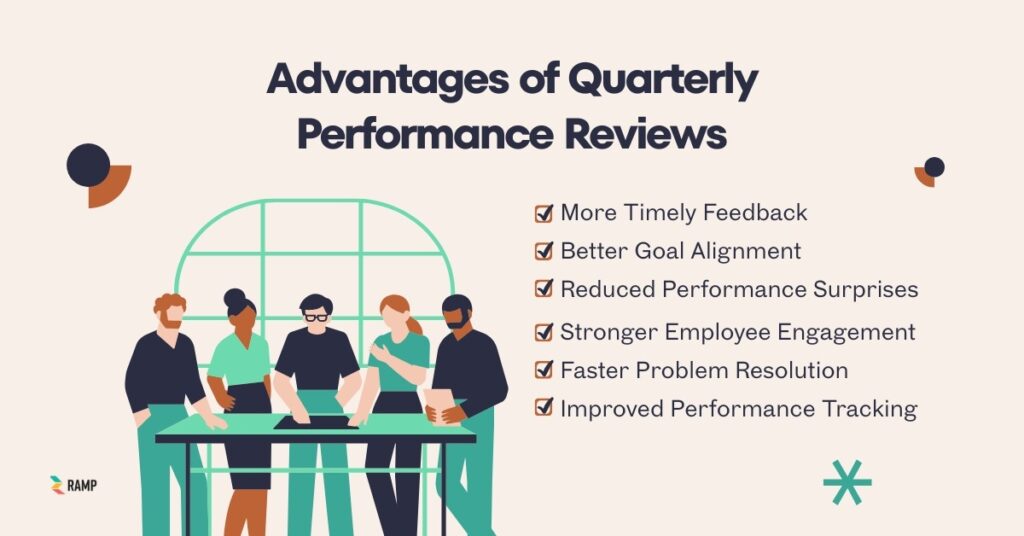
The details are given below.
- More Timely Feedback: Employees receive feedback sooner, making it easier to improve performance quickly.
- Better Goal Alignment: Short-term reviews help employees stay aligned with changing business priorities.
- Reduced Performance Surprises: Frequent discussions reduce the chances of unexpected criticism during evaluations.
- Stronger Employee Engagement: Regular communication improves trust, motivation, and involvement.
- Faster Problem Resolution: Managers can identify challenges early before they become long-term issues.
- Improved Performance Tracking: Quarterly evaluations create a more continuous view of employee progress throughout the year.
Disadvantages of Quarterly Performance Reviews
Despite their benefits, quarterly reviews also have limitations.
- Increased Time Commitment: Frequent evaluations require more manager involvement and administrative effort.
- Risk of Review Fatigue: Employees and managers may become overwhelmed if reviews feel repetitive or overly formal.
- Short-Term Focus: Employees may focus too heavily on immediate goals instead of long-term development.
- Inconsistent Review Quality: Managers may rush reviews when quarterly processes are poorly structured.
- Pressure from Frequent Evaluation: Some employees may feel constantly monitored or evaluated.
Jim Miller’s article, Benefits (and Costs) of the Quarterly Performance Review, explains that quarterly reviews require considerable time and preparation but create a valuable feedback loop between daily work and measurable goals. The shorter cycle allows employees to adjust their performance before problems continue and helps managers recognize consistent strengths. However, organizations can reduce the frequency for consistently strong performers to avoid repetitive meetings and unnecessary administrative work.
Common Bias Risks
Bias can still affect the fairness and accuracy of quarterly reviews. The diagram below shows the common bias risks.
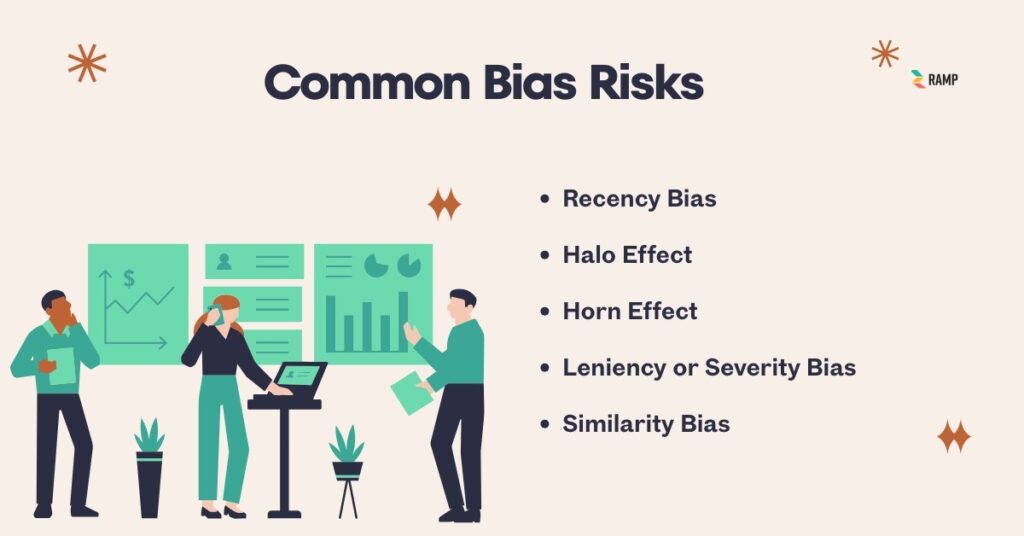
The details of the bias are mentioned below.
- Recency Bias: Managers may focus too heavily on events from the last few weeks of the quarter.
- Halo Effect: One strong achievement may unfairly influence the entire evaluation.
- Horn Effect: A single mistake may overshadow overall performance.
- Leniency or Severity Bias: Some managers consistently rate employees too generously or too harshly.
- Similarity Bias: Managers may unconsciously favor employees with similar personalities or working styles.
Organizations should actively monitor these risks to maintain fair evaluations.
Safeguards for Effective Quarterly Performance Reviews
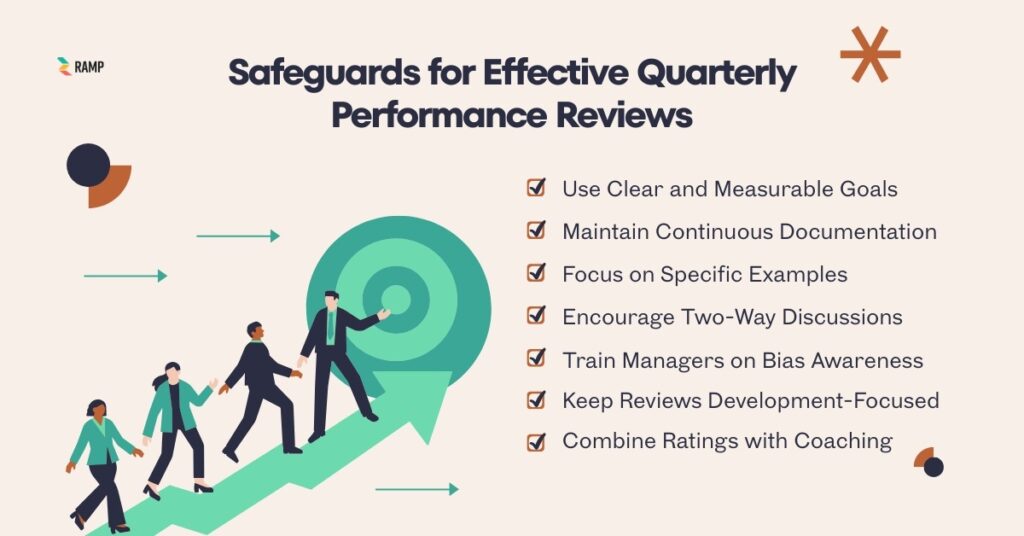
Several safeguards help improve the effectiveness of quarterly review systems. The diagram below lists the safeguards for effective quarterly performance reviews.
The details are given below.
- Use Clear, Measurable Goals: Employees should understand exactly what is expected for the quarter.
- Maintain Continuous Documentation: Managers should record performance observations regularly rather than relying solely on memory.
- Focus on Specific Examples: Feedback should be based on measurable outcomes and observable behaviors.
- Encourage Two-Way Discussions: Employees should feel comfortable discussing concerns, challenges, and development needs.
- Train Managers on Bias Awareness: Bias training improves consistency and fairness across teams.
- Keep Reviews Development-Focused: Quarterly reviews should emphasize improvement and coaching rather than punishment.
- Combine Ratings with Coaching: Constructive conversations are more effective than numerical ratings alone.
When to Use Quarterly Performance Reviews
Quarterly reviews are most useful when organizations need regular feedback and flexible goal management. The diagram below shows when to use quarterly performance reviews.
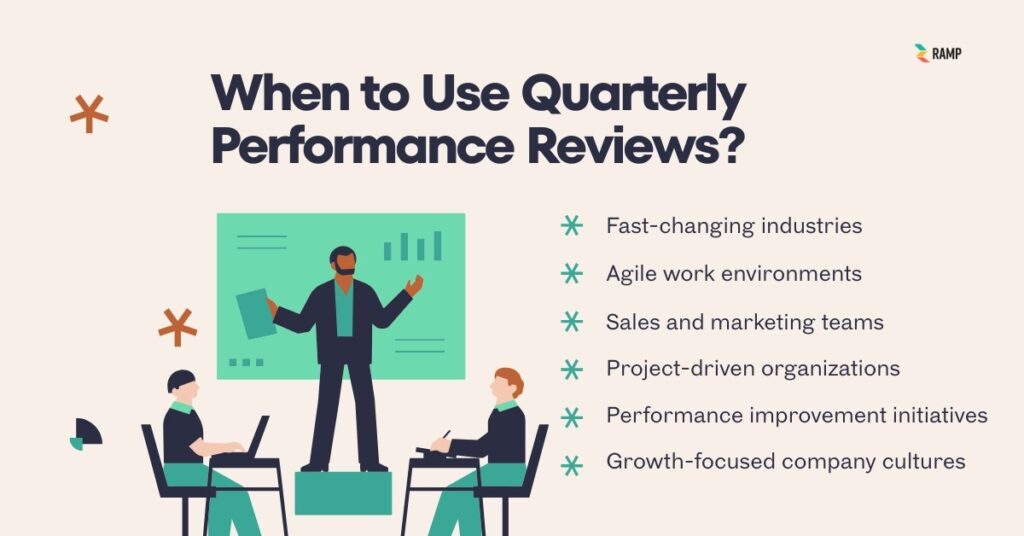
They are commonly used for:
- Fast-changing industries
- Agile work environments
- Sales and marketing teams
- Project-driven organizations
- Performance improvement initiatives
- Growth-focused company cultures
Organizations that experience frequent operational or strategic changes often benefit from shorter review cycles.
Best Roles for Quarterly Performance Reviews
Quarterly reviews work especially well for roles where performance changes quickly or goals require frequent adjustment.
Common Examples
- Sales professionals
- Marketing teams
- Project managers
- Customer support teams
- Business development roles
- Startup employees
- Technology and software teams
These roles usually involve measurable short-term objectives and dynamic work conditions.
Situations Where Quarterly Performance Reviews May Not Work Well
Quarterly reviews may not fit every organization or role equally well.
- Highly Stable Roles: Jobs with long-term responsibilities and slow-changing objectives may not require frequent formal evaluations.
- Small Organizations with Limited Resources: Frequent reviews may create unnecessary administrative workload for small teams.
- Roles with Long Project Cycles: Employees working on multi-year projects may not show measurable progress every quarter.
- Poor Feedback Cultures: If managers are not trained to provide constructive feedback, frequent reviews may create frustration instead of improvement.
- Overly Formal Systems: Quarterly reviews can become exhausting if organizations make the process too complicated or paperwork-heavy.
In these situations, organizations may benefit from combining quarterly check-ins with lighter informal feedback systems.
Quarterly performance reviews provide a balanced approach between annual evaluations and continuous performance management. They offer timely feedback, stronger communication, faster problem-solving, and better alignment with changing organizational goals.
When managed properly, quarterly reviews improve employee engagement, accountability, and development while reducing the performance gaps often created by infrequent evaluations. However, their success depends on clear goals, consistent communication, fair evaluation practices, and a strong focus on continuous improvement rather than excessive monitoring.