

A project-based performance review evaluates an employee's performance after completing a specific project, assignment, or task. This review focuses on individual contributions, teamwork, problem-solving ability, time management, and the quality of completed work within the project timeline. Project-based reviews are especially useful in industries where employees work on temporary assignments, client projects, or team-based initiatives with measurable outcomes.
Research on key performance indicators in project-based organisations explains that project-based organizations need clear KPIs to identify, measure, understand, and control performance. The study highlights that performance indicators should be linked to project goals, organizational needs, and measurable outcomes. This supports the value of project-based performance reviews because they help evaluate employee contributions using real project results, responsibilities, and evidence-based performance data.
How do project-based performance reviews work?
Project-based performance reviews usually follow a structured evaluation process tied directly to the project's lifecycle. The diagram below shows the process of project-based performance review.
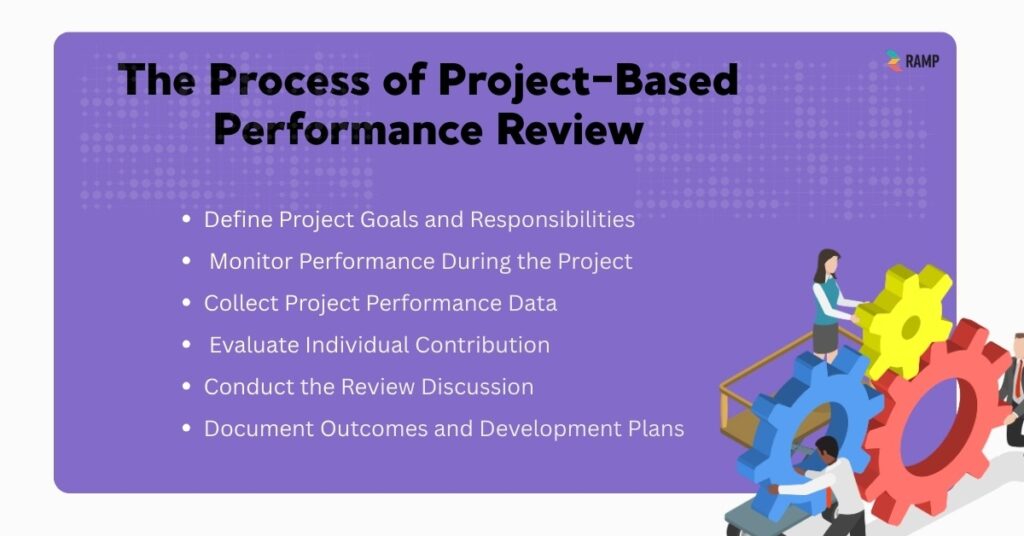
The details of the process are given below.
1. Define Project Goals and Responsibilities
At the beginning of the project, managers establish clear objectives, timelines, responsibilities, and performance expectations for each team member.
These may include:
- Project deliverables
- Deadline expectations
- Budget responsibilities
- Communication standards
- Team collaboration requirements
- Quality benchmarks
Clear expectations help employees understand how performance will be measured.
2. Monitor Performance During the Project
Managers and project leaders observe employee performance throughout the project lifecycle.
Performance tracking may involve:
- Task completion
- Problem-solving ability
- Team collaboration
- Communication effectiveness
- Adaptability under pressure
- Work quality
- Client interaction
- Time management
Continuous observation improves review accuracy.
3. Collect Project Performance Data
At different stages or after project completion, managers gather evidence of employee contributions.
This may include:
- Project reports
- KPI results
- Client feedback
- Team feedback
- Productivity metrics
- Milestone completion records
- Quality assessments
Evidence-based evaluation reduces personal assumptions.
4. Evaluate Individual Contribution
Managers assess how effectively employees contributed to project success.
The review often focuses on:
- Goal achievement
- Initiative and accountability
- Technical performance
- Communication and teamwork
- Leadership contribution
- Creativity and innovation
- Ability to handle challenges
Employees may also complete self-assessments during this stage.
5. Conduct the Review Discussion
The manager or project leader discusses performance with the employee after the project is completed.
The discussion may include:
- Project achievements
- Lessons learned
- Strengths demonstrated
- Areas requiring improvement
- Collaboration experiences
- Development opportunities
Constructive discussions help employees improve performance in future projects.
6. Document Outcomes and Development Plans
The organization records feedback and future recommendations after the review.
Documentation may include:
- Performance summaries
- Skill development areas
- Project accomplishments
- Leadership potential
- Future project recommendations
- Training needs
This information may support future staffing or career development decisions.
Advantages of Project-Based Performance Reviews
Project-based reviews provide several important benefits in dynamic work environments. The diagram below shows the advantages of project-based performance reviews.
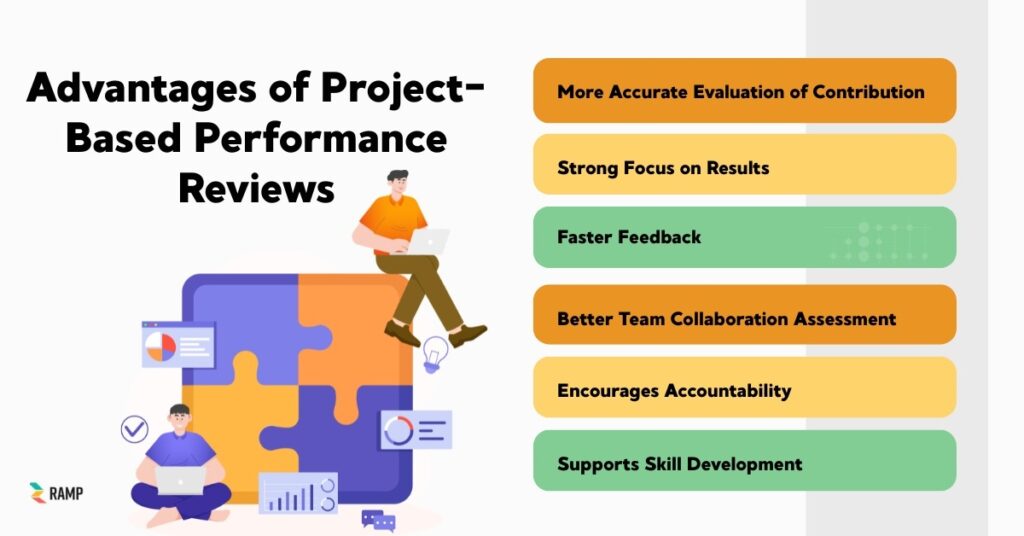
The details of the advantages are given below.
- More Accurate Evaluation of Contribution: Managers can evaluate performance based on real project outcomes and responsibilities.
- Faster Feedback: Employees receive feedback soon after project completion, while the experience is still fresh.
- Strong Focus on Results: Reviews connect directly to measurable deliverables and project success.
- Better Team Collaboration Assessment: Managers can evaluate teamwork, communication, and collaboration more effectively.
- Encourages Accountability: Employees understand how their contributions affect overall project outcomes.
- Supports Skill Development: Project reviews help identify technical, leadership, and communication strengths or gaps.
Disadvantages of Project-Based Performance Reviews
Despite their strengths, project-based reviews also have limitations. The diagram below shows the disadvantages of project-based performance reviews.
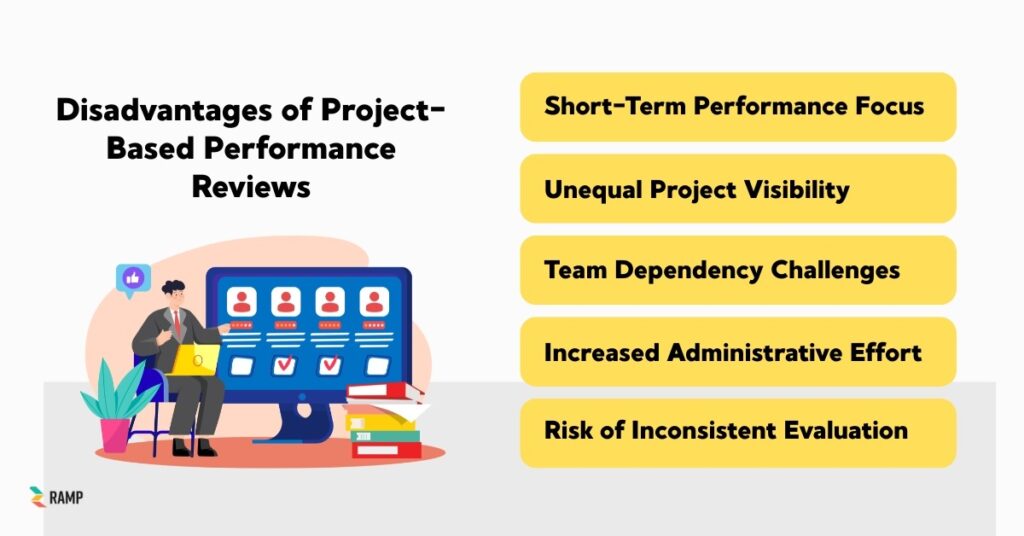
The details are given below.
- Short-Term Performance Focus: Reviews may focus heavily on project-specific outcomes rather than long-term employee growth.
- Unequal Project Visibility: Employees assigned to high-profile projects may receive more recognition than those assigned to other projects.
- Team Dependency Challenges: Individual performance can be difficult to separate from overall team performance.
- Increased Administrative Effort: Frequent project reviews may require additional manager time and coordination.
- Risk of Inconsistent Evaluation: Different project managers may apply different evaluation standards.
Common Bias Risks
Several biases can affect the fairness and accuracy of project-based performance reviews. The diagram below shows the common biases in project-based performance reviews.
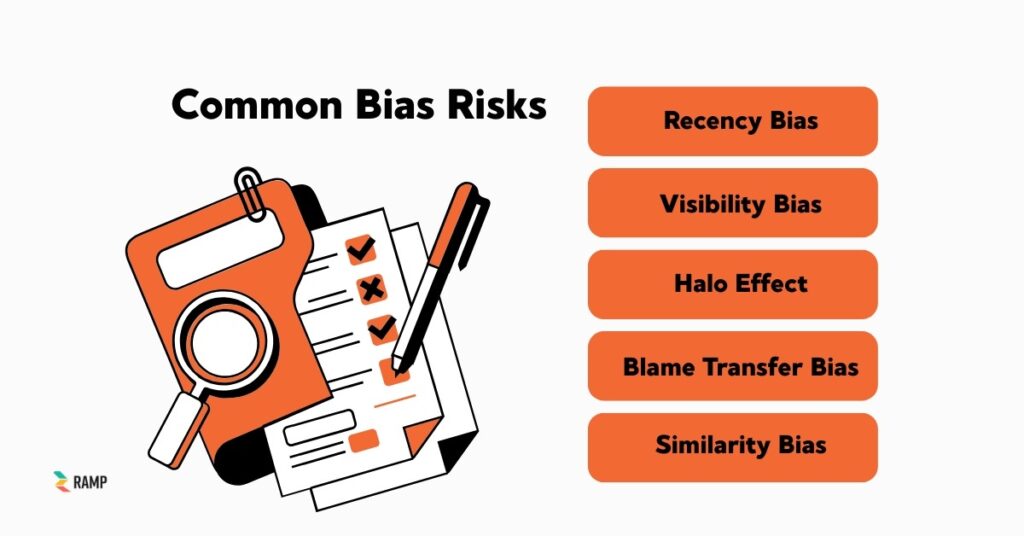
The biases are explained in detail below.
- Recency Bias: Managers may focus solely on the final stages of the project rather than the entire process.
- Visibility Bias: Highly visible employees may receive more favorable evaluations regardless of actual contribution.
- Halo Effect: One major success may unfairly influence the entire review.
- Blame Transfer Bias: Employees may be unfairly blamed for broader project failures outside their control.
- Similarity Bias: Managers may favor employees with similar work styles or communication approaches.
Organizations should actively manage these risks to maintain fair evaluations.
Safeguards for Effective Project-Based Performance Reviews
Several safeguards improve review quality and consistency.
- Define Clear Roles and Responsibilities: Employees should understand their project responsibilities from the beginning.
- Use Measurable Performance Criteria: Evaluation should focus on deadlines, deliverables, quality, communication, and problem-solving.
- Collect Feedback from Multiple Sources: Input from project managers, peers, clients, or team members creates a more balanced evaluation.
- Document Performance Throughout the Project: Managers should maintain ongoing records rather than rely solely on memory after the project is complete.
- Focus on Individual Contribution: Evaluate the employee's actual role and effort rather than only overall project success or failure.
- Standardize Evaluation Formats: Consistent review templates improve fairness across different projects.
- Encourage Reflective Discussions: Employees should openly discuss lessons learned and areas for future improvement.
When to Use Project-Based Performance Reviews
Project-based reviews work best in organizations where employees frequently work on temporary assignments or measurable projects. The diagram below shows when to use project-based performance reviews.
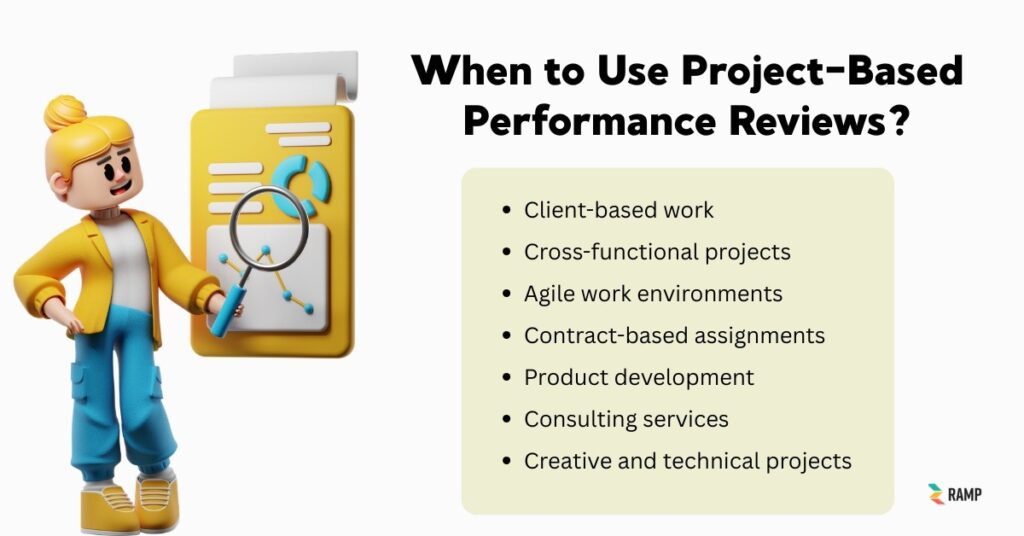
The points in the diagram include:
- Client-based work
- Cross-functional projects
- Agile work environments
- Contract-based assignments
- Product development
- Consulting services
- Creative and technical projects
Organizations with project-driven workflows benefit significantly from this approach.
Best Roles for Project-Based Performance Reviews
Project-based reviews are especially effective for roles involving teamwork, deadlines, and measurable deliverables.
Common Examples
- Project managers
- Software developers
- Engineers
- Consultants
- Marketing teams
- Designers and creative professionals
- Construction professionals
- Research and development teams
- Event management professionals
These roles often involve defined project goals and performance outcomes.
Situations Where Project-Based Performance Reviews May Not Work Well
Project-based reviews may be less effective in certain work environments.
- Long-Term Operational Roles: Employees with repetitive daily responsibilities may not work within clear project structures.
- Highly Independent Roles: Some employees work with minimal project collaboration or measurable deliverables.
- Organizations Without Clear Project Tracking: Poor project management systems can reduce evaluation accuracy.
- Small Teams with Informal Structures: Very small organizations may lack the resources for structured project reviews.
- Roles with Indirect Contributions: Employees supporting projects indirectly may be overlooked during evaluation.
In these situations, organizations often combine project-based reviews with managerial or continuous performance review systems.
Project-based performance reviews provide a focused, results-driven approach to employee evaluation by assessing performance on specific assignments or projects. They improve accountability, strengthen teamwork evaluation, support faster feedback, and help organizations measure contribution more accurately in dynamic work environments.
However, their effectiveness depends on clear expectations, measurable goals, consistent evaluation standards, and proper documentation. When combined with ongoing feedback and broader performance management systems, project-based reviews become a valuable tool for employee development, project success, and organizational growth.