
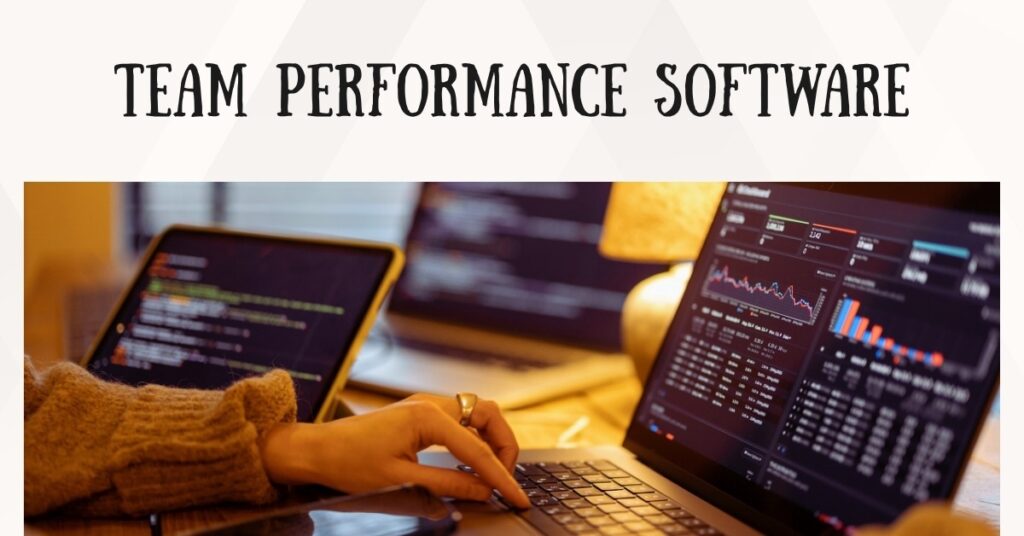
Team Performance Software is a digital platform that helps organizations measure, manage, and improve team performance by tracking shared goals, collaboration, productivity, and collective outcomes. Rather than focusing solely on individual employee performance, it provides visibility into team effectiveness, progress toward objectives, and the factors that influence overall organizational execution and success.
Core Components of Team Performance Software
The core components of team performance software are given below.
1. Shared Goal Management
Team performance depends on alignment around common objectives. Team Performance Software provides tools that help teams establish, monitor, and achieve shared goals.
Common capabilities include:
- Team OKRs (Objectives and Key Results)
- KPI tracking
- Milestone tracking
- Visibility into collective progress
Purpose: Ensures team members understand priorities and how their work contributes to broader organizational objectives.
2. Performance Analytics
Performance analytics help teams measure effectiveness using objective data rather than assumptions.
Common capabilities include:
- Team productivity metrics
- Progress dashboards
- Data-driven insights
Purpose: Provides leaders and team members with visibility into performance trends, progress levels, and areas requiring attention.
3. Collaboration Tracking
Since team performance depends heavily on coordination, collaboration tracking helps organizations understand how work moves across individuals and departments.
Common capabilities include:
- Task ownership clarity
- Workflow transparency
- Cross-functional alignment
Purpose: Improves accountability, reduces confusion, and supports effective coordination across teams.
4. Continuous Feedback Systems
Regular feedback helps teams improve performance, address issues early, and maintain alignment.
Common capabilities include:
- Peer-to-peer feedback
- Manager-to-team feedback
- Pulse surveys
Purpose: Encourages communication, strengthens engagement, and supports continuous performance improvement.
5. Performance Reporting
Reporting capabilities help organizations transform team performance data into actionable information.
Common capabilities include:
- Real-time dashboards
- Performance summaries
- Trend analysis
Purpose: Supports decision-making by providing ongoing visibility into team outcomes and performance patterns.
Primary Purpose of Team Performance Software
The main purpose of Team Performance Software is to:
- Increase strategic alignment
- Improve execution consistency
- Enhance accountability clarity
- Enable data-informed team decisions
- Strengthen collaborative performance outcomes
By combining goals, analytics, collaboration insights, feedback systems, and reporting tools, the software helps organizations manage team performance rather than focusing exclusively on individual contributors.
Why Team Performance Software Matters?
Modern organizations operate in highly collaborative environments where success often depends on coordinated team efforts rather than individual contributions alone. Measuring individual effort alone does not fully reflect overall team effectiveness.
Team Performance Software helps organizations by providing:
Visibility Into Group Progress
Teams and leaders can see how collective efforts contribute to strategic objectives and business outcomes.
Identification of Bottlenecks
Performance data helps identify delays, workflow constraints, and collaboration challenges that may affect results.
Clear Responsibility Mapping
Defined ownership and transparent workflows improve accountability and reduce uncertainty regarding responsibilities.
Continuous Improvement at Scale
Ongoing measurement and feedback allow teams to identify opportunities for improvement and strengthen performance over time.
Research on team performance in software development shows that team performance is shaped by factors such as shared understanding, coordination, communication, and alignment with Agile principles. The article highlights that high-performing teams need more than individual technical skill; they need clear goals, effective collaboration, and visibility into how work moves through the team. This supports the value of team performance software because digital platforms help teams track shared goals, monitor progress, identify bottlenecks, improve feedback, and make better data-informed decisions.
How Team Performance Software Differs from Individual Performance Software
The following chart highlights the key differences between Team Performance Software and Individual Performance Software, illustrating how each solution measures success, tracks performance, and supports organizational effectiveness from both team-based and individual perspectives.
| Team Performance Software | Individual Performance Software |
| Focuses on collective output | Focuses on personal evaluation |
| Measures shared KPIs | Measures individual KPIs |
| Tracks collaboration impact | Tracks personal productivity |
| Supports cross-functional alignment | Supports personal development planning |
Key Difference
Team Performance Software evaluates how groups work together to achieve shared objectives, whereas Individual Performance Software primarily evaluates how an individual employee performs against personal goals and responsibilities.
Team Performance Software enables organizations to manage and improve collective performance through shared goal management, performance analytics, collaboration tracking, continuous feedback systems, and performance reporting. Its primary purpose is to increase strategic alignment, improve execution consistency, enhance accountability clarity, support data-informed decision-making, and strengthen collaborative performance outcomes. Focusing on team effectiveness rather than individual effort alone, it provides a more complete view of organizational performance in modern collaborative workplaces.
OKR Software vs Performance Software
Traditional and software-based performance management both aim to improve employee and organizational performance, but they differ in how performance data is managed, monitored, and used. Modern software platforms offer greater visibility, automation, and scalability than manual or process-driven approaches.
Structured Comparison
The following chart compares OKR Software and Performance Software across key operational areas, helping organizations understand how each approach supports goal alignment, performance visibility, reporting capabilities, and scalability.
| Area | OKR Software | Performance Software |
| Primary Focus | Goal setting, objective alignment, and key result tracking. | Broader performance management, including goals, feedback, reviews, development, and evaluations. |
| Speed | Enables rapid goal updates, progress tracking, and real-time visibility into objective achievement | Supports ongoing performance processes but may involve additional workflows such as reviews, feedback cycles, and development planning. |
| Transparency | Provides visibility into organizational, team, and individual OKRs, making goal alignment highly transparent | Provides visibility into performance outcomes, feedback, evaluations, and employee development activities. |
| Reporting | Focuses on OKR progress, completion rates, alignment metrics, and objective achievement reporting. | Offers broader reporting capabilities, including performance ratings, review outcomes, productivity trends, development progress, and workforce analytics. |
| Scalability | Scales effectively for organizations seeking consistent goal alignment across teams and departments. | Scales across multiple performance management processes, supporting complex workforce and talent management requirements. |
Key Distinction
OKR Software is primarily designed to help organizations define, align, and track objectives and key results, while Performance Software provides a more comprehensive framework for evaluating, developing, and managing employee performance over time.
Performance Software and OKR Software serve complementary purposes rather than competing functions. OKR Software strengthens goal alignment and visibility into execution, whereas Performance Software supports broader performance management activities, including feedback, evaluations, development planning, and workforce performance analysis. Organizations often use both approaches together to connect strategic objectives with long-term performance improvement.